


 Have a great day, y'all!
31 specialties and 10-dollar visits: a new public hospital opens in rural Cuenca
The Baños Municipal Hospital, in the countryside south-west of Cuenca, Ecuador, opened on Thursday 12 November with 31 medical specialties, 22 beds and 10-dollar consultations for some 20,000 people in the parish and its neighbours.
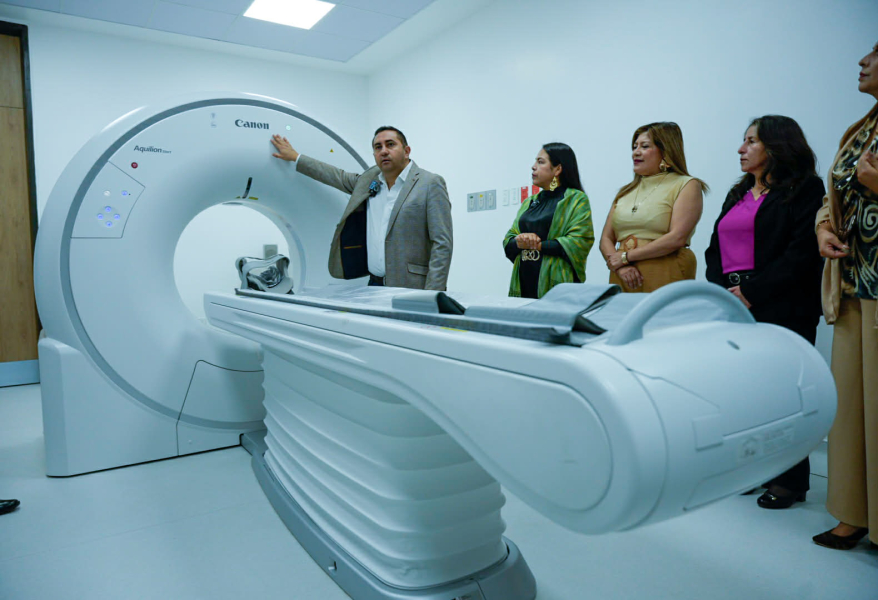
Since Friday 13 November, people living in Huizhil Alto, in the rural parish of Baños, about eight kilometres from the centre of Cuenca, can see an orthopaedic surgeon, a neurologist or a cardiologist without travelling into the city. The Baños Municipal Hospital was inaugurated on the night of Thursday 12 November and opened its consulting rooms the next morning, the Cuenca newspaper El Mercurio reported.
It is the second of three hospitals that the city government of Cuenca, Ecuador's third-largest city, has built in the rural parishes around it. The first, in El Valle, treated more than 16,000 patients in its first hundred days. The third, in Ricaurte, is 90% complete and is expected to open in early 2027.
- 31 medical specialties and an emergency department open around the clock, every day.
- 22 inpatient beds, two operating theatres, six emergency beds and 12 consulting rooms.
- A consultation with any specialist costs 10 US dollars; an inpatient day costs 50 dollars, not including medicines and supplies.
- Around 20,000 residents of Baños benefit directly, along with people from the neighbouring parishes of Tarqui, Cumbe, San Joaquín, Turi, Sayausí and Molleturo.
- The hospital cost about 7.5 million dollars, funded by a CAF development bank loan that pays for the whole rural hospital network.
Three floors on a hillside in Huizhil Alto
The building has roughly 6,600 square metres of floor space on a 5,200-square-metre plot, according to the project sheet published by Cuenca's city government. It is run by the Fundación Municipal de la Mujer y el Niño, a municipal foundation that has managed the city's hospital in Patamarca, in northern Cuenca, for about two decades, and the El Valle hospital since February.
The layout, described by the local paper El Nuevo Tiempo, is that of a second-level hospital, the tier between a neighbourhood clinic and a large referral centre. The ground floor holds the medical and dental consulting rooms, the clinical laboratory, a vaccination room, X-ray and the emergency department with six beds. The second floor has 16 inpatient rooms with private bathrooms, plus offices, an auditorium, the kitchen and a dining room. The top floor houses the two operating theatres, a delivery unit, neonatal care, an intensive care unit and sterilisation.
Equipment includes ultrasound, X-ray and a CT scanner. There are two stretcher lifts and one public lift, a separate entrance for ambulances, 50 parking spaces, bicycle parking, a backup generator and water tanks for drinking and for firefighting. ETAPA, the city's water utility, signed off on the site's plumbing and drainage study.
Not everything is running at full capacity from day one. The foundation's director, Fabián Zamora, told El Mercurio that intensive care and neonatal care will be switched on as demand grows. The same approach was used in El Valle, where those units were fully equipped but had no permanent staff during the first months.
The list of specialties is long. El Nuevo Tiempo names ear, nose and throat, gynaecology, orthopaedics, cardiology, paediatric surgery, urology, internal medicine, nephrology, neurology, dentistry, endodontics, vascular surgery, general and laparoscopic surgery, surgical oncology, emergency medicine and diagnostic imaging. El Mercurio adds paediatric orthopaedics, gastroenterology, paediatrics, nutrition, cardiovascular surgery and clinical psychology.
Outpatient clinics run Monday to Friday, from 8am to 5pm. The emergency department never closes.
That price is the calling card of Cuenca's municipal network. In the emergency department, the 10 dollars is a starting point; the bill can rise depending on how serious the case is and which procedures are needed. A day in a hospital bed costs 50 dollars, with medicines and supplies charged separately. One local resident interviewed by El Mercurio on opening night compared the fees with those of private clinics and some charitable foundations in the city and called them affordable.

Just over 80 people start work in the building, counting health, administrative and cleaning staff. According to El Mercurio's breakdown, 32 are doctors and 16 are nurses. The posts were filled through an open competition launched in May on the city's jobs platform, with technical and psychometric tests and a final interview, as Primicias reported at the time.
Interest far exceeded expectations. In two days the city received 11,558 applications for 82 jobs, Zamora said in a May interview with El Mercurio: about 140 candidates for every post.
The hospital will also be a classroom. The city signed an agreement with four local universities, the Universidad del Azuay, the Universidad de Cuenca, the Universidad Politécnica Salesiana and the Universidad Católica de Cuenca, covering research, training and student placements. Medical and nursing students in Cuenca now have a second-level hospital in a rural area where they can train.
From signed contract to first patient
It took longer than planned. These are the main milestones, pieced together from local press coverage:
- 11 December 2024: the construction contract is signed, with a 360-day deadline and funding from CAF, the development bank of Latin America and the Caribbean.
- 3 August 2026: ACESS, Ecuador's agency for quality assurance in health services, grants the operating licence after several weeks waiting for its technical inspection.
- 31 August 2026: the opening planned for 6 September is called off because the building's provisional handover certificate has not yet been issued.
- 23 October: a new date is announced, 8 November.
- 6 November: the ceremony is moved to Tuesday 10 November.
- 12 November: the hospital is inaugurated and blessed by the Bishop of Cuenca, Marcos Pérez; consultations begin the following day.
The missing certificate in August had practical consequences. Without it, the city could not finish checking what the contractor had to deliver, including inspection of the medical equipment and training staff to use it, El Nuevo Tiempo explained at the time. The hospital had its health licence, but it could not take patients with equipment that had not been checked.
Investment figures vary depending on who is counting and what they include. The city government puts the hospital at about 7.5 million dollars; El Mercurio has reported 7.4 million for construction alone and more than 8 million for the full financing. Every source agrees on where the money came from: a 24-million-dollar CAF loan for the three rural hospitals, about 8 million each, according to Zamora. Combined investment in the rural network stands at 24,063,697 dollars, with an estimated reach of more than 60,000 people.
What El Valle has already shown
The best guide to what may happen in Baños lies a few kilometres to the east. El Valle Municipal Hospital opened on 2 February 2026 in the Guncay area, about two kilometres from the parish centre, with 31 specialties and an investment of more than 8 million dollars, according to El Diario. It serves El Valle, Santa Ana, Quingeo, Paccha, Nulti and Turi, and draws patients from the neighbouring cantons of Sígsig and Gualaceo.
On its first day it handled 132 outpatient visits and 32 emergencies, carried out its first operation and delivered its first baby, born a few hours after the doors opened. It treated 4,774 patients in its first month and more than 5,000 in its second. After a hundred days, the tally had passed 16,000 patients and nearly 200 operations.
"We thought the growth curve would be much more gradual; however, the results surprised us."
Fabián Zamora, director of the Fundación Municipal de la Mujer y el Niño
By September, the city government counted 26,295 patient visits at El Valle and 50,336 at Patamarca: 76,631 visits between the two municipal hospitals already running. With Baños open, and once Ricaurte follows, the network will have four hospitals. Zamora describes it as the largest municipal health network in Ecuador.

The idea behind the network is simple: bring second-level care out to the rural parishes so that a broken bone or a birth does not mean a trip into the city. Rural health care in Ecuador has made gains on several fronts in recent months, from a fall in chronic malnutrition among children under two to free cleft lip and palate surgery in Guaranda and the certification of Chimborazo and Tungurahua as a region equipped to treat strokes quickly.
Baños is a good place to test the model. The parish covers about 327 square kilometres, roughly 10.6% of Cuenca canton, and stretches from 2,050 to 4,200 metres above sea level, according to its Wikipedia entry. The 2010 census counted 16,861 residents; the city government now estimates about 20,000. Its territory includes scattered communities on the slopes of El Cajas, where a doctor's appointment in the city could take half a day of buses and waiting rooms.
Work remains. The first task is to complete the network with the Ricaurte hospital. The second is to bring the Baños intensive care and neonatal units into service. Residents are also asking for attention to the area around the building: a local food vendor called for more police and municipal guard patrols as visitor numbers grow, and another neighbour asked for better access roads.
There is a third, less visible task, which Zamora himself raised in May: giving the municipal hospitals a legal footing that guarantees they keep running whichever administration is in office.
"I believe that issues such as health, education and security should not be seen through a political lens, because they are services that directly help citizens."
Fabián Zamora, in an interview with El Mercurio
As he explained, no city ordinance currently guarantees that these hospitals will operate permanently. Patamarca, the oldest, has been open for about 21 years and has been through several administrations. Cuenca, whose cooking joined the UNESCO Creative Cities Network this year, has had one more public hospital since this week, this time in a rural parish.
Something you might not know
The parish name is no accident. Baños, Spanish for "baths", is named after the hot springs that rise in the area and that, according to accounts of its history, drew the first Cañari settlers long before the Spanish arrived. In the early 17th century colonists mined gold and silver there, and on 1 September 1852 Baños was formally recognised as a rural parish of Cuenca. For more than a century and a half, people who came to Baños in search of better health went to its hot pools. As of this week, they can also see a cardiologist for 10 dollars.
Further reading
- Official project sheet for the Baños Municipal Hospital, from Cuenca's city government (Spanish).
- A floor-by-floor tour and the communities served, in El Nuevo Tiempo (Spanish).
- The opening, with fees and staffing, in El Mercurio (Spanish).
- Interview with Fabián Zamora on the municipal hospital network, in El Mercurio (Spanish).
- The first 100 days at El Valle hospital, in El Mercurio (Spanish).
Go further
- Web · Alcaldía de CuencaHospital Municipal de Baños fortalece la red de salud de Cuenca y acerca servicios médicos a la ruralidad
La ficha oficial del proyecto, con superficie, camas, servicios e inversión de toda la red de hospitales rurales.
- Web · Milton Rocano, El Nuevo TiempoHospital Municipal de Baños atiende con 30 especialidades
Recorre el edificio piso por piso y detalla qué comunidades y parroquias vecinas podrán usarlo.
- Web · Bolívar Pérez, Diario El MercurioFabián Zamora: «Hay que posicionar los hospitales municipales»
Entrevista con el director de la red municipal sobre los resultados de El Valle, el financiamiento y lo que falta para asegurar el futuro de los hospitales.
- Web · Milton Rocano, Diario El Mercurio16 mil pacientes en los primeros 100 días del hospital de El Valle
El balance del hospital hermano que abrió en febrero y que sirve de referencia para medir lo que puede lograr Baños.
- Web · El DiarioCuenca inaugura el hospital municipal El Valle, al servicio de la población rural
Crónica de la apertura del primer hospital de la red rural y de las parroquias que atiende.
- Web · WikipediaBaños, Azuay
Historia, geografía y población de la parroquia de aguas termales donde se levanta el nuevo hospital.
Sources
- Alcaldía de Cuenca: Hospital Municipal de Baños fortalece la red de salud de Cuenca
- El Mercurio: Hospital de Baños abre sus puertas con 31 especialidades
- El Nuevo Tiempo: Hospital Municipal de Baños atiende con 30 especialidades
- El Mercurio: Aplazan nuevamente la inauguración del hospital de Baños
- El Nuevo Tiempo: Alcaldía de Cuenca suspende inauguración del Hospital de Baños
- El Mercurio: Hospital de Baños ya puede operar tras aprobación de la ACESS
- El Mercurio: Fabián Zamora, «Hay que posicionar los hospitales municipales»
- El Mercurio: 16 mil pacientes en los primeros 100 días del hospital de El Valle
- El Diario: Cuenca inaugura el hospital municipal El Valle
- Primicias: vacantes para el hospital de Baños





