


 Have a great day, y'all!
669 new connections bring grid power to four Amazon cantons
Grid power reaches 669 users in Taisha, Sevilla Don Bosco, Logroño and Huamboya, in Ecuador's Morona Santiago, after a $417,036 Centrosur investment.
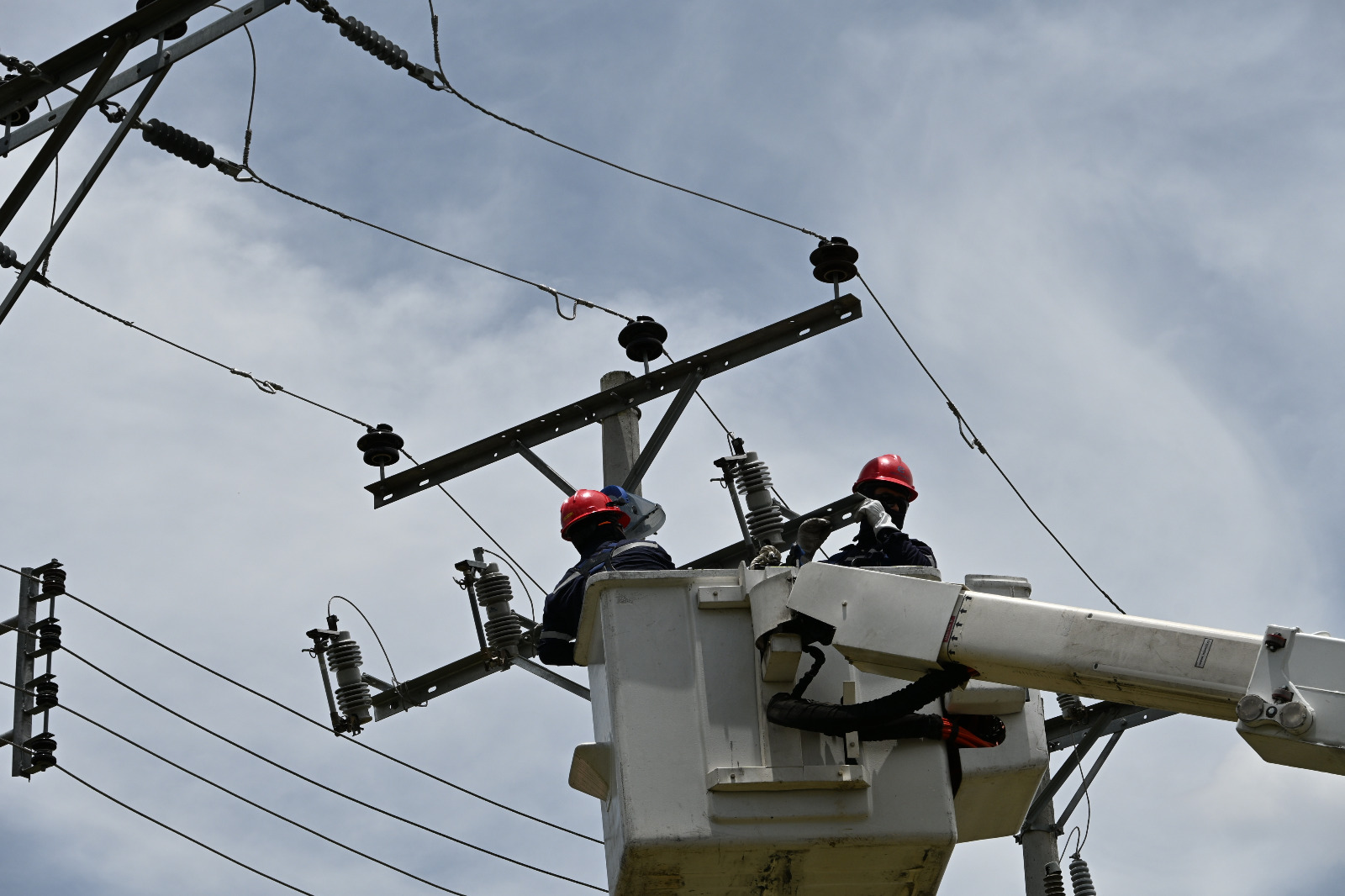
On November 12, 2026, the utility Centrosur approved a USD 417,036.11 investment to run the public power grid out to 669 customers across the cantons of Taisha, Sevilla Don Bosco, Logroño and Huamboya, in Ecuador's Amazonian province of Morona Santiago. Five days later, on November 17, the same company announced a second round of works: USD 237,429.71 to electrify Comuna Grande, in Logroño canton, and Santa Marianita de Chumpi, in Sevilla Don Bosco, reaching another 198 people. Together, the two announcements extend the conventional grid to 867 residents of shuar settlements that until now relied on diesel generators, candles or small, isolated solar panels with limited output.
- Centrosur invested USD 417,036 to connect 669 customers across four cantons of Morona Santiago to the public power grid.
- Seven days later, the company added another USD 237,430 to electrify Comuna Grande (Logroño) and Santa Marianita de Chumpi (Sevilla Don Bosco).
- The works reach shuar communities such as the Irutkamu center known as "Bosco Yankur," the Norte neighborhood of Shimpis, Las Cascadas-Ángel Rouby, and the Juank and Kaniras neighborhoods of Yunkuapais, in Taisha canton.
- Ecuador's electricity coverage stands at 97.81% nationally, according to sector figures; these Amazonian hamlets were among the last pockets without a conventional grid.
- November's round continues a plan that in July had already electrified four communities in Yaupi parish, in Logroño canton.
Four cantons, one line
The November 12 resolution splits the funding across rural expansion and electrification works that had never had a formal grid connection before. According to Centrosur's official statement, crews are advancing in the Las Cascadas neighborhood and the Ángel Rouby sector, in the Norte neighborhood of the Shimpis community, in the Irutkamu shuar center known as "Bosco Yankur," and in the Juank and Kaniras neighborhoods inside the Yunkuapais community. The latter two sit in Taisha canton, one of the most remote territories in Morona Santiago, where road access is limited and much of the travel still happens by small plane or by river.
The contract covers medium- and low-voltage line construction, distribution transformers and, along several stretches, LED-based public lighting. Centrosur did not specify how many kilometers of cable this particular phase installs, but it did confirm that 669 users are connected directly — a figure that covers dozens of homes, schools and small shops spread across the four cantons.
"Centrosur strengthens electrical infrastructure, improving the quality and continuity of service for the urban and rural communities in its service area."
Diego Morales Jadán, executive president of Centrosur
Morales signed that statement on November 12 itself, explaining why the company is prioritizing these rural stretches over maintenance work in areas already connected. Morona Santiago absorbs a significant share of Centrosur's rural electrification budget because, unlike Azuay or Cañar — the other two provinces the utility serves — it still has scattered Amazonian hamlets that a conventional grid never reached.
A second round, five days later
The second announcement, released on November 17 under the headline "Gobierno Nacional, a través de Centrosur, impulsa la electrificación con una inversión de USD 2,78 millones," groups projects across three provinces: Morona Santiago, Cañar and Azuay. In Morona Santiago, the USD 237,429.71 figure jointly covers the Comuna Grande works in Logroño and those in Santa Marianita de Chumpi, along the La Unión-Barranco stretch of Sevilla Don Bosco canton, benefiting 198 users between the two sites. Centrosur also noted it has begun community outreach — the socialization phase that precedes construction — for a third project in Sevilla Don Bosco worth USD 156,763, which would add another 150 people once it moves forward.
"Through these actions, the National Government, via Centrosur, reaffirms its commitment to citizen participation, transparency and territorial development, delivering a safer, more reliable and more efficient electrical service."
Diego Morales Jadán, executive president of Centrosur

The newspaper El Comercio documented, within that same package of works in Taisha canton, an additional stretch in the community of Paantin, in Macuma parish, where Centrosur put in USD 252,085.66 so that 240 residents — according to that report — would get a conventional distribution network for the first time, after years of depending on small individual solar panels or having no supply at all. The same outlet detailed another block worth USD 393,332.44 across the sectors of Wisum, La Felicidad, Juank and Kaniras, La Pista, Tsamaren and San José de Taisha, covering 530 more people. Adding up every figure published by both Centrosur and El Comercio for the active works in and around Taisha canton, the total tops USD 645,000 and close to 770 direct beneficiaries in that canton alone.
What changes behind a chronic blackout
For a family that has been living off a household solar panel, the difference is not just more hours of light. A small panel, the kind that dominates scattered Amazonian communities, barely powers a couple of LED bulbs and a phone charger; it cannot run a refrigerator, a water pump or a power tool. A conventional grid connection — complete with distribution transformers and medium-voltage lines — instead makes it possible to keep food and medicine cold at community health posts, run equipment in rural schools, and let a carpentry workshop or a small grocery store use electric tools instead of a combustion engine.
The LED-based public lighting included in several stretches of this round also has an immediate effect on safety: paths, community sports fields and home access routes that used to go completely dark after six in the evening — when daylight all but switches off in the Ecuadorian Amazon — now have night lighting. In shuar communities such as Irutkamu "Bosco Yankur" or Yunkuapais, where productive activities and community meetings often run past sunset, that shift stretches the useful hours of the day without relying on candles, kerosene lamps or short-lived batteries.
The Interprovincial Federation of Shuar Centers (FICSH), an organization that brings together dozens of communities across Morona Santiago, Pastaza and Zamora Chinchipe, has said at previous public gatherings that access to basic services — water, electricity and connectivity — is one of the conditions communities themselves prioritize to slow the migration of young people toward canton capitals in search of power and phone signal. In that sense, every stretch of grid that Centrosur connects in Taisha or Sevilla Don Bosco canton does more than fix a specific shortage: it bears on whether families stay on their own land.
The cost of electrifying these Amazonian stretches also explains why the work moves forward in small stages rather than one sweeping project. Based on the figures Centrosur itself released, each user connected in this November round cost, on average, between USD 480 and USD 1,200 — far above the cost of expanding the grid in a consolidated urban area such as Cuenca, where pole and transformer infrastructure already covers most of the route. In the Amazon, every kilometer of line has to cut through dense vegetation and unstable soil, and in several stretches there is no permanent road for hauling materials, which drives up both construction and later maintenance costs.
The province has been racking up basic-infrastructure improvements over the past several months. In Palora, in the north of Morona Santiago, the canton opened the country's first phytosanitary lab for yellow pitahaya this year, while Gualaquiza created a water-protection area of more than 72,000 hectares named Runahurco. Also in Taisha, a shuar teacher bought a small plane with his own salary so he would not have to depend on the area's irregular flights. November's electrification work adds to that map of targeted projects that, community by community, are narrowing the distance between the deep Amazon and the basic services the rest of the country already takes for granted.
What is left, and what comes next
This November round is not the first Centrosur has run in Morona Santiago this year. In July 2026, the company inaugurated similar works in four communities of Yaupi parish, in Logroño canton: La Cascada, Etsa, Wampints and Wamputsar. That project, worth more than USD 160,000, laid five kilometers of network and 50 LED streetlights for roughly 120 residents. Neighbors quoted at the time by the newspaper El Oriente said electricity would let educational, productive and commercial activities run into the night, and that the new lighting would improve safety on streets and paths — the same argument officials are now making about Taisha and Sevilla Don Bosco.
Centrosur's 2025-2026 business plan identifies Morona Santiago, along with rural pockets of Cañar and Azuay, as the areas where a share of the population still sits outside the conventional grid, even though Ecuador's national electricity coverage sits around 97.81%, per sector figures reported by El Comercio. Closing that final gap — the most remote hamlets, reachable only by river, air or dirt track — tends to cost more per connected user than expanding the grid in urban areas, since every kilometer of cable has to cross forest or mountain terrain with little existing infrastructure to build on.
For the next phase, Centrosur has already flagged that the USD 156,763 project in Sevilla Don Bosco, which would benefit another 150 people, is in the community-outreach stage that precedes construction. The Provincial Government of Morona Santiago also maintains co-financing agreements with electric utilities for this kind of work, though the statements reviewed for this story do not break down the provincial share in November's projects. What is documented, across both of Centrosur's official releases and El Comercio's independent coverage, is that 867 people in Morona Santiago gained public-grid electricity within a single week of November, while another 770 in Taisha canton are moving through a parallel process expected to wrap up in the coming months.
For further reading
- Centrosur statement, November 12: electrical works in Azuay and Morona Santiago
- Centrosur statement, November 17: USD 2.78 million investment
- El Comercio: new power grids reaching Taisha communities
- El Comercio: a snapshot of Ecuador's electricity sector, 2025 figures
- El Oriente: Centrosur inaugurates electrification works in Amazonian communities
- Provincial Government of Morona Santiago
At the Irutkamu shuar center, on the bank of a tributary of the Macuma River, the newly planted poles do not yet carry cable along their full length: Centrosur's crews keep working stretch by stretch, at the same pace that, back in July, finished the Yaupi network in a little over four months.
Go further
- Web · CentrosurMás de USD 1,1 millones para obras eléctricas en Azuay y Morona Santiago
Comunicado oficial, 12 de noviembre de 2026
- Web · CentrosurGobierno Nacional, a través de Centrosur, impulsa la electrificación con una inversión de USD 2,78 millones
Comunicado oficial, 17 de noviembre de 2026
- Web · El ComercioNuevas redes eléctricas llegarán a comunidades de Taisha en Morona Santiago
Cobertura independiente sobre Paantin y otros sectores de Taisha
- Web · El ComercioEcuador presenta la radiografía del sector eléctrico con cifras actualizadas al 2025
Cobertura eléctrica nacional: 97,81 %
- Web · El OrienteCentrosur inaugura obras de electrificación en comunidades amazónicas de Morona Santiago
Antecedente: electrificación de Yaupi, julio de 2026
- Web · GAD Provincial de Morona SantiagoGobierno Provincial de Morona Santiago
Sitio oficial del gobierno provincial





