


 Have a great day, y'all!
Bankrupt in 2024 for lack of buyers, it reopens with 16 brands: the plant turning clothes into clothes
Circulose's plant in Sundsvall, Sweden, the first to recycle textiles chemically at commercial scale, resumed production on 10 November with purchase commitments from H&M, Mango, C&A and 13 other fashion brands.

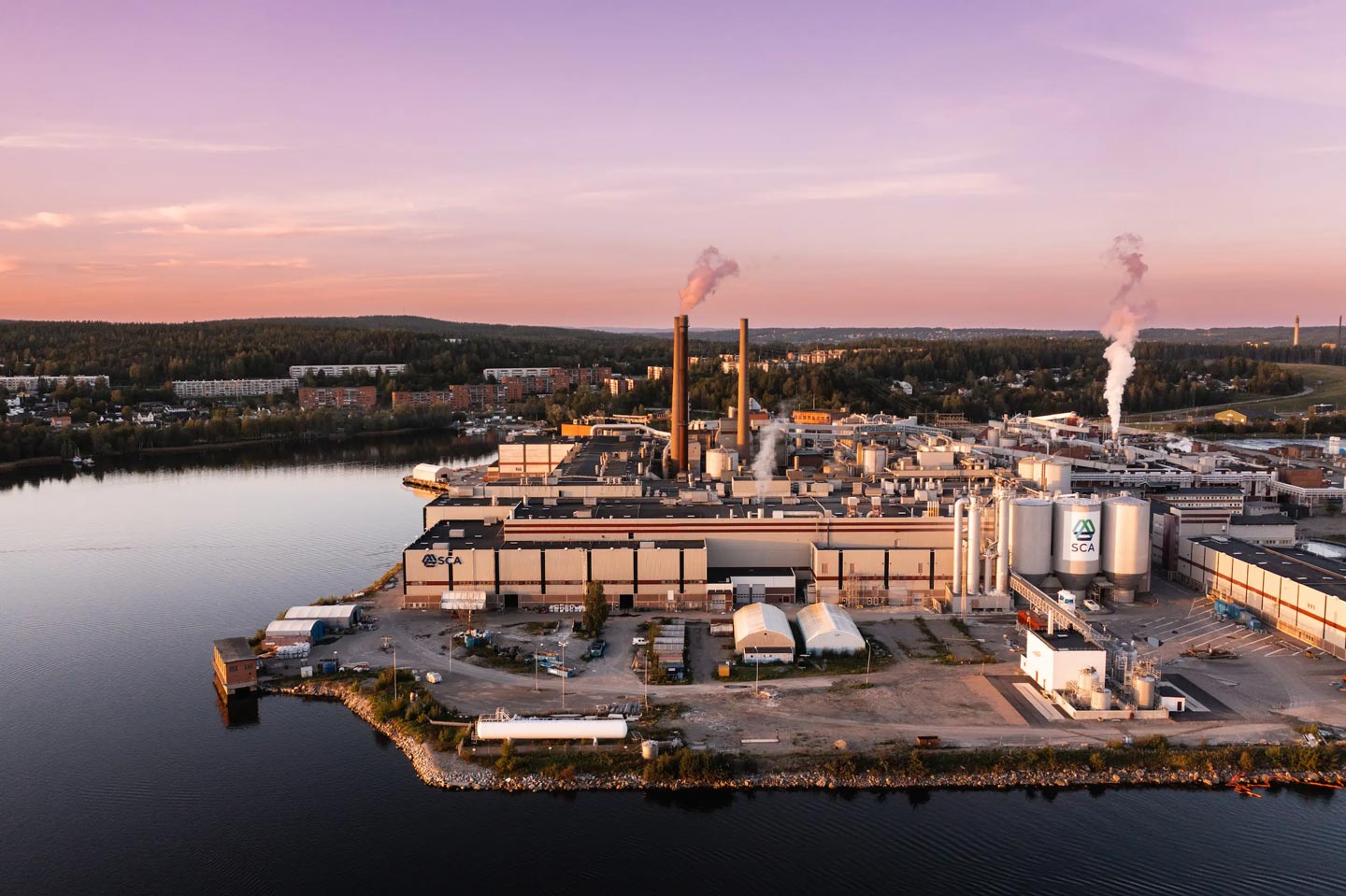
On the edge of Sundsvall, on Sweden's northern coast, an industrial site called Ortviken holds a 20,000-square-metre plant that spent the best part of three years doing very little. Few old T-shirts went in. Almost nothing came out. On 10 November 2026 the company that runs it, Circulose, said it is producing at commercial scale again: discarded cotton clothing goes in at one end and comes out at the other as sheets of pulp that can be spun into new fibre.
This is the same factory that ran out of money in February 2024, when its previous owner, Renewcell, filed for bankruptcy. It restarts with one difference that changes the arithmetic: this time the customers signed up before the machines were switched on. Sixteen fashion brands have committed to buying volume, among them H&M, Mango, Marks & Spencer, C&A and Tommy Hilfiger.
- What: the Ortviken plant, which the company describes as the world's first commercial-scale chemical textile recycling facility, is running again.
- How much: planned capacity of 60,000 tonnes of pulp a year, with room to double it later.
- Who is buying: 16 brands with volume commitments, plus three large fibre producers in China and India.
- Why it matters: according to the Ellen MacArthur Foundation, less than 1% of the material used to make clothing is recycled into new clothing.
- New leadership: chief executive Jonatan Janmark steps down on 1 December; chief financial officer Amanda Geijer takes over on an interim basis.
A factory that had to fail before it could start again
The story begins in 2012, when a group of innovators from Stockholm's KTH Royal Institute of Technology founded Renewcell. The idea was easy to explain and hard to pull off: dissolve used cotton down to pure cellulose, the same molecule that gives trees their structure, and sell it to the companies that make viscose and lyocell, fibres that today rely almost entirely on wood.
In 2022 the company opened its commercial plant at Ortviken, inside a former paper mill in an area with a long tradition in pulp and paper. For a while it looked like the future. Fibre makers Tangshan Sanyou (in 2021) and Lenzing (in 2022) signed agreements to buy up to 275,000 tonnes over five years, as Fortune reported. H&M was not only a customer but also the company's second-largest shareholder.
The orders never arrived at the promised pace. In 2023 Renewcell sold around 18,000 tonnes, far short of the 60,000 it could make and of what it needed to break even. Fibre made from its pulp cost almost a third more than conventional viscose, and fibre producers would only buy more if brands ordered more. Brands, for their part, were waiting for prices to fall. Nobody moved first.
We were building the plane, flying it and then the runway was getting short.
Tricia Carey, then chief commercial officer of Renewcell, speaking to Fortune
In January 2024 the company cut a quarter of its workforce. In February it filed for bankruptcy at Stockholm District Court, with debts of close to one billion Swedish kronor, according to the public broadcaster SVT. Its chairman at the time, Michael Berg, called it "a sad day for the environment", FashionUnited reported.
Four months later, in June 2024, the Swedish private equity firm Altor bought the remaining assets and renamed the business after its product: Circulose. "We don't shy away from a challenge and this one is worth taking," Altor principal Clara Zverina told Textile World.
Customers first, machines second
The new team did the opposite of the old one. In late 2024 Jonatan Janmark, a former McKinsey partner, became chief executive, and Helena Helmersson, who had run H&M Group, took the chair. The rule they set themselves was simple: not a single tonne without a buyer behind it.
When SVT visited Ortviken in March 2025, about 15 people were working at the plant and roughly ten more on the commercial side. Janmark said then that the lesson from the first attempt was not to start too fast and to lock in demand first. In the meantime, orders were filled from pulp that Renewcell had left in storage before it collapsed.
The list of brands grew slowly:
- December 2025: eight new names join H&M, Mango and Marks & Spencer: Bestseller, John Lewis, C&A, Filippa K, Reformation, Faherty, Bobo Choses and Zero.
- 16 February 2026: with 11 brands committed, Circulose announces it will reopen Ortviken in the fourth quarter.
- 14 October 2026: the Circulose partner network wins the Textile-to-Textile Ecosystem Award at Textile Exchange's Climate and Nature Impact Awards in Vancouver.
- 10 November 2026: the plant resumes commercial production with 16 brands on board.
The company's partners page now lists H&M, Bestseller, Mango, Reformation, Tommy Hilfiger, Marimekko, Marks & Spencer, Eileen Fisher, C&A, John Lewis, Filippa K, Bobo Choses, Samsøe Samsøe, King Louie, Faherty and Zero. On the other side of the chain sit three fibre makers: China's Tangshan Sanyou, India's Aditya Birla and China's Jilin Chemicals.
Our focus has been to align the production restart with confirmed demand. With commitments from 16 brands, and more on the way, we are now there.
Helena Helmersson, executive chair of Circulose

How an old T-shirt becomes a new one
The process looks more like a paper mill than a sewing room, which is why Sundsvall makes sense as a home. As Circulose describes it, there are five steps:
1. Discarded, cotton-rich textiles that can no longer be worn arrive at the plant, production offcuts among them.
2. They are shredded, stripped of dye and turned into a wet slurry.
3. Contaminants such as polyester from blended fabrics are removed. What remains is cellulose.
4. The slurry is dried into sheets, which are packed into bales.
5. The bales go to fibre producers, who turn them into viscose, lyocell, modal or acetate. That fibre becomes yarn, then fabric, then garments that can one day be recycled again.
The difference from more common recycling lies in what comes out. When clothes are shredded mechanically, the fibres get shorter and weaker, and they often end up as stuffing or insulation. The chemical route breaks cotton down to its base molecule, so the fibre that results matches virgin quality. That is why the industry talks about "textile-to-textile" recycling: the T-shirt becomes clothing again, not a rag.
Along the fashion supply chain, that distinction counts. According to the latest Textile Exchange market report, global fibre production hit a record 139 million tonnes in 2025, up from 132 million the year before. Among companies reporting to the organisation, only about 1.5% of recycled polyester came from textiles; most came from plastic bottles. Turning clothes back into clothes is still the exception.
The problem it is trying to solve
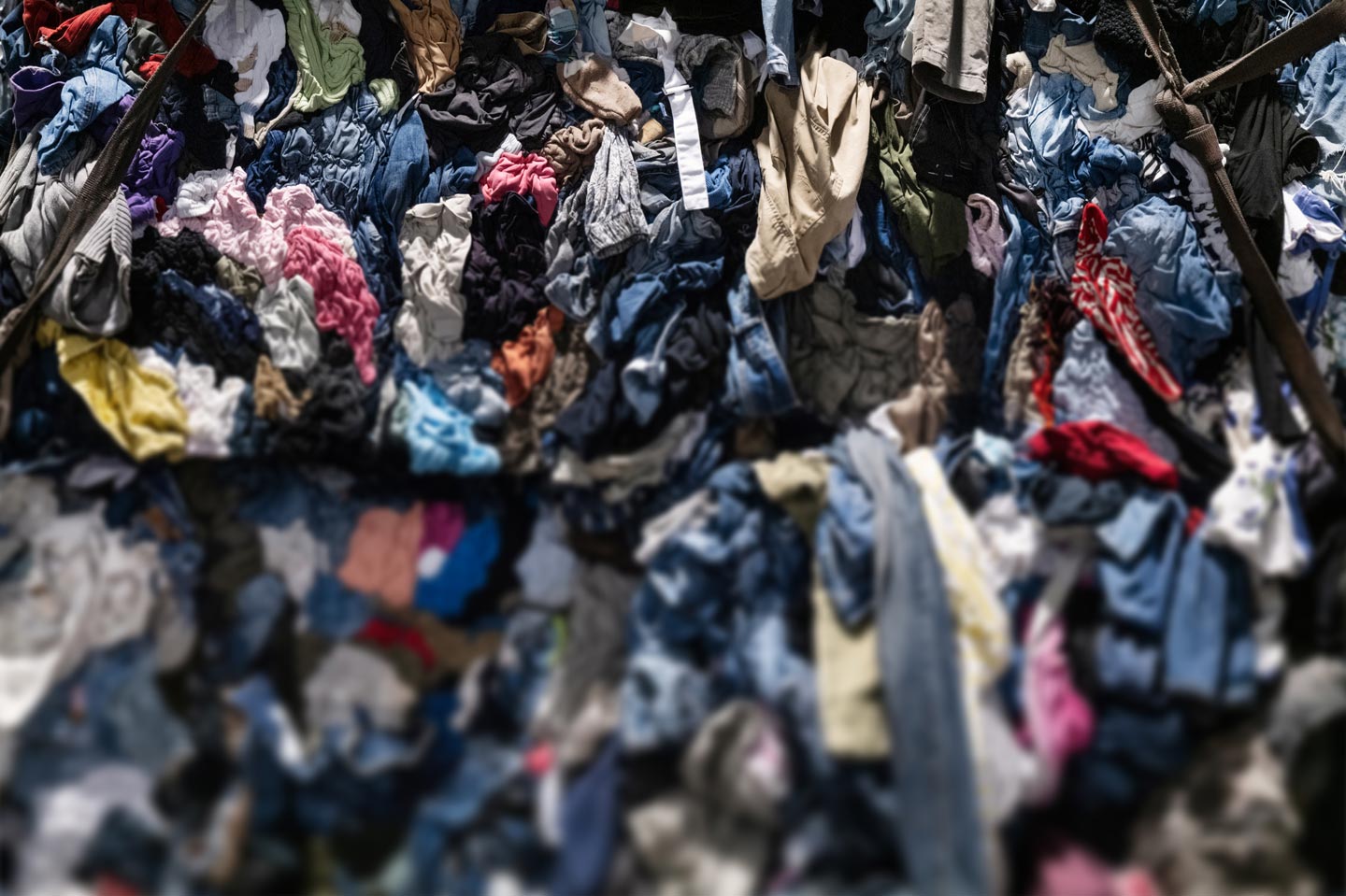
The background figures explain why the restart of one Swedish plant matters far beyond Sweden. In 2017 the Ellen MacArthur Foundation published A New Textiles Economy, a report that has become a reference point for the industry. Its findings were blunt: less than 1% of the material used to produce clothing is recycled into new clothing, and the equivalent of one rubbish truck of textiles is thrown away every second. The report estimated that around 500 billion dollars' worth of material value is lost each year.
Europe has its own numbers. According to the European Environment Agency, each EU resident bought about 19 kilograms of clothing, footwear and household textiles in 2022, up from 17 kilograms in 2019. The bloc generated 6.94 million tonnes of textile waste that year, about 16 kilograms per person, and 85% of what households threw away was not collected separately. It went into mixed rubbish, bound for landfill or incineration.
Regulation is now pushing in the same direction as Ortviken. The revised Waste Framework Directive, given final approval by the European Parliament on 9 September 2025 and in force since 16 October that year, requires EU countries to set up extended producer responsibility schemes for textiles within 30 months, according to the European Parliament. In plain terms, brands will have to pay to deal with the clothes they sell once those clothes become waste. It follows the same logic that led Brussels to ban the destruction of unsold clothing and footwear, a rule we covered earlier.
For those laws to mean anything, all that collected clothing needs an industrial destination. Repair and second-hand extend the life of garments, as the more than 4,000 Repair Cafés now running worldwide show, but when a T-shirt is too worn to wear again, the alternative to landfill has to be a plant like the one in Sundsvall.
What still has to be proven
A restart does not guarantee success. The plant now has to reach its planned capacity of 60,000 tonnes a year, which the company believes it could double over time. That pace depends on the 16 brands honouring their commitments and on fibre producers turning the pulp into yarn at prices the market will accept. That is exactly where Renewcell came unstuck.
Supply is another open question. Circulose needs large volumes of cotton-rich clothing, and polyester blends, common in cheap fashion, complicate the job because that plastic has to be separated out before the cellulose can be recovered. Europe's new collection obligations should increase the supply of feedstock in the coming years.
On the human side, the company now has about 130 people, according to its announcement. That is a big step up from the 15 who kept the plant ticking over in 2025, and Janmark told SVT at the time that the factory alone would employ around 90 once fully running.
Janmark's departure comes just as the plant starts up again. He explained it in the company's statement: "With confirmed market demand for our product, a strong team in place, and a plant ready for production, the time has come for me to hand over." Helmersson thanked him for making Circulose "a leading player in textile-to-textile recycling again" after the company had been given "a second chance".
Restarting Ortviken is a milestone for Circulose and for the industry. Our focus now is to ramp up production safely and deliver on the commitments to our customers.
Amanda Geijer, interim chief executive of Circulose
Amanda Geijer joined Circulose as chief financial officer in 2025, after serving as vice president of finance at Billerud Europe, another paper-industry company. She takes charge on 1 December until the board appoints a permanent successor.
Ortviken is not the only piece moving towards a cleaner textile industry. In recent months a 400-million-dollar fund to decarbonise textile factories has been set up in the countries that clothe the world, and clean power keeps gaining ground: in 2025 renewables overtook coal in global electricity generation. A plant that turns waste into raw material fits the same transition.
The detail you might not know
Viscose and lyocell, two of the fibres made from Circulose pulp, are classed as "man-made" fibres, but they are not plastic. They are made of cellulose, the same substance found in wood, cotton and almost every green plant. That is why an old cotton T-shirt can take the place of a tree in the production chain: the industry usually extracts that cellulose from wood, and at Ortviken it is recovered from clothes nobody wants any more.
Further reading
- Circulose's announcement on the Ortviken restart (10 November 2026)
- The Ortviken plant in figures, on the Circulose website
- A New Textiles Economy, the Ellen MacArthur Foundation report
- The European Environment Agency on record textile consumption in the EU
- FashionUnited's coverage of the restart
- _Textile World_'s coverage of the restart
Go further
 YouTube · ValmetRenewcell - Changing the global textile industry for the better
Vídeo sobre el proyecto original de Renewcell y cómo convierte la ropa usada en pulpa.
- Web · CirculoseCirculose resumes recycling of discarded cotton textiles and appoints interim CEO
El comunicado oficial del reinicio, con las declaraciones completas de la dirección.
- Web · CirculoseMade in Sweden: la fábrica de Ortviken
Datos de capacidad, tamaño y ubicación de la planta.
- Web · Fundación Ellen MacArthurA New Textiles Economy: Redesigning Fashion's Future
El informe que puso cifras al desperdicio textil mundial y propuso cómo cerrar el círculo.
- Web · Agencia Europea de Medio AmbienteConsumption of clothing, footwear and other textiles in the EU reaches new record high
Cuánta ropa compran y tiran los europeos, con datos oficiales.
- Web · SVT VästernorrlandOmstart för textilåtervinning i Sundsvall
Reportaje local (en sueco) sobre cómo se preparó el regreso de la fábrica.
- Web · FortuneThis startup vowed to help fashion go green. Brands didn't want to pay
Explica por qué quebró Renewcell y qué lecciones aplicó después Circulose.
Sources
- Circulose resumes recycling of discarded cotton textiles and appoints interim CEO (Circulose, 10/11/2026)
- Circulose Resumes Recycling Of Discarded Cotton Textiles And Appoints Interim CEO (Textile World)
- Circulose restarts commercial-scale textile recycling production, names interim CEO (FashionUnited)
- Made in Sweden - Ortviken (Circulose)
- Partners (Circulose)
- Textile Exchange awards Circulose the Textile-to-Textile Ecosystem Award (Circulose)
- Circulose reopens Sundsvall factory following strategic restructuring (FashionUnited)
- Omstart för textilåtervinning i Sundsvall (SVT)
- Renewcell bankruptcy (Fortune)
- H&M-backed textile recycler Renewcell files for bankruptcy (FashionUnited)
- Altor acquires remaining assets of Renewcell (Textile World)
- EEA: textile consumption record high
- A New Textiles Economy (Ellen MacArthur Foundation)
- Revision of the EU Waste Framework Directive (European Parliament)
- Textile Exchange reports progress in production (Resource Recycling)





