


 Have a great day, y'all!
A Cork village lost five pubs. Then its neighbours paid €380,000 to save the last one
In Cullen, a Duhallow parish of about 400 people, 38 shares of €10,000 each bought the village's only bar and reopened it in August as Laiti's, with farmers and tradespeople doing the renovation for free.

Con Houlihan is 72 and has been playing the bagpipes for most of his life. In August he put them to a use he had not tried before: he walked at the head of a small crowd down the road in Cullen, in north-west Cork, and piped his neighbours through the door of a pub they now own.
The bar is called Tigh Laitiarain, or Laiti's to anyone who drinks there. It had been the last pub standing in a place that once had five, along with three shops, a creamery, a petrol station and a post office. All of those had gone. When the final set of lights went off, a parish of roughly 400 people was left without anywhere to meet that wasn't a church, a pitch or somebody's kitchen.
Houlihan, who leads the Cullen Pipe Band, did not reach for understatement. He described the reopening to the Irish Examiner as "absolutely revolutionary".
- 38 shares of €10,000 each raised €380,000; some were bought outright, others pooled by friends and families.
- The group paid €290,000 for the premises and licence, plus €10,800 in stamp duty and just over €4,000 in legal fees.
- Local farmers, electricians, plumbers and carpenters renovated the bar without charge.
- Cork County Council contributed a €10,000 grant towards a new cooling room and beer lines.
From a meeting in November to a pint in August
The idea took shape last November. The pub, previously known as Fleming's Tavern, had been put up for sale with an adjoining four-bedroom house at an asking price of €300,000, and a handful of residents started asking whether the parish could buy it.
Damian Hickey, one of the organisers, made the case at the time in terms that had little to do with drink. The previous owner had done good trade, he said, so the business could pay its way. What worried him more was what the closure was doing to older people. A group of eight or nine men in their seventies used to gather in the bar for cards and conversation, and since the doors shut they had nowhere to go. Hickey also wanted a place where younger people could meet.
Before committing any money, the organisers did something sensible: they phoned people who had already done it. Two communities had recently bought their own last pubs, Dromid in south Kerry and Kilteely in east Limerick, and Cullen asked both for advice.
Then they built a structure. Rather than a loose fundraising drive, the residents set up a limited company with five directors, Damian Hickey, Frankie O'Sullivan, Linda Ryan, John Walsh and Martin Collins, and sold shares at €10,000 each. The Irish Examiner counted 38 named shareholders; because many shares were split between relatives and friends, the paper reported that around 70 people had put money in.
One of those investors is Joe Crowley, 77. He and a friend each put in €5,000 to make up a single share. It is not his first pub rescue: he told the paper he had been part of a similar effort in north London in 1987. Asked about the risk, he was blunt. If the money was lost, he said, he would not give a damn.
That attitude runs through the whole project. Its own backers describe it as a social venture first and a business second. The shareholders accept the financial risk, but the return they are mainly after is a room with a fire, a television and people in it.

Help came from further afield too. Hickey credited John O'Connor of the Idle Hour, a well-known pub in Cork city, with advice and introductions to people in the trade. O'Connor put the group in touch with Tom Barry of Old Quarter accountants in Ballincollig, who set up the company in three weeks at a reduced fee. Guinness and Heineken sponsored the fit-out. "They've been unbelievable," Hickey told The Echo.
The real labour, though, was local. Director Linda Ryan said farmers, electricians, plumbers and carpenters from the parish gave their time to get the building ready. About €24,000 went on what the group describes as an eco-friendly cooling room and new beer lines, with Cork County Council covering €10,000 of that through a grant.
The momentum has been fantastic. People want to reconnect with traditional values.
Linda Ryan, director of the Cullen pub company, speaking to The Echo
Why one bar matters in Duhallow
Cullen sits in the barony of Duhallow, a few miles east of the Kerry border and north-west of Millstreet, in rolling farmland drained by the Owentaraglin River. The village itself is tiny; the Irish Examiner put its population at under 100, with about 400 in the wider parish. It has a GAA club, a national school and crèche, a community centre, a Tidy Towns group and the pipe band. According to Wikipedia's entry on the village, the band dates back to the 1940s, and the area is home to St Laitiaran's holy well. The new pub takes its name from that saint, whose pattern day the parish still marks every July with Féile Laitiarain.
The surrounding district shows how thin the rural pub map has become. When the plan was first floated, the Mayor of County Cork, Bernard Moynihan, who lives in nearby Kiskeam, listed the losses from memory: Knocknagree had seven pubs a decade ago and now has two, one of them open only at weekends; Boherbue is down to one; Banteer and Rathcoole have none. "A community without a pub loses a bit of its soul," he said at the time.
The national numbers tell the same story at scale. A report written for the Drinks Industry Group of Ireland by economist Anthony Foley, emeritus associate professor at Dublin City University, found that 2,205 pubs have closed since 2005, more than one in four. There are now 6,412 active pub licences in the State. Every county recorded a fall. Limerick lost 37.2% of its pubs, Offaly 34.1% and Cork 32.7%, while Dublin's numbers barely moved.
Cork's figure is worth pausing on. An earlier edition of the same research, reported by the Irish Examiner's business desk in 2025, counted 1,221 pubs in the county in 2005 and 822 two decades later: 399 fewer. Most of those were not city bars. They were the kind of place Cullen had just lost.
The industry's own explanation centres on excise duty and running costs, and its lobby group has argued for a tax cut. That is a policy debate with more than one side. What is less contested is the pattern the same report described in 2025: closed rural pubs, as the group's secretary Donall O'Keeffe told The Irish Times, rarely reopen. Cullen's has.
A quiet movement across Munster
Cullen did not invent the idea. It is the latest in a short line of Irish communities that have decided the local pub is too important to leave to the market.
In Dromid, an Irish-speaking parish of just over 400 people on the Iveragh Peninsula in Co Kerry, the community enterprise body Forbairt na Dromoda took over the Inny Tavern in 2025. A GoFundMe campaign raised €108,405 from 792 donors, comfortably beating its €100,000 target, and the rest came from about €20,000 of the group's own funds and a 15-year bank loan, according to the Irish Examiner. "We have helped to show people what they can achieve if they put their minds to something," said the group's manager, Emir Ní Mhurchú.
In Kilteely, Co Limerick, a village of 214 people, 26 locals bought Ahern's, a pub about 150 years old, for €300,000 and reopened it as The Street Bar in the summer of 2025. Among the new owners were a barrister, a dairy farmer, a carpenter and a gardener, and none had run a bar before. The group has since added a butcher's counter for the village, and a short documentary about them, The Pub That Refused to Die, directed by the Galway film-maker Gar O'Rourke, premiered at the Dublin International Film Festival in February 2026. One of the co-owners, gardener Noel O'Dea, offered a line that could be Cullen's motto: don't leave your local's future in someone else's hands.
The three villages share a model, more or less. A small group of residents does the legwork, a company or community body owns the asset, and dozens of households put in money they can afford to lose. Professional help is borrowed from people who have done it before, and the hours of physical work come free from neighbours with trades.
Readers of this site may notice the echo in other stories we have covered from rural Ireland, from the Donegal and Mayo farmers who changed how they mow to bring back the corncrake to the folk song about the vanishing curlew that won twice at the RTÉ Folk Awards. The common thread is local people deciding something is worth keeping and organising to keep it. Elsewhere, the fishermen's guild of Llanes in Asturias has shown how long a community institution can last when the people who use it also run it.

Inside Laiti's, the day-to-day running falls to bar manager Áine Breen, who is 27, holds a law degree and previously taught in Dubai. She said she was drawn by the passion behind the project and its community focus. The opening hours are modest: 5.30pm on weekdays, 3pm on Saturdays, earlier if an important match is on the big screen, and 12.30pm on Sundays.
The diary is already filling. The organisers have planned work parties, 45 card drives, table quizzes, bingo, pool tournaments, karaoke and family events, including a Taylor Swift dance party for children. The card players Hickey worried about last November have their table back.
Nobody involved pretends one bar fixes everything. Derek Morley of the local Tidy Towns group hopes the pub will be the start of a wider regeneration, but he also pointed to the young people who left after being refused planning permission to build homes in the area. "A generation has been lost here because of this," he told The Echo. Pat Fleming, who chairs the Féile Laitiarain committee, called the pub a shared vision that gives the parish hope, and suggested subsidised taxis so older people in scattered townlands can get to it and home again safely.
Other pieces are moving. The local GAA club is redeveloping its grounds and has lodged a planning application for a community shop there, which would give Cullen its first shop in years. Moynihan, the mayor, believes remote working is part of the shift: people who no longer commute to Cork or Killarney have more hours to give to projects at home.
The shareholders are clear-eyed about the business side. Hickey's argument from the start was that the previous owner traded well, so a well-run bar can cover its costs. If it does, the €380,000 stays in a building the parish owns. If it does not, the investors, by their own account, have already priced that in.
The detail you may have missed
The day Con Houlihan piped his neighbours into Laiti's, his band was a week away from its own big date. The Cullen Pipe Band, which the Irish Examiner reports took a world title in 2007, was preparing to compete at the World Pipe Band Championships in Glasgow on 15 August. They made it to the Grade 4A final.
Twenty years ago, after the band finished fourth in Glasgow in 2006, Houlihan called the Worlds "the Olympics of piping". This summer the parish managed to get both its band to Glasgow and its pub back open. Ask most villages of 400 people and they would settle for either.
Further reading
- Irish Examiner: 'Phenomenal' support for owners after Cork residents buy last pub in village
- The Echo: 'We bought our local pub': The little North Cork village that could
- Drinks Ireland: One quarter of Irish pubs have closed since 2005
- Irish Examiner: Kerry village buys the local pub rather than let it disappear
- The Positive Way: A village of 12,000 took in 36,000 refugees. Its chief just won the Nansen Award
Go further
 YouTube · Life FM RadioLaiti's Pub - Saving Cullen's last pub
The Cullen organisers explain in their own voices why a parish of 400 decided to buy its bar.
 YouTube · RTÉ NewsAlmost 2,000 pubs have closed in Ireland since 2005
The national picture behind the Cullen story, in a short RTÉ News report.
 YouTube · Crazy RedGrade 4A Final - Cullen Pipe Band @ World Pipe Band Championships 2026
The village pipe band that piped the first customers into Laiti's, playing in Glasgow a week later.
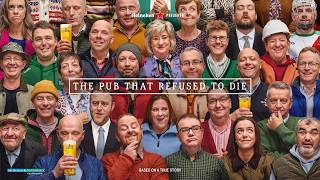 YouTube · Heineken (dir. Gar O'Rourke)The Pub That Refused to Die
A ten-minute documentary on Kilteely, Co Limerick, one of the villages Cullen asked for advice; note it was funded by a brewer.
- Web · Drinks Ireland / IbecOne quarter of Irish pubs have closed since 2005
County-by-county figures from the 2026 report by economist Anthony Foley; Cork lost almost a third of its pubs.
- Web · Irish ExaminerSomething to celebrate: Kerry village buys the local pub rather than let it disappear
How Dromid, a Kerry Gaeltacht parish, crowdfunded more than €108,000 for the Inny Tavern.
Sources
- 'Phenomenal' support for owners after Cork residents buy last pub in village (Irish Examiner, 10 Aug 2026)
- 'We bought our local pub': The little North Cork village that could (The Echo, 24 Aug 2026)
- Cork residents plan to buy last pub in village (Irish Examiner, 8 Nov 2025)
- One quarter of Irish pubs have closed since 2005 (Drinks Ireland, 31 Aug 2026)
- More than 2,000 pubs have closed since 2005 (The Irish Times, 14 Jul 2025)
- Kerry village buys the local pub rather than let it disappear (Irish Examiner, 19 Sep 2025)





