


 Have a great day, y'all!
Ecuador pays 142.8 million dollars to dialysis clinics in 2026
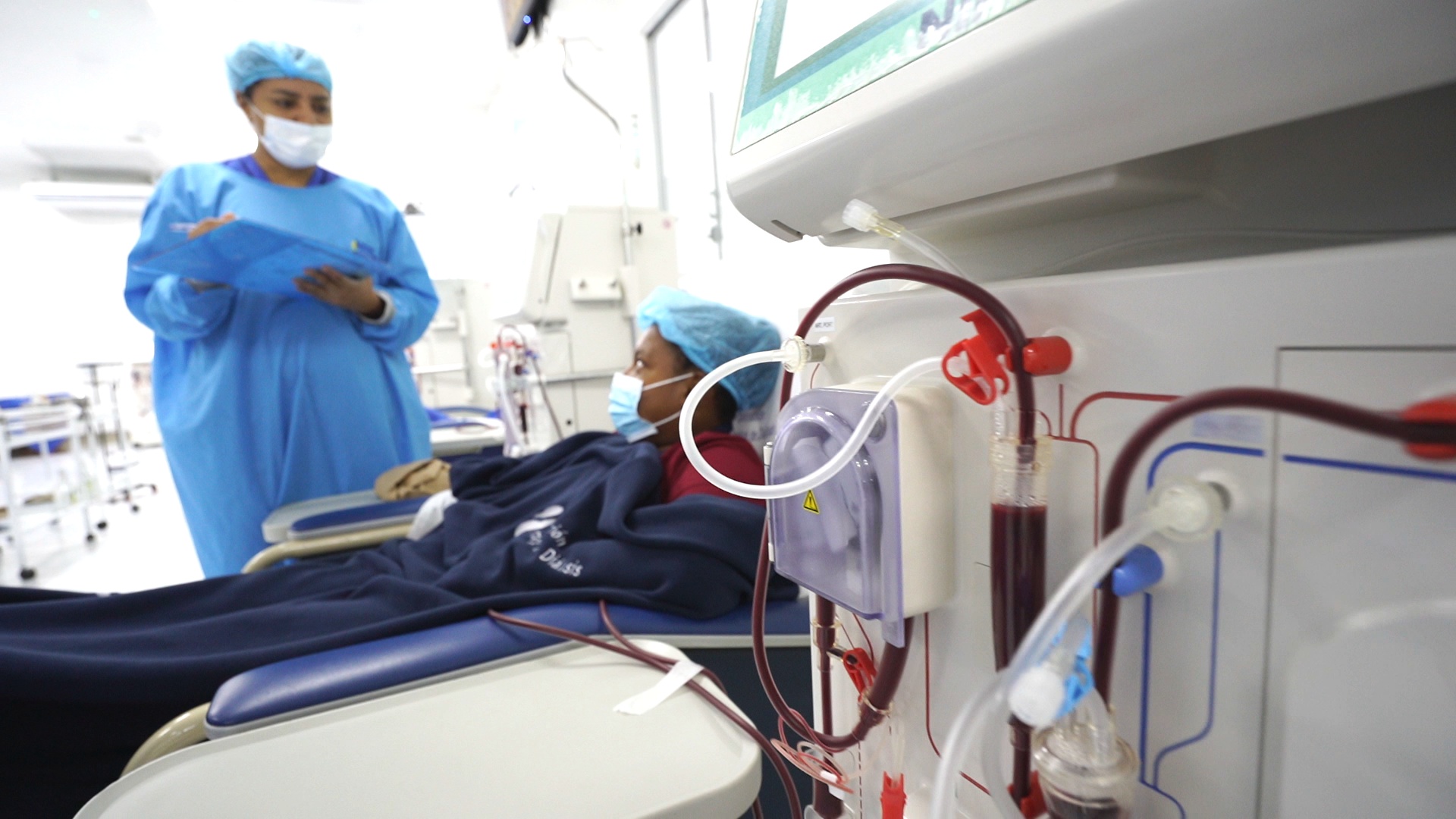
Ecuador's Ministry of Public Health credited more than 142.8 million dollars to private dialysis providers during 2026, including 31.2 million paid between September and November alone, to keep treatment running for more than 10,000 people with kidney disease.
Key points
- The Ministry of Public Health (MSP) paid more than USD 142.8 million to private dialysis centers during 2026.
- Of that total, USD 31.2 million was credited just between September and November.
- More than 10,000 people receive hemodialysis, peritoneal dialysis or hemodiafiltration in Ecuador.
- The state runs 25 of its own centers; when they reach capacity, patients are referred to private clinics under contract.
- The announcement follows years of payment delays that triggered protests from patients and clinics.
What the government paid, and to whom
On November 11, the Ministry of Public Health reported that it had credited more than USD 142.8 million this year to external dialysis service providers. The ministry specified that, in the period between September and November alone, the accumulated amount reached USD 31.2 million. According to the official statement, the disbursements cover pending obligations the state owed these facilities for care already delivered to patients.
The figure is not a new bonus or a freshly created program. It is payment for services that private clinics had already provided to people with kidney disease, under agreements in force with the public health system. In other words, the money closes a gap between what the state owed and what it had actually transferred to providers.
The mechanism itself is not new: for several years, the Ministry of Health has contracted external providers to cover dialysis demand that its own hospitals cannot meet in every province. That mixed public-private model runs on agreements that set per-session rates and payment deadlines, and it is precisely compliance with those deadlines that has caused friction at different points over the past decade. The payment also lands in a year in which the government has had to balance social spending against the constraints of dollarization, the monetary regime that keeps the central bank from printing money to cover fiscal gaps. A disbursement of this size effectively competes with other items in the Ministry of Finance's budget, which helps explain why payments to dialysis providers have not always arrived within the deadlines set by their contracts.
The newspaper El Comercio independently confirmed the same figures, citing the official MSP report, which allows the amount released by the health ministry to be checked against what the press reported. The specialized outlet ConsultorSalud also reproduced the announcement with identical numbers.
Who treats kidney patients in Ecuador
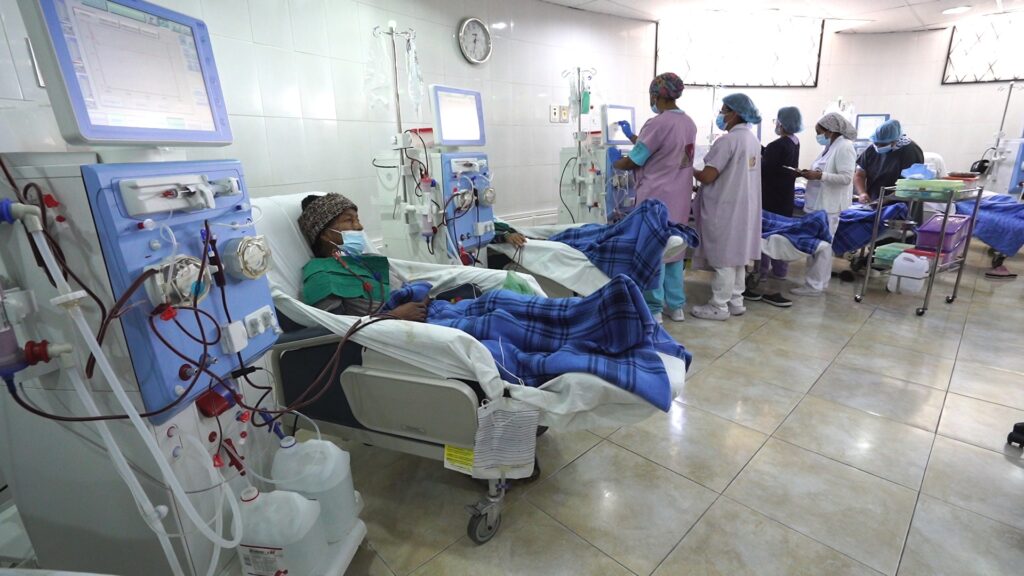
The MSP explained that it operates 25 facilities of its own where dialysis treatments are carried out. When that capacity is not enough to cover demand in a given area, patients are first referred to other units of the Comprehensive Public Health Network and, if space is still unavailable there, to providers in the Complementary Private Network that hold a valid agreement with the state.
That mechanism explains why a significant share of dialysis spending ends up with private clinics and international operators such as DaVita, which has operated in the country for years. These centers, in practice, sustain much of the care for the more than 10,000 patients who currently receive hemodialysis, peritoneal dialysis or hemodiafiltration in Ecuador, according to the figure the ministry released alongside the payment announcement.
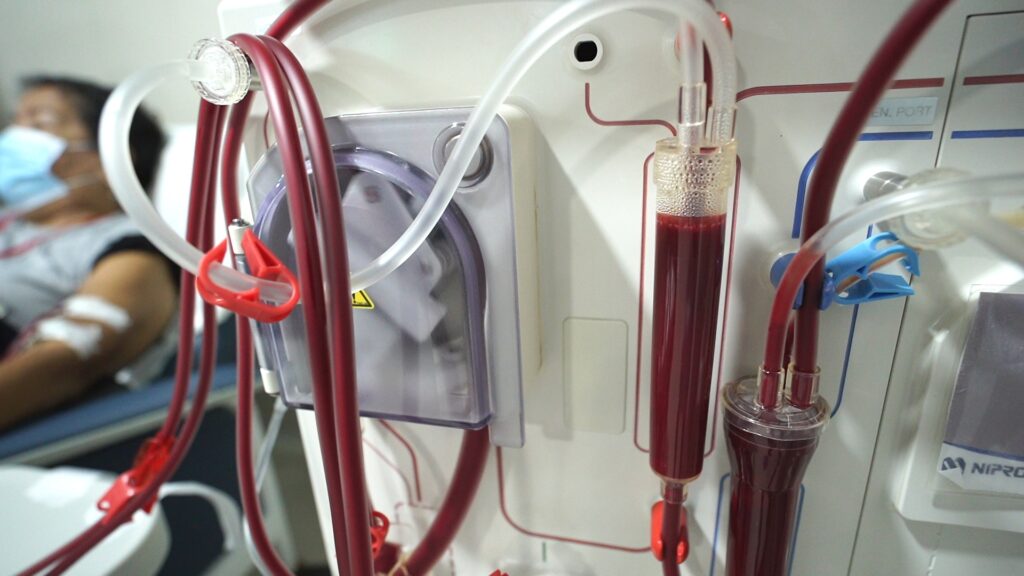
The three methods are not interchangeable. Hemodialysis, the most common, requires the patient to connect to a machine that filters their blood for several hours, typically three times a week, at a specialized center. Peritoneal dialysis, by contrast, can be done at home, with a daily fluid exchange through an abdominal catheter, though it still depends on supplies the health system must guarantee. Hemodiafiltration, the third method the MSP mentions, combines filtration with blood purification and is usually reserved for specific clinical profiles. None of the three tolerates a long interruption without risk to the patient.
Chronic kidney disease is not cured with a single session: people living with it need several connections to a machine every week, indefinitely, unless they receive a transplant. That makes these patients especially sensitive to any delay in state payments to the clinics that treat them, because a prolonged delay can translate into fewer supplies, less staff or more spaced-out appointments.
Background: years of tension over delayed payments
The relationship between the state and dialysis clinics has not always been as smooth as November's announcement suggests. In previous years, several associations of hemodialysis centers publicly denounced prolonged payment delays, at times warning they might have to restrict care if the debt was not settled. Those complaints led to patient protests in Quito and Guayaquil, demanding that the Ministry of Health and the Ecuadorian Social Security Institute (IESS) catch up with providers.
To gauge the scale of the problem November's announcement aims to address, it helps to look at an earlier El Comercio report, which documented an accumulated Ministry of Health debt to dialysis clinics of close to USD 160 million, with delays that, according to the clinics themselves, had stretched beyond fourteen months. That report also cited a broader figure: more than 17,000 people depended on some form of dialysis treatment in the country at the time, within an estimated universe of roughly two million Ecuadorians living with some degree of kidney disease. Those figures are not directly comparable to the November 2026 numbers, since they come from different measurements and different moments in the health system, but they illustrate the scale of the problem the government says it is now addressing.
Against that backdrop, on September 30, 2026, the government confirmed a working meeting with representatives of DaVita Ecuador. President Daniel Noboa, Secretary of Public Administration José Julio Neira, and Minister of Public Health Juan Carlos Aveiga took part. According to the official statement from that date, the meeting sought to map out a plan to keep dialysis treatments running without interruption, though the text did not detail specific commitments at the time.
The USD 31.2 million paid between September and November, announced six weeks later, overlaps with that period of engagement between the executive branch and one of the sector's main private operators. The available statements do not spell out a direct causal link between the two events, but they do show a sequence: first the working meeting, then the disbursements.
What it means for patients, and what remains unresolved
For someone with chronic kidney disease, whether the state is up to date with the clinic that treats them is not an abstract administrative detail: it determines whether their next dialysis session runs normally or faces delays, fewer supplies, or the need to find another provider. The MSP's announcement does not mean the entire historical debt has been settled, and it does not specify how much is still owed to dialysis providers or exactly which clinics received the funds.
It is also worth clarifying a point that often causes confusion in coverage of this issue: the USD 142.8 million corresponds specifically to payments from the Ministry of Public Health, the agency that serves people without social security or enrolled in the general public system. The Ecuadorian Social Security Institute, which covers affiliated workers and their families, manages a separate budget and a separate debt with the same dialysis clinics, with figures not included in November's announcement. That is why earlier references to a combined debt of close to USD 160 million were adding together obligations from both institutions, while the recent MSP payment covers only its own share of the problem. That distinction matters because it means an additional debt on the IESS side may still exist that this announcement does not resolve.
It is also not yet known whether there is a public payment schedule that would let patients and clinics anticipate whether disbursements will keep arriving at the same pace in coming months. The ministry's November statement did not say whether a fixed calendar exists or whether payments still depend, as in the past, on the state's available cash. Patient organizations have previously asked the health ministry to publish an updated record of the outstanding debt owed to each clinic, so that monitoring does not rely solely on occasional statements like the one issued in November. As of this report, no such public document tied to the USD 142.8 million announcement has been identified.
None of this diminishes the practical weight of the payment itself. For a dialysis clinic operating on thin margins, USD 31.2 million arriving over three months can be the difference between keeping full staffing levels and cutting back on nursing shifts or delaying equipment maintenance. For a patient, it can be the difference between a scheduled session that happens on time and one that gets pushed back while a clinic waits for funds to buy filters or dialysate solution. Numbers of this size rarely make for dramatic headlines, but they translate directly into whether a treatment chair is staffed on a given Tuesday afternoon.
What this episode does leave is a concrete reference point: in barely three months, the Ecuadorian state channeled more than USD 31 million toward a sector that, at other points this decade, warned of risks to patient care over unpaid bills. For the more than 10,000 patients who depend on that circuit, the difference between a quarter with on-time payments and one without can show up directly in the quality of care they receive.
The case also fits into a year in which the government has used other targeted relief mechanisms, such as advancing the public sector's year-end bonus, or deferring loan installments for people hit by El Niño. In rural health care, other recent initiatives, such as the delivery of wheelchairs in Bolívar province, show a similar pattern of addressing concrete medical needs with targeted resources.
For those following this issue closely, the open question is not whether the state paid these 142.8 million dollars, a fact confirmed by the ministry itself and by independent outlets, but whether that pace of payments holds through 2027, and whether it will be enough to keep clinics from once again warning about possible restrictions on care.
For now, the ministry's own numbers are the clearest public record available of how the state is handling this long-running obligation.
Further reading
- Official Ministry of Public Health statement on payments to dialysis providers
- Official statement on the September 2026 meeting with DaVita Ecuador
- El Comercio's coverage of the USD 142.8 million payment
- ConsultorSalud's coverage of the same announcement
- Ecuadorian Social Security Institute website
- DaVita corporate website
Go further
- Web · Gobierno del EcuadorMinisterio de Salud Pública del Ecuador
Portal oficial donde se publicaron los comunicados sobre los pagos a las dializadoras.
- Web · Gobierno del EcuadorPresidencia de la República del Ecuador
Sitio oficial de la Presidencia, que encabezó la reunión de septiembre con DaVita Ecuador.
- Web · DaVitaDaVita Inc.
Página corporativa del operador internacional que presta servicios de diálisis en Ecuador.
- Blog · ConsultorSaludEcuador paga más de USD 142,8 millones a dializadoras en 2026
Cobertura especializada en salud que recoge el mismo anuncio del Ministerio de Salud.
- Web · IESSInstituto Ecuatoriano de Seguridad Social
Entidad que también financia tratamientos de diálisis para sus afiliados.
- Web · Grupo El ComercioEl Comercio
Diario que verificó de forma independiente las cifras del Ministerio de Salud.
Sources
- Gobierno de Daniel Noboa paga más de USD 142,8 millones a dializadoras para respaldar la atención de pacientes renales
- Gobierno pagó 142,8 millones de dólares a centros de diálisis en Ecuador
- COMUNICADO: Gobierno del presidente Noboa genera compromisos con DaVita Ecuador en beneficio de pacientes renales
- Ecuador paga más de USD 142,8 millones a dializadoras en 2026 para la atención de pacientes renales





