


 Have a great day, y'all!
Trachoma eliminated in Eritrea: eyelashes no longer scrape the eye
Trachoma, the leading infectious cause of blindness, is no longer a public health problem in Eritrea, the WHO confirmed on 16 November. It is the 34th country.

Trachoma is no longer a public health problem in Eritrea. The World Health Organization confirmed it on Monday 16 November 2026, after an independent panel went through the evidence the country had gathered over almost two decades of surveys, eyelid operations and antibiotic campaigns.
That makes Eritrea the 11th country in the WHO African Region, and the 34th worldwide, to clear this hurdle against the world's leading infectious cause of blindness.
- What happened: on 16 November the WHO validated Eritrea's elimination of trachoma as a public health problem.
- How long it took: baseline surveys from 2006 to 2020, every one of the country's 58 districts checked, and the SAFE strategy rolled out wherever the disease was endemic.
- Who helped: the Ministry of Health, the Fred Hollows Foundation, and azithromycin donated by Pfizer through the International Trachoma Initiative.
- The global picture: the number of people needing trachoma interventions has dropped from about 1.5 billion in 2002 to under 100 million by late 2025.
It has been a busy year for this disease. In January the WHO counted 27 validated countries. By September its fact sheet listed 33, including Algeria, Australia, Libya, Tunisia, Timor-Leste and El Salvador, which in July became the first trachoma-free country in Central America. Eritrea now closes out the year's run.
A bacterium that hides under the eyelid
Trachoma is caused by the bacterium Chlamydia trachomatis. It passes from person to person through discharge from the eyes and nose, carried on hands, clothes, bedding or hard surfaces. Some flies that land on people's faces ferry it from one child to the next.
The infection usually starts early. In parts of the world where it is endemic, up to 90% of pre-school children have active trachoma, according to the WHO fact sheet. Most transmission happens within families, and crowded homes, scarce water and a lack of toilets all help it spread.
The real damage builds up over years. Each infection leaves a small scar on the inside of the eyelid. Enough scars and the lid turns in, so the eyelashes scrape the eyeball with every blink. Doctors call this stage trachomatous trichiasis. It hurts, makes light unbearable and, left alone, scratches the cornea until it clouds over.
Sight usually starts to fail between the ages of 30 and 40, though in the hardest-hit communities it can happen in childhood. The WHO estimates that about 1.9 million people are blind or visually impaired because of trachoma, roughly 1.4% of all blindness worldwide.
One pattern repeats everywhere. Women are blinded by trachoma up to four times as often as men, the WHO says, most likely because they spend more time caring for young children, the main reservoir of the bacterium. The International Coalition for Trachoma Control puts it another way: women are 1.8 times more likely than men to need trichiasis surgery.

Four letters against blindness
Eritrea followed the approach the WHO has backed for decades, known by the acronym SAFE:
- S for surgery: an eyelid operation that stops the lashes rubbing the eye.
- A for antibiotics: mass treatment with azithromycin to wipe out infection across a whole community.
- F for facial cleanliness: washing faces, especially children's, so there is no discharge left to spread the bacterium.
- E for environmental improvement: water and sanitation, so people can wash and there are fewer flies.
Sightsavers, one of the charities that runs SAFE programmes, notes that antibiotics are usually handed out in mass campaigns, often once a year for three years or more. Surgery is aimed at individuals whose lashes have already turned, and it is the only thing that stops trichiasis from ending in blindness.
How Eritrea got there
Eritrea sits in the Horn of Africa on the Red Sea, with its capital in Asmara. The landscape swings from hot coastal plains to highlands that top 3,000 metres at Emba Soira, and savannah in the west. The country is split into six regions, or zobas, and 58 districts, or sub-zobas. Nine national languages are recognised, from Tigrinya to Afar and Kunama.
Planning health campaigns there takes some care with numbers. Eritrea has never held an official census of its own; the last count, made in 1984 while it was still under Ethiopian rule, recorded about 2.6 million people, and current estimates vary widely. Health indicators have moved in the right direction over the long run: life expectancy at birth rose from about 39 years in 1960 to more than 66 in 2020, according to figures compiled on Wikipedia. Against that backdrop, the trachoma programme chose to survey every single district rather than a handful of them.
To find out where the disease was, the national programme ran baseline surveys between 2006 and 2020 across different parts of the country. The WHO singles out one detail: all 58 sub-zobas were surveyed, with no gaps. Wherever trachoma turned out to be endemic, the four SAFE measures were introduced and gradually scaled up.
The antibiotic was mostly oral azithromycin, donated by Pfizer through the International Trachoma Initiative. Across all countries, that donation has now passed 1.1 billion doses, the initiative says.
The WHO points to two other tools that made a difference. One was a community-led sanitation model, which delivered big gains on modest outside funding. The other was the use of digital tools to collect data and map cases, including in places that are hard to reach.
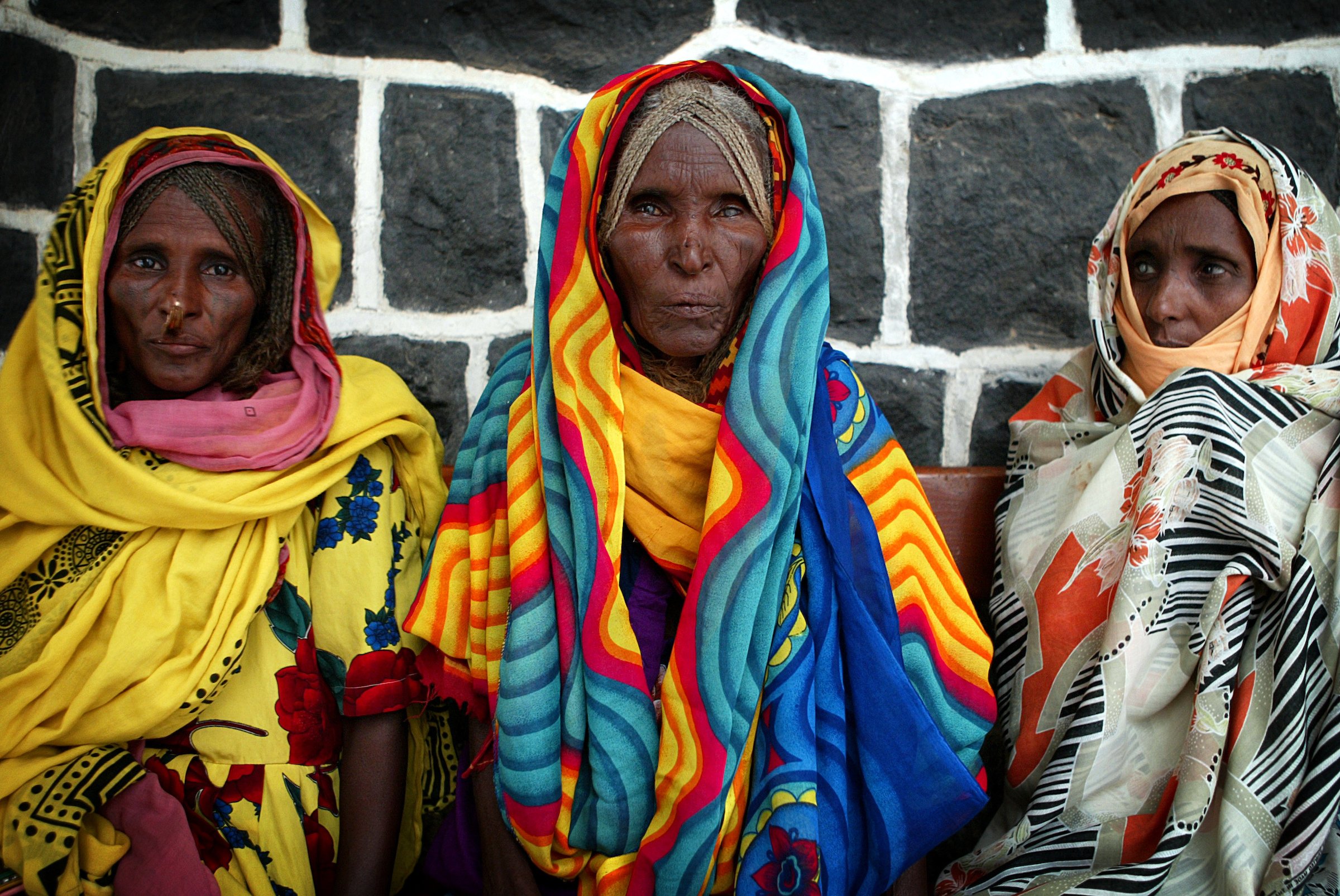
The certificate does not end the job. According to the WHO, Eritrea has systems in place to find and treat new trichiasis cases, and surveillance will carry on. That is what "elimination as a public health problem" means in practice: not that the bacterium has vanished altogether, but that cases sit below the WHO's thresholds and that a system exists to look after anyone who still needs care.
Before that status is granted, a group of independent experts appointed by the WHO reviews the country's dossier and checks that the epidemiological thresholds have been met. Only with their recommendation does the official recognition follow.
After two decades of determined effort, Eritrea has consigned trachoma as a public health problem to history.
Tedros Adhanom Ghebreyesus, WHO Director-General
Mohamed Janabi, the WHO's Regional Director for Africa, said the result showed what sustained political commitment, community leadership and strong partnerships can achieve, as reported by Channel Africa. The WHO's representative in the country, Mary Stephen, put the emphasis elsewhere.
This success belongs first and foremost to the people of Eritrea.
Mary Stephen, WHO Representative to Eritrea
Stephen thanked the Ministry of Health, the Fred Hollows Foundation, other partners and health workers, according to the WHO statement and a report in Nigeria's Peoples Gazette.
The surgeon who arrived in 1987
One of those partners has deep roots in the country. Fred Hollows, an eye surgeon born in Dunedin, New Zealand, in 1929 who later took Australian citizenship, first visited Eritrea in 1987. That trip led to programmes training local technicians to perform eye surgery, and to the idea of a laboratory making intraocular lenses at cost, around A$10 each, according to his Wikipedia biography.
Hollows never saw it running. He died in Sydney in February 1993, the year lens production began. In 1991 he had been named Eritrea's first honorary citizen. The foundation that bears his name was launched in Sydney in September 1992.
On its Eritrea page, the foundation says it works in all six regions, helped set up the National Blindness Prevention Programme and backed two five-year national eye care plans covering 2006 to 2015. It also notes that cataract and trachoma remain the leading causes of blindness in Eritrea, above all in rural areas.
What the global numbers say
Eritrea's milestone sits on a curve that has been falling for more than 20 years. In 2002 an estimated 1.5 billion people lived at risk of trachoma. By 2011, 314 million needed interventions. In November 2025 the figure dipped below 100 million for the first time, to 97.1 million, a 94% fall since the start of the century, the WHO reported.
The same trend shows up in the most painful stage of the disease. The International Coalition for Trachoma Control estimates that trichiasis cases fell from 7.6 million in 2002 to 1.2 million in March 2026, a drop of 84%.
The work has not slowed. If anything, the number of operations is rising. In 2025, the WHO says, 98,829 people had trichiasis surgery, 13% more than the year before, and 47.4 million received antibiotics. Global antibiotic coverage stood at 47%.
When the sub-100-million figure came out, Michaela Kelly, who chairs the coalition, called the 94% fall in people at risk "a remarkable achievement". PJ Hooper, director of the International Trachoma Initiative, pointed out that each step along that curve stands for real people who kept their sight.
The work still ahead
The good numbers sit alongside a real to-do list. As of March 2026, 92 million people still lived in trachoma-endemic areas, and the disease remained a public health problem in at least part of 29 countries. Africa is still the worst-affected continent and the focus of the most intensive control work.
The economic toll is heavy too. The WHO puts the productivity lost to trachoma-related blindness and visual impairment at between US$2.9 billion and US$5.3 billion a year, rising to US$8 billion once trichiasis is included.
Several countries are close behind. The coalition lists six that have reported reaching the elimination thresholds: Botswana, Guinea, Guinea-Bissau, Namibia, Sierra Leone and Eritrea itself, which has now moved off that list with validation in hand. For the others, the next step is putting together the dossier that WHO experts will review.
Trachoma is one of 21 neglected tropical diseases covered by the WHO's 2021–2030 road map, endorsed by the World Health Assembly in 2020. With this announcement Eritrea also becomes the 66th country in the world, and the 23rd in the African Region, to eliminate at least one of them.
That list has grown with other wins The Positive Way has reported: Kenya has gone 16 years without a local case of sleeping sickness, Chile became the first country in the Americas verified free of leprosy and Guinea worm fell to about ten cases in 2025. On the other side of the map, Timor-Leste beat malaria.
In Eritrea, the daily work now takes a different shape: keep searching, district by district, for anyone whose lashes have started to turn inward, and operate before they lose their sight.
Further reading
Go further
- Web · Caroline Harper (TED)What if we eliminated one of the world's oldest diseases?
Una charla breve sobre cómo se combate el tracoma y por qué su eliminación es alcanzable.
- Web · Organización Mundial de la SaludTrachoma - Fact sheet
La referencia oficial: cómo se transmite, la estrategia SAFE y la lista de países validados.
- Web · International Coalition for Trachoma ControlKey statistics
Las cifras actualizadas de cirugías, antibióticos y países a punto de lograr la eliminación.
- Web · The Fred Hollows FoundationOur work in Eritrea
La organización que acompaña la salud ocular eritrea desde finales de los años ochenta.
- Web · SightsaversSAFE: trachoma control
Explica pieza a pieza la estrategia SAFE con datos de sus programas en África.
- Web · Organización Mundial de la SaludGlobal population requiring interventions against trachoma falls below 100 million for the first time
El informe que mostró la caída del 94 % de las personas en riesgo desde 2002.
Sources
- Eritrea eliminates trachoma: a major public health milestone (WHO)
- Trachoma fact sheet (WHO)
- Global population requiring interventions against trachoma falls below 100 million (WHO)
- Eritrea eliminates trachoma as a public health problem, WHO confirms (Channel Africa)
- Eritrea becomes 11th African country to eliminate trachoma (Peoples Gazette)
- Key statistics (International Coalition for Trachoma Control)
- Our work in Eritrea (The Fred Hollows Foundation)





