


 Have a great day, y'all!
The internet is not switching off today: what really happens on 17 November
The only thing scheduled for this Tuesday is a one-minute test on US radio and television, at 2:20 pm Ecuador time. Here is how a cartoon scene and a civil-protection tip turned into a rumour of a worldwide blackout, and what is actually worth having ready at home.
The essentials in 30 seconds
- There will be no global blackout and no internet shutdown on 17 November. No authority in any country has announced one.
- What is happening is a nationwide test of the US Emergency Alert System (EAS): about one minute, on US radio and TV only, at 2:20 pm Ecuador time.
- The rumour stitched together three unrelated things: that test, a 2023 Simpsons scene and European advice to keep 72 hours of supplies.
- In Ecuador an emergency backpack does make sense, but because of El Niño, not because of any blackout. The official checklist is below.
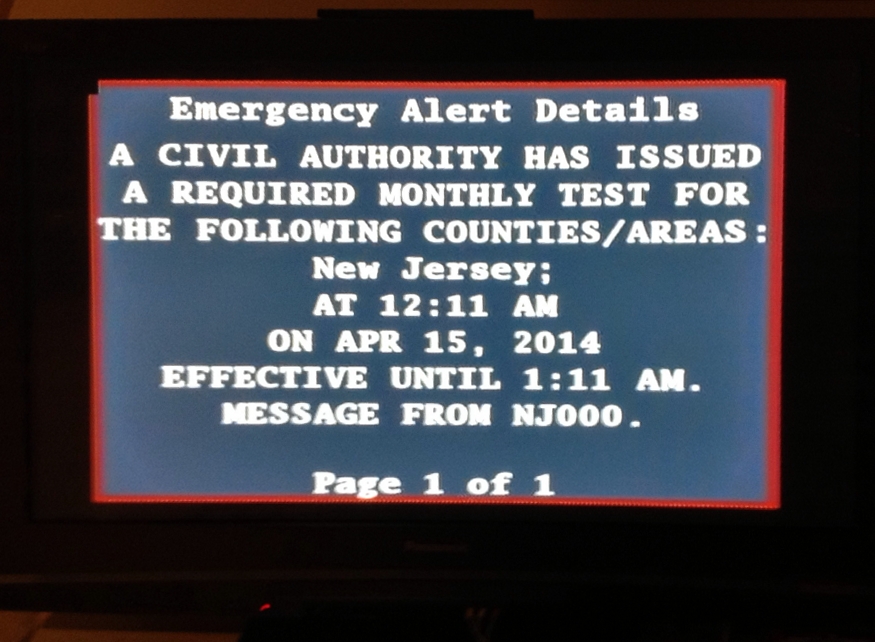
At 2:20 this Tuesday afternoon, Quito and Guayaquil time, some television sets in Miami, New York or Los Angeles will show a notice for about a minute, in English and Spanish. It will say it is a test and that nobody needs to do anything. In Ecuador, nothing at all will happen: electricity, wifi, WhatsApp and online banking do not depend on that exercise.
That is what the US Federal Emergency Management Agency (FEMA) and the Federal Communications Commission (FCC) say. They announced the exercise on 16 September, almost two months ago. Ecuadorian outlets such as Metro Ecuador and Vistazo have checked it too, along with fact-checkers across the region.
Even so, "is the power going off on the 17th?" has been bouncing around family chat groups for two weeks. Vistazo reports that Google Trends shows rising searches for "apagón mundial" and "17 de noviembre". There is a reason for that, and it is not that people are gullible.
What is really happening today
The Emergency Alert System is the network that lets US authorities break into radio and TV broadcasts to warn of a hurricane, a tornado or another serious crisis. US law requires a national test at least once every three years. The first nationwide test took place in November 2011; the previous one was in October 2023.
According to FEMA and the FCC, today's test works like this:
- It starts at about 2:20 pm Eastern Time, which in November is the same as mainland Ecuador. That is 3:20 pm in Bolivia and 8:20 pm in Spain.
- It lasts about one minute.
- It runs on radio and TV only: participating stations, cable, digital radio and satellite.
- It does not go to mobile phones. Unlike 2023, the wireless alert system is not being tested this time.
- The message is in English and Spanish and says plainly that it is an exercise.
- If it has to be postponed, the back-up date is 3 December.
FEMA summed it up on its official account:
X@femaVer publicación en X ↗Testing an alert system is, in fact, good news. It checks that on the day millions of people need to be warned about a storm, the message will get through. The FCC has also asked broadcasters to make the alert accessible, with text and audio, so that deaf and blind people receive it too.
Three loose pieces someone glued together
The hoax did not come from nowhere. It was built from three real facts that have nothing to do with each other, and each new post added a more unsettling detail.
1. A cartoon scene
The first ingredient is an episode of The Simpsons, "It's a Blunderful Life", from season 35, first shown in November 2023. Lisa remembers a blackout in Springfield, and her diary shows the date 17 November. There is no year and no worldwide blackout. It is fiction. The Spanish fact-checker Maldita.es has spent years documenting how scenes from the show get recycled as prophecies.
2. A civil-protection tip
The second is more serious, and more useful. In late October the European Commission updated its advice for households to keep the basics to cope on their own for 72 hours in any emergency. Many other governments have published similar guides for years. Newsweek grouped 33 countries with such guides on a map, and social media presented it as 33 governments bracing for the same blackout. As FayerWayer explained, there is no coordinated alert: the UK and Mexico suggest 72 hours, Norway a week and Germany ten days, each according to its own risks. Madrid's regional government, for example, clarified that its emergency-kit advice is routine and has been repeated for years.
3. The US test
The third was FEMA's announcement. Put the three together and the story sounded complete: "The Simpsons predicted it, Europe wants people to stock up and the US is going to cut the TV." Some versions later threw in an alleged cyberattack or a new pandemic. According to the fact-checking desk of the Peruvian daily La República, a single Facebook post passed 4.9 million views and 17,000 shares.
There is no announcement from US authorities that involves disconnecting the internet.
Metro Ecuador, in its fact-check of 16 November

Why the rumour hit home in Ecuador, and what the power data say
In Ecuador, "blackout" is not an abstract word. In 2024 drought drained the reservoirs and households lived with scheduled cuts of up to 14 hours a day. It is natural for a message about power cuts to stir memories and worry.
This week's figures, however, point the other way. According to the independent monitoring platform Amaru, quoted by Diario Extra, the Mazar reservoir, which feeds the Paute river power plants, stood on Monday 16 November at 2,123.60 metres above sea level. That is about 13 metres higher than on the same date in 2024 and above the level Amaru links to a higher risk of cuts (2,121 metres). The same platform puts the chance of the reservoir entering that zone within 30 days at around 16%. It is a projection, not an official announcement, and supply also depends on thermal plants, other hydro stations and imports.
On 6 November the government said, in remarks reported by Metro Ecuador, that available generation was between 5,400 and 5,500 megawatts against peak demand of about 5,200. Over the past year new projects have also come on line or advanced, such as the country's largest solar park, in Santa Elena, and the Villonaco III wind farm in Loja, and Ecuador removed VAT on equipment to generate and store electricity.
In practical terms: any outages in particular neighbourhoods will be down to rain, fallen trees or local faults, as in any rainy season, not to a date circled on a calendar.
What is worth preparing
The useful side of the hoax is the reminder it carries. With El Niño active on the coast, Ecuador's Risk Management Secretariat recommends a backpack to cover the first 72 hours of any emergency, as reported by Primicias:
- Bottled water and tinned food, including baby food or special diets.
- A first-aid kit with the family's usual medicines.
- A change of clothes, a blanket and rainwear.
- A portable radio with spare batteries, a torch, a whistle, candles and matches.
- Copies of ID cards, prescriptions and property papers, plus a list of family phone numbers and 911.
- For the rainy season: water purification tablets or chlorine, waterproof bags and insect repellent.
- Food and water for pets, if you have them.
We have already covered in more detail what we know about El Niño in Ecuador and what each household can prepare.

Three questions before you forward it
Fact-checkers agree on a simple routine for breaking these chains. First, who is saying it? A genuine notice of power cuts in Ecuador is published by the Energy Ministry, CNEL or the electricity companies on their official channels, not by an unsigned voice note. Second, is there a date and a source? If the message does not link to a statement, be wary. Third, have named news outlets reported it? If nobody with a byline has published it, it most likely does not exist.
When a relative shares it in the group chat, there is no need to argue. Just send the FEMA link and point out that the test lasts a minute and does not even reach phones.
Something you might not know
The first nationwide US alert test, in 2011, partly failed: in some areas the message did not go out, or went out garbled. That is exactly why the tests are repeated. Each one, including today's, produces reports that broadcasters must file with the FCC so that whatever did not work gets fixed. A minute of test notice on screen is, at heart, routine maintenance on a system built to save lives.
To understand it better
- Official page of the 2026 nationwide test — FEMA
- It is false that there will be a global blackout on 17 November — La República
- Emergency backpack for El Niño — Primicias
Go further
- Web · FEMA2026 Nationwide Emergency Alert System Test
La página oficial de la prueba de hoy: horario, alcance y fecha de reserva.
- Web · FCCAlertas accesibles durante la prueba nacional de 2026
Cómo se garantiza que el aviso llegue también a personas sordas o ciegas.
- Web · La República (Verificador)Es falso que habrá un apagón mundial el 17 de noviembre
Desmonta pieza a pieza el origen del bulo, con datos de su difusión.
- Web · FayerWayer¿Por qué 33 países llaman a prepararse?
Explica de dónde sale la famosa lista de países y por qué cada uno pide un plazo distinto.
- Web · PrimiciasMochila de emergencia ante El Niño
La lista de la Secretaría de Gestión de Riesgos, adaptada a la temporada de lluvias.
- Web · Maldita.esFalsas predicciones de Los Simpson que se viralizan como reales
Un repaso a las veces que una escena de la serie se ha vendido como profecía.
Sources
- FEMA and FCC Schedule 2026 Nationwide Test of the Emergency Alert System for November 17, 2026
- FEMA en X: recordatorio de la prueba del 17 de noviembre
- ¿Se irá el internet este 17 de noviembre? - Metro Ecuador
- ¿Qué pasará el 17 de noviembre? - Vistazo
- Es falso que habrá un apagón mundial el 17 de noviembre - La República
- Así surgió el rumor del apagón masivo - N+
- Embalse de Mazar se recupera - Extra
- Gobierno descarta déficit eléctrico - Metro Ecuador





