


 Have a great day, y'all!
Two shots a year against HIV: Honduras readies lenacapavir for 13 clinics
The Ministry of Health has confirmed that the twice-yearly preventive injection, which stopped almost every infection in its trials, will first be offered at 13 specialised clinics under an agreement with the United States.

Two shots a year instead of a pill every day. That is what Honduras's Ministry of Health is preparing to offer people at higher risk of HIV: lenacapavir, a long-acting injectable antiretroviral that will first be available at 13 specialised clinics around the country, Deputy Health Minister Eduardo Midence said in remarks reported between 8 and 12 November by Infobae and ICN Digital.
The drug is neither a vaccine nor a cure. It is a form of pre-exposure prophylaxis, or PrEP, which protects people who do not have the virus. In the clinical trials that led to its approval, it prevented almost every infection among the people who received it.
- What it is: a lenacapavir injection under the skin every six months to prevent HIV.
- Where: in a first phase, 13 sentinel surveillance clinics for sexually transmitted infections (known by the Spanish acronym VICITS) spread across the country.
- Who for: people without HIV who meet the criteria after a medical assessment, including serodiscordant couples.
- Who pays: a cooperation agreement with the United States government, according to the Ministry of Health.
- Still pending: the start date, the number of doses and the detailed eligibility rules have not yet been published.
What has Honduras decided?
The news began to circulate in early November, when outlets such as Hondudiario and Tu Nota reported that the country would add a twice-yearly HIV injection to its prevention options. Over the following days the Ministry of Health, known locally as Sesal, set out the scope: 13 VICITS clinics, the network the public system uses to monitor and treat sexually transmitted infections, will be the first to offer it.
Those clinics already run tests, provide counselling and handle confidential medical follow-up. That explains much of the choice. Lenacapavir requires confirming before every dose that the person is still HIV-negative, with testing, a clinical assessment and regular check-ups. Placing it with teams that already do that work every day shortens the path.
According to information released by Sesal and reported by Infobae on 8 November, three groups will be prioritised at first:
- serodiscordant couples, where one partner lives with HIV and the other does not;
- people at higher risk of exposure, as judged by health staff;
- people looking for an alternative to oral PrEP who meet the medical requirements.
The ministry stresses that the decision must rest on an individual assessment, not simply on belonging to a group. That nuance matters in a country where stigma still keeps many people away from clinics.
Midence said Honduras hopes to be among the first Latin American countries to use this form of prevention. Several local outlets have described it outright as the first in the region. It is wiser to wait until the injections actually begin: according to regulatory tracking by the HIV prevention organisation AVAC, as of July 2026 Brazil was the only Latin American country listed with the drug approved for prevention, and Peru's application was pending.
The starting numbers
Context helps explain why the move matters. Between 1985 and December 2025, Honduras recorded 44,620 HIV diagnoses, according to Health Surveillance Unit figures cited by the National Human Rights Commissioner (Conadeh). In 2025 alone, 1,191 new diagnoses were reported.
In 2026, up to epidemiological week 30, Sesal had counted 457 new diagnoses: 336 men and 121 women. People aged 25 to 39 accounted for 229. By department, Cortés had 133, Francisco Morazán 86, Atlántida 63 and El Paraíso 44.
Midence noted, according to ICN Digital, that part of the rise in diagnoses may reflect more testing, which is not bad news: every early diagnosis is a person who can start treatment. More than 15,000 people in Honduras live with HIV and know their status, and the public system runs 66 comprehensive care centres offering free antiretroviral treatment.
The weak spot is timing. In March 2026 the Pan American Health Organization warned that 39% of people with HIV in Honduras started treatment when the infection was already advanced. Prevention is the other half of the equation, and that is where a twice-yearly shot could change the rules.
Why does a shot every six months matter?
PrEP has existed for more than a decade as a daily pill, and it works very well when taken consistently. That is precisely the problem: taking it every day, storing it, carrying it, explaining it. Many people stop because they forget, because of mild side effects, or because they fear someone will see the bottle and draw conclusions.
Lenacapavir breaks that routine. It targets the HIV capsid, the protein shell that protects the virus's genetic material, and blocks several stages of its life cycle. Its formulation allows a single injection under the skin to keep protective levels in the body for about six months.

Two trials with almost no infections
The evidence comes from two large clinical studies. The first, PURPOSE 1, enrolled young women in South Africa and Uganda and was published in July 2024 in The New England Journal of Medicine (abstract on PubMed). Among the more than 2,000 participants who received lenacapavir, there was not a single infection.
The second, PURPOSE 2, involved 3,265 cisgender men who have sex with men and transgender and gender-diverse people in seven countries, four of them in Latin America: Argentina, Brazil, Mexico and Peru. According to the specialist publication HIV i-Base, there were only two infections in the lenacapavir group, a 96% reduction against expected incidence and 89% against daily oral PrEP.
On the strength of those results, the US Food and Drug Administration approved the drug for prevention in June 2025, and the World Health Organization recommended it on 14 July 2025 as an additional PrEP option rather than a replacement for existing tools.
From Africa to Central America
Honduras's move fits into an international roll-out that has picked up speed over the past year. In September 2025 the US State Department, the drugmaker Gilead Sciences and the Global Fund announced a commitment to buy and distribute lenacapavir in countries with a heavy HIV burden. The first doses reached Eswatini and Zambia in November 2025, and the Global Fund then set a goal of reaching up to two million people within three years.
According to an analysis by the Center for Strategic and International Studies (CSIS), in April 2026 that target was raised to three million people, deliveries had reached nine African countries, and the plan is to cover around 24 countries by the end of 2026.
In Latin America, the main route opened on 15 September 2026, when the Pan American Health Organization announced a deal with Gilead allowing 14 countries to buy the drug through its Regional Revolving Funds. Honduras was not on that list; its access comes through the bilateral cooperation with the United States described by Sesal.
These innovations will only have an impact if they reach the people who need them.
Jarbas Barbosa, Director of the Pan American Health Organization
The price is shifting too. In early November the FDA gave tentative approval to the first generic, which will cost 40 dollars per person per year in 120 low- and middle-income countries, as we reported in Generic lenacapavir: the twice-yearly HIV shot for 40 dollars. The region records around 140,000 new HIV infections every year, according to PAHO.
What do we still not know?
Quite a lot, and it is worth saying so. Sesal has not yet announced the start date for the injections, how many doses the country will receive, the value of the agreement with the United States or the detailed eligibility criteria. Nor has it published the cities where the 13 clinics are located, although the VICITS network covers the country's main urban centres.
There are also practical questions that will only be answered on the ground:
- how the second dose six months later will be guaranteed, especially for people who live far from the clinics;
- how the new option will sit alongside the oral PrEP some services already provide;
- how the real effect on new diagnoses will be measured.
Work is already under way on some of these questions. Médecins Sans Frontières has registered on its research platform a mixed-methods study on PrEP preferences and the feasibility of injectable lenacapavir in Honduras, with a protocol dated September 2026. According to that record, it would be the first study on the acceptability of injectable PrEP anywhere in Latin America; its status is currently listed as stalled, and no results have been published.
Experience elsewhere suggests that proximity is what matters most. Programmes that work combine rapid testing, counselling and follow-up in one place. Countries that have eliminated mother-to-child transmission of HIV through close-knit primary care networks show it, from Barbados in the Caribbean to the Maldives on the other side of the world.
Central America also has recent examples of how persistence in public health pays off: El Salvador was certified as the first country in Central America free of trachoma. And Honduran talent in the health sciences is gaining visibility abroad, as shown by neuroscientist Rose León Alvarado, the first Honduran to win a Gates Cambridge scholarship.

What changes for one person
Take a couple in San Pedro Sula where he lives with HIV and she does not. Until now, besides his treatment, which prevents transmission once the virus is suppressed, she could use condoms or a daily pill. With the new option, if she meets the medical criteria, she will be able to go to a VICITS clinic, get tested and receive an injection that protects her for half a year.
Two visits a year instead of 365 doses. For someone who works shifts, lives with an extended family or simply forgets pills, the difference is huge.
Something you might not know
Lenacapavir is the first approved drug that attacks the HIV capsid, the cone-shaped shell that wraps the virus's genetic material. For decades it was considered an almost impossible target: the capsid is built from hundreds of copies of a single protein that fit together with extreme precision, and any disruption makes it useless. The drug exploits exactly that fragility. It slips between the pieces and scrambles the assembly, so the virus can neither enter the cell nucleus nor form viable new copies.
There is another curious detail. When injected under the skin, lenacapavir forms a small depot that is released slowly over time. That is why two shots a year are enough. And that is why, in the trials, the most common side effect was something as mundane as a lump or tenderness at the injection site.
Further reading
- Infobae: Honduras to add HIV prevention injection at 13 specialised clinics (Spanish)
- WHO: recommendation of injectable lenacapavir for HIV prevention
- PAHO: new access route to lenacapavir in Latin America and the Caribbean (Spanish)
- HIV i-Base: PURPOSE 2 trial results
- Médecins Sans Frontières: study on PrEP preferences and lenacapavir in Honduras
Go further
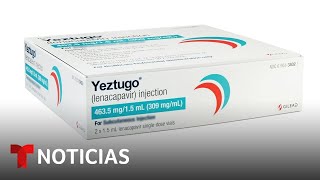 YouTube · Noticias TelemundoEl lenacapavir ayudaría a disminuir contagios de VIH
Reportaje breve en español que explica cómo funciona la inyección semestral.
 YouTube · FRANCE 24 EnglishHIV-prevention drug to be available for $40 a year from 2027
Cuenta cómo el genérico abarata el acceso en países de ingresos bajos y medios.
 YouTube · Al Jazeera EnglishZimbabwe rolls out new HIV prevention drug
Muestra cómo es el despliegue real del lenacapavir en clínicas africanas.
- Web · Organización Mundial de la SaludWHO recommends injectable lenacapavir for HIV prevention
La recomendación oficial que abrió la puerta a los programas nacionales.
- Web · Organización Panamericana de la SaludLa OPS abre una nueva vía de acceso al lenacapavir en América Latina y el Caribe
Explica el acuerdo regional de compra y qué países participan.
- Web · Médicos Sin FronterasUser Preferences for PrEP and Feasibility of Implementing Long-Acting Lenacapavir in Honduras
Ficha del estudio que analizará cómo recibe la población hondureña la PrEP inyectable.
- Web · AVACLenacapavir regulatory approvals (julio de 2026)
Mapa actualizado de los países que ya han aprobado el medicamento.
Sources
- Televisión Nacional de Honduras: Honduras aplicará lenacapavir para prevención de VIH
- Infobae: Honduras incorporará inyección preventiva contra el VIH en 13 clínicas especializadas
- Infobae: Honduras incorporará inyección preventiva contra el VIH que se aplica cada seis meses
- ICN Digital: La Sesal prepara el uso de lenacapavir para prevenir el VIH
- Hondudiario: Honduras incorporará inyección semestral para prevenir el VIH en 13 clínicas
- OPS: nueva vía de acceso al lenacapavir
- OMS: recomendación del lenacapavir inyectable
- HIV i-Base: resultados de PURPOSE 2





