


 Have a great day, y'all!
Kenya has gone 16 years without a local sleeping sickness case, and the WHO certifies it
On 8 August 2025 the WHO validated that Kenya had eliminated human African trypanosomiasis as a public health problem, the tenth country to do so; in May 2026 it was honoured at the World Health Assembly.

The last person known to have caught sleeping sickness inside Kenya was diagnosed in 2009. Sixteen years later, on 8 August 2025, the World Health Organization announced from Nairobi, Brazzaville and Geneva that Kenya had eliminated human African trypanosomiasis as a public health problem.
Kenya is the tenth country to get there. The technical validation was completed in June 2025 after an external expert review. The certificate followed in August, and in May 2026 the country was honoured at the World Health Assembly.
- Kenya has recorded no locally acquired cases since 2009; the last two exported cases, both infected in the Masai Mara reserve, were detected in 2012.
- Around 7 million Kenyans lived in at-risk areas when the disease was endemic.
- It is the second neglected tropical disease Kenya has eliminated, after Guinea worm in 2018.
- On 19 May 2026, in Geneva, the WHO Director-General handed the certificate to Kenya's health minister.
A fly, a parasite and more than a century of work
The disease is caused by a blood parasite, Trypanosoma brucei, and spread by the bite of the tsetse fly. It exists only in Africa. It hits hardest among people who farm, fish, herd cattle or hunt, because they spend the most time near the scrub and riverbanks where the fly lives.
There are two forms. The common one, gambiense, accounts for 92% of reported cases across the continent according to the WHO) and develops slowly. The other, rhodesiense, was the only form present in Kenya. It moves fast, can invade several organs including the brain, and kills within weeks if untreated.
Kenya's history with the disease begins in 1901, when the first cases were recorded on the Uganda border, according to the account of the Kenya Tsetse and Trypanosomiasis Eradication Council (KENTTEC) published by The Star. By 1910 it had pushed about 25 miles inland along the Kuja and Migori rivers.

The Lambwe Valley
One place tells most of the story: the Lambwe Valley, near Lake Victoria in Homa Bay County. A large outbreak there in 1964 led to the first aerial spraying against tsetse. Cases surged again between 1980 and 1984, and spraying from the air and on the ground was kept up. The focus stayed active until 1988, with fewer than 50 cases a year.
What turned it around was a set of unglamorous tools. Bush clearing. Mass treatment of livestock with trypanocides, since cattle also carry the parasite. And insecticide-treated screens baited with odours, plus scented traps that lure the flies in and kill them. With those, incidence in Lambwe fell to zero.
The six formerly endemic counties ring the lake: Busia, Bungoma, Siaya, Homa Bay, Migori and Narok, the last of them the gateway to the Masai Mara.
Proving a disease has gone
Elimination is not just a matter of not seeing cases. To get WHO validation, a country has to show it is actively looking and finding nothing. Kenya strengthened surveillance at 12 health facilities across the six historic counties, which act as sentinel sites. They were given diagnostic tests, and clinical staff were trained in the most sensitive and practical techniques for detecting the rhodesiense form.
Veterinary authorities and KENTTEC kept monitoring the fly and animal trypanosomiasis both inside and outside the old risk zones. The diagnostics foundation FIND, county governments, research institutes and local communities all took part.
This is a testament to our capacity to eliminate neglected tropical diseases through policy leadership, technical excellence, and community-driven action.
— Aden Duale, Kenya's Cabinet Secretary for Health
WHO Director-General Tedros Adhanom Ghebreyesus congratulated "the government and people of Kenya". Patrick Amoth, Director General of Health at Kenya's ministry, said the country remains "fully committed" to sustaining quality of care and surveillance in line with WHO recommendations.

From 40,000 cases to under 1,000 across Africa
Kenya's result fits a wider trend. In 1998 almost 40,000 cases were reported in Africa, and the WHO estimates another 300,000 went undetected and untreated. In 2017 the count dropped below 2,000 for the first time, and since 2018 it has stayed under 1,000 a year. The Democratic Republic of the Congo now accounts for most cases.
Before Kenya, elimination as a public health problem had been achieved by Benin, Chad, Côte d'Ivoire, Equatorial Guinea, Ghana, Guinea, Rwanda, Togo and Uganda. In all, 57 countries have eliminated at least one neglected tropical disease. The Positive Way has covered other milestones in the same family: Suriname becoming the first malaria-free Amazon country and how Timor-Leste went from 223,000 malaria cases to zero.
Guinea, one of the countries on that list, announced its own success in January 2025. The Drugs for Neglected Diseases initiative (DNDi) told that story in a short film:
Pills instead of arsenic
For decades the standard treatment for late-stage disease was an arsenic compound so toxic it could kill the patient. DNDi and its partners have gradually replaced it with oral drugs. Fexinidazole was approved by the European Medicines Agency in 2023 for the rhodesiense form, the one Kenya had.
In February 2026 the same agency issued a positive scientific opinion on acoziborole, a single-dose pill for the gambiense form developed by DNDi with Sanofi and partners in affected countries, as the European programme Global Health EDCTP3 reported in March. A one-day cure makes it far easier to reach remote villages where finishing a long course is hard. The WHO also keeps a stock of medicines donated by Bayer and Sanofi to treat any new case quickly.

Not eradicated, not forgotten
The WHO's word is elimination, not eradication, and the distinction matters. The parasite and the fly are still present in the region. Kenya will run a post-validation surveillance plan to catch any resurgence or reintroduction.
Complacency is the enemy of elimination.
— Adiele Onyeze, WHO neglected tropical diseases expert, quoted by The Star
On 19 May 2026, at the 79th World Health Assembly in Geneva, Tedros handed Duale the certificate in person. According to Citizen Digital, the minister warned that elimination "does not signify the end of the fight" and called for continued early detection, fly control and the folding of these services into routine healthcare.
Kenya's challenge now resembles that of other countries that have crossed a similar line, such as Barbados with mother-to-child HIV transmission: keeping surveillance funded once there are no patients left to justify it.
Something you might not know
The tsetse is an odd fly. Females do not lay batches of eggs; each one carries a single larva at a time inside her body and feeds it a kind of milk. That makes populations grow slowly, which is why traps and screens that remove females one by one work so well. In a country famous for distance runners such as Faith Kipyegon, the race against this insect was a long one: 108 years from the first recorded case to the last local infection.
Go further
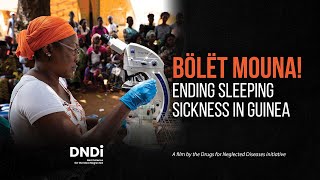 YouTube · Drugs for Neglected Diseases initiative (DNDi)Bölët Mouna | Ending Sleeping Sickness in Guinea
Documental breve sobre cómo Guinea, otro de los diez países de la lista, dejó atrás la enfermedad.
- Web · DNDiSleeping sickness: proyectos y tratamientos
Explica el paso del arsénico al fexinidazol y al acoziborol de dosis única.
- Web · Organización Mundial de la SaludTrypanosomiasis, human African (sleeping sickness) – Fact sheet
La ficha de referencia con cifras, síntomas y la meta de cero casos para 2030.
- Web · Liverpool School of Tropical MedicineTiny Targets
Cómo funcionan las pantallas con insecticida que atraen y matan a la mosca tsetsé.
- Web · The Star (Kenia)From outbreak to elimination: Kenya's 100-year battle with sleeping sickness
Infografía con la cronología completa de la enfermedad en Kenia.
- Blog · The ConversationBloodthirsty tsetse flies nurse their young one live birth at a time
La biología insólita de la tsetsé y por qué ayuda a combatirla.
Sources
- WHO: Kenya achieves elimination of human African trypanosomiasis or sleeping sickness as a public health problem
- The Star: How Kenya fought, beat sleeping sickness 100 years on
- Citizen Digital: Kenya honoured at World Health Assembly for eliminating sleeping sickness
- DNDi: Statement on Kenya's elimination of rhodesiense sleeping sickness





