


 Have a great day, y'all!
Science at 72: what 131 older adults in Murcia and Valencia taught science communicators
Two Spanish universities, Murcia and Valencia, have released a free guide, funded by the national science foundation FECYT, built on talks and discussion groups with 131 people aged 65 to 80.

On 22 May 2025, in a function room at the Barceló Siete Coronas hotel in Murcia, a chronobiologist stepped up to give a short talk about something that worries almost everyone past 65: sleeping well. The audience was not the usual crowd for a science event, teenagers on a school trip or parents with young children. It was made up of retirees with an average age of 72, who had questionnaires to fill in before and after listening.
That day was the first large event of La Tercera Ciencia (The Third Science, or LA3C), a project run by the University of Murcia and the University of Valencia. This week the project formally closed with the release of an open-access guide whose Spanish title translates as The Third Science: a research and practice guide to science communication with older people.
- What it is: a free guide to designing science outreach for people over 65.
- Where it comes from: two events held in Murcia and Valencia in 2025, with 131 participants.
- Who wrote it: the science communication units of the two universities, with funding from Spain's Foundation for Science and Technology (FECYT).
- What it offers: a ten-point checklist and two sets of recommendations so that other universities and associations can run similar events.
The premise is simple and still unusual: treat older people as an audience with a right to science, rather than as people who need to be given advice. In the statement that accompanied the guide's release, the University of Murcia put it this way: older people "want science, want to understand it and want to take an active part in it".

Four talks, three questionnaires and nineteen discussion tables
The project is led by Delfina Roca Marín, its principal investigator and head of the University of Murcia's science communication unit. She co-wrote the guide with Rocío González, A. M. Coleff, M. V. de Haro de San Mateo and M. Salinas. The Science Flows research group and academics from the National University of Río Cuarto in Argentina also took part.
The format ran twice. Murcia came first, in May 2025. Valencia followed on 4 December 2025, at the University of Valencia's Espai Vives. Each event followed the same pattern: four science talks of no more than 20 minutes each, followed by conversation in small groups.
The topics were not picked at random. People who signed up were asked in advance what interested them, and the final line-up looked like this:
- Sleep well: medicine without a prescription, on sleep, body clocks and daily habits, given by María Ángeles Rol de Lama (University of Murcia).
- Don't retire your brain, on neuroscience and memory, with Bruno Rodolfo Ribeiro do Couto (University of Murcia).
- How to reach a hundred without dying in the attempt, on longevity, with Consuelo Borrás Blasco (University of Valencia).
- Quirky diets and other weight-loss lies, on nutrition myths, with José Miguel Soriano del Castillo (University of Valencia).
What turns this into more than a lecture series is the research built around each talk. Participants filled in three questionnaires, on paper or through a QR code. The first, before the talks, recorded what they already knew and how they usually came across science. The second, straight afterwards, asked about understanding, interest and usefulness. The third came after the group discussions. Murcia ran 11 discussion groups at the same time and Valencia ran 8, each with eight to ten people and a trained moderator following a shared script.
The University of Murcia's research ethics committee approved the study, and its data protection office reviewed the procedures. Taking part was voluntary, with informed consent, the right to withdraw and anonymised data.
Who came
The final sample was 131 people from the Region of Murcia and the Valencia region, aged 65 to 80. Women made up 73% of the group, and 53% had a university degree. The guide is upfront about that skew: people with more formal education are over-represented, which matters before drawing broad conclusions.
To reach participants, the team worked through senior centres, women's centres, neighbourhood associations and both universities' programmes for older learners: the University of Murcia's Aula Sénior, the Saavedra Fajardo university association and the University of Valencia's NauGran. Everyone registered beforehand, giving basic personal details, topics of interest and availability.
What the participants made clear
The guide does not publish percentages from the questionnaires; its conclusions are qualitative. But the messages that keep coming up are clear, and some of them run against common assumptions about how to talk to older people.
First, they do not want things dumbed down. Participants said they valued trust in experts and clear, rigorous explanations, and they asked for more depth, not less. In an article published in June in the Spanish edition of The Conversation, Roca and University of Valencia researcher Soledat Rubio Candel summed it up:
They don't want to be spectators. They want to be part of the conversation.
Delfina Roca Marín and Soledat Rubio Candel, writing in The Conversation
In the same piece, the authors warn against elderspeak, the patronising, childlike way of addressing older people, with short sentences and a sing-song tone, which can hurt self-esteem and get in the way of real communication. They add a line that captures much of the guide: making knowledge accessible "does not mean simplifying it until it is emptied of meaning".
Second, question time matters as much as the talk. People valued the chance to talk things through and the social side of the day, and they were especially drawn to workshops and hands-on formats.
The third lesson is practical. Recruitment takes longer than with other audiences and depends on trusted go-betweens, such as a neighbourhood association or a university programme. Logistics carry a lot of weight: transport, breaks, comfortable seating and a mix of online, phone and face-to-face contact often decide whether someone turns up or stays at home.

A checklist anyone can borrow
The guide does not stop at diagnosis. It sets out 13 recommendations for anyone who wants to repeat the research side, 8 for designing talks and a ten-point checklist. Among other things, it suggests:
- Putting older people at the centre from the design stage, not as an afterthought.
- Working with local organisations that already have this audience's trust.
- Tying content to daily life: sleep, memory, food.
- Treating logistics as part of the content, not a detail.
- Training staff and running small groups of six to ten people with open questions.
- Seeing participation as a social experience, not just a lesson.
For the talks, the advice is concrete: plain language, everyday examples, visual support, a time limit, rehearsal and interaction with the audience. None of this is exotic. What stands out is that someone has written it down for this particular audience and tested it with 131 real people.
One sentence in the guide works almost as a summary: communicating science with older people "is not only about passing on content".
An ageing country and a science outreach habit that looks elsewhere
The project starts from a mismatch. Spain is getting older. According to population projections released in June by the National Statistics Institute (INE), people aged 65 and over already make up 21.1% of the population, a share that could peak at 30.9% in 2076. Worldwide, according to the World Health Organization estimate cited by Roca and Rubio, more than a fifth of the population will be over 60 by 2050.
Yet science outreach has traditionally been built for young people and families. FECYT's 2024 survey on public perceptions of science shows the starting point. When people are asked, without prompts, which subjects interest them, 13.2% of the population mention science and technology. Among 15 to 24-year-olds the figure rises to 20.9%. Among those over 64 it falls to 6.9%.
There are two ways to read that number. The familiar one is that older people simply care less about science. The other, which LA3C argues for, is that if nobody designs activities with them in mind, science is unlikely to come to mind when someone asks. The same survey notes that television, radio and newspapers matter more as sources of information as people age, while younger people rely on social media and video platforms. Reaching an older audience, in other words, takes different channels and different formats.
The four topics were not chosen by chance either. Sleep, memory, longevity and diet are among the most common concerns in later life, and all four are crowded with myths. Putting a chronobiologist, a neuroscientist, an ageing researcher and a nutrition expert in front of people living those questions every day has obvious practical value.
At The Positive Way we have covered other stories about life after 65, from the Spanish reform that sets a three-month deadline for long-term care decisions to a care home in Killarney that has given every resident a room of their own. And curiosity does not expire, as the British novelist who won the Booker at 81 with a science fiction book showed.
What happens next
With the guide out, the project is officially complete. Its findings have appeared in scientific journals, book chapters, popular science articles and at national and international conferences. It was funded through a call from the Spanish Foundation for Science and Technology (FECYT), part of the Ministry of Science, Innovation and Universities, under its research and practice in science communication strand, with project reference FCT-23-18995.
The guide has its own ISBN and can be downloaded free from the University of Murcia website. It is meant for other university science communication units, local councils and community groups. The Spanish science news site Nova Ciencia boiled its message down to one line: interest in science does not disappear with age.
There is more to do, and the guide says so. The sample had more women and more graduates than the older population as a whole, so the obvious next step is to reach people who rarely set foot in a lecture hall or a science museum: those with less formal education, people living in villages and people with limited mobility. For them, the advice about working with neighbourhood groups and sorting out transport matters even more.
The Region of Murcia knows what happens when science and citizens pull in the same direction: we reported on the recovery of 175 hectares of seagrass meadow in the Mar Menor lagoon.
The detail you may not know
The project's name plays on tercera edad, the Spanish phrase for old age (literally "the third age"). It also hints at a broader idea: that science has a third audience, besides students and families, that hardly anyone addresses. To introduce it, Roca and Rubio turned to a film, David Lynch's The Straight Story (1999), in which Alvin Straight, an elderly man, travels more than 500 kilometres on an old ride-on lawnmower to visit his brother. The lesson they draw is the project's own: age changes the pace, not the wish to get there.
Further reading
- La Tercera Ciencia guide (PDF, University of Murcia, in Spanish)
- Report on the guide's release in Cartagena Actualidad (Spanish)
- Delfina Roca and Soledat Rubio's article for The Conversation (Spanish)
- FECYT 2024 survey on public perceptions of science (Spanish)
- INE population projections 2026-2076
- WHO fact sheet on ageing and health
Go further
 YouTube · UMUDivulga (Universidad de Murcia)Conoce el proyecto La Tercera Ciencia
El propio equipo explica en pocos minutos qué buscaba el proyecto y cómo se organizaron los encuentros.
- Web · Delfina Roca, Rocío González, A. M. Coleff, M. V. de Haro y M. SalinasLa Tercera Ciencia. Guía de investigación y práctica para la divulgación científica con personas mayores
La guía completa y gratuita, con el decálogo y las recomendaciones para replicar la experiencia.
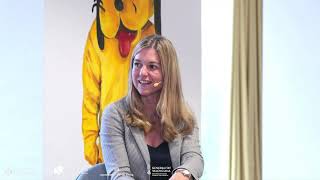 YouTube · Fundación Cañada BlanchCómo llegar a centenario sin morir en el intento
La charla de la catedrática Consuelo Borrás sobre envejecimiento saludable, uno de los temas que se llevaron a los encuentros.
- Blog · Delfina Roca Marín y Soledat Rubio Candel (The Conversation)La curiosidad no envejece y la ciencia no debería ignorarlo
Las autoras cuentan en primera persona por qué la divulgación suele olvidarse de los mayores.
 YouTube · UMUDivulgaDivulgando en Tiempos de Confinamiento IX. Delfina Roca
Una charla de la directora del proyecto sobre su manera de entender la divulgación.
- Web · FECYTEncuesta de Percepción Social de la Ciencia y la Tecnología 2024
Los datos oficiales sobre interés por la ciencia según la edad, útiles para entender de dónde se parte.
- Web · Universitat de ValènciaNauGran, programa universitario para mayores
El programa de la Universitat de València para mayores, uno de los socios que ayudó a reunir a los participantes.
Sources
- La Tercera Ciencia. Guía de investigación y práctica para la divulgación científica con personas mayores (Universidad de Murcia)
- La Universidad de Murcia y la Universitat de València publican una guía para acercar la ciencia a las personas mayores (Cartagena Actualidad)
- Cómo acercar la ciencia a las personas mayores: una guía hecha por la UMU y la UV (Nova Ciencia)
- La curiosidad no envejece y la ciencia no debería ignorarlo (The Conversation, vía Yahoo Noticias)
- Encuesta de Percepción Social de la Ciencia y la Tecnología 2024 (FECYT)
- Proyecciones de Población 2026-2076 (INE)




