


 Have a great day, y'all!
120,000 weigh-ins in Catalonia show leisure-time exercise slows weight gain
A Hospital del Mar study of almost 15,000 adults finds that between 30 and 60, BMI rises 60% faster in the least active, and that physical activity is linked to a 17% lower lifetime risk of obesity.
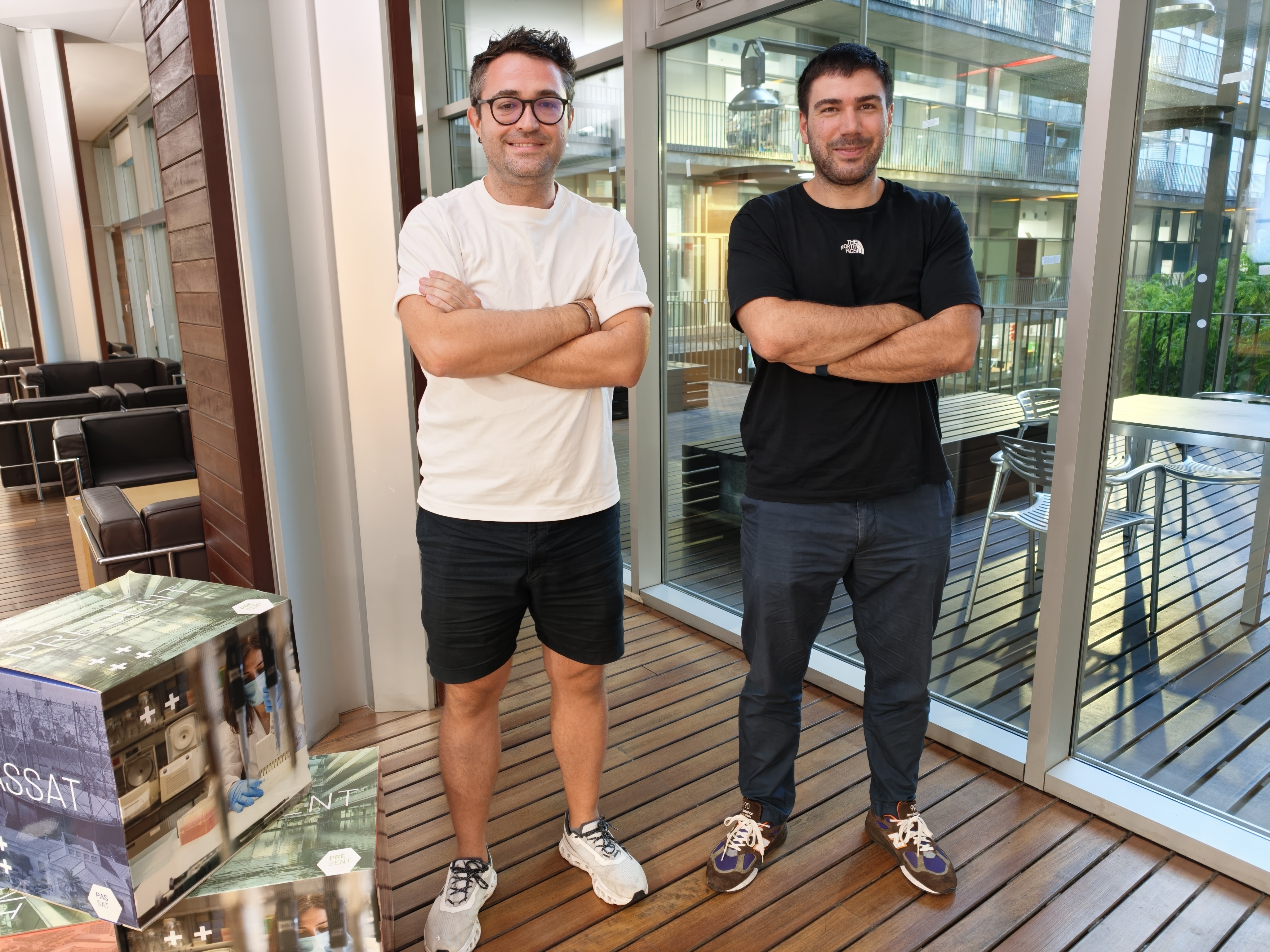
Between the ages of 30 and 60, the body mass index of Catalan adults who do little exercise in their free time rises 60% faster than that of people who stay active. That is the finding of a study from the Hospital del Mar Research Institute in Barcelona, which tracked the weight of almost 15,000 people over decades and is published in the journal Diabetes, Obesity and Metabolism.
The real news is the flip side of that figure: moving more slows the weight gain that tends to arrive with age, and it does so at every stage of adult life. The researchers pooled more than 120,000 weight readings from medical records and matched them with what each participant had reported about their physical activity. The pattern held for men and women, in middle age and in old age.
- Who: almost 15,000 adults from the CORDELIA meta-cohort, the largest of its kind in Spain; more than half were women.
- How much data: more than 120,000 weight measurements, covering ages 30 to 90.
- What they found: between 30 and 60, BMI climbs 60% faster in the least active; from 70 onwards, they lose weight more abruptly.
- The risk: leisure-time physical activity was linked to a 17% lower lifetime risk of obesity.
- The cross-check: people whose genes favour good fitness followed the same curve as the most active.
How do you measure a lifetime of weight?
The paper, led by Javier Hernando-Redondo with around a dozen co-authors, relies on something few countries have: decades of linked clinical data. Participants come from three Catalan population studies, REGICOR-ACRISC, ILERVAS and ARTPER, all part of CORDELIA, a project that brings together 35 Spanish cohorts, some 197,000 people and 23 research groups from the CIBER networks.
Every time one of those volunteers visited their family doctor and someone wrote down their weight, the number was stored. Catalonia's Data Analytics Programme for Health Research and Innovation (PADRIS) made it possible to retrieve those records in anonymised form. From them, the team rebuilt body mass index (BMI) curves from age 30 to age 90.
Physical activity was measured once, when people joined the study, using validated questionnaires such as the Minnesota leisure-time questionnaire or the international IPAQ, which ask about walking, sport, dancing, gardening and climbing stairs. The authors note that an adult's activity level tends to be fairly stable, while acknowledging that a single self-reported measure adds noise.
This was not a group of athletes. At the start, one in four people had obesity, 7% had diabetes, 36% had high blood pressure and 42% had high cholesterol. It is a fairly faithful portrait of the adults who walk into a Catalan primary care centre.
A quick reminder of what is being measured. Body mass index is weight in kilograms divided by height in metres squared. A reading between 25 and 30 counts as overweight, and 30 or above as obesity. It is a blunt tool, because it cannot tell muscle from fat, but it has one big advantage for research on this scale: it is cheap, it is recorded routinely and it can be compared across decades. That is exactly what allowed the team to follow the same people from their thirties into old age without asking them to come in for a single extra test.

Two life stages, one effect
What the curves show changes with age. Between 30 and 60, almost everyone puts on some weight. The difference lies in the pace. In the preliminary version of the paper, posted in February on the medRxiv server, BMI in the least active quarter rose by about 0.12 points a year, against 0.075 in the most active quarter.
That may sound small. For someone 1.70 metres tall, the gap works out at roughly 350 grams a year versus 220, according to an illustrative calculation by our newsroom. Over three decades, it adds up to about four kilos between the two groups.
"Among young adults, body mass index increases more slowly as a result of physical activity, while at older ages physical activity helps prevent a sharp decline in body mass index."
Javier Hernando, researcher in the REGICOR group at the Hospital del Mar Research Institute and at CIBEROBN
After 70, the picture reverses. Weight tends to fall, and in later life that drop is not always good news: it often comes with loss of muscle and growing frailty. In the study, weight loss sped up in the least active people, while those who moved more followed a gentler curve.
Overall, leisure-time physical activity was associated with a 17% lower risk of developing obesity over a lifetime. In the preliminary version, the reduction was larger among people who regularly did moderate or vigorous activity, and the effect showed up in both sexes, though it was stronger in men.
What the genes say
Every observational study faces the same awkward question: are active people lighter because they move, or do they move more because being lighter makes it easier? To get closer to an answer, the team used a technique called Mendelian randomisation.
The idea is simple to explain. At conception, each of us inherits a random mix of genetic variants, and some of them favour better cardiorespiratory fitness. Because that lottery is random, it works like a natural experiment: it does not depend on income, neighbourhood or habits. If people who inherit "good fitness" genes follow the same weight curve as the most active, a causal link becomes more likely.
That is what the team found. People with a stronger genetic predisposition to fitness showed BMI trajectories and obesity risk very similar to those of the people who exercised most.
"When two complementary scientific approaches reach the same conclusions, our confidence increases considerably that this is not simply an association, but that physical activity is a cause of a more favourable evolution of body weight throughout life."
Álvaro Hernáez, researcher at the Hospital del Mar Research Institute and CIBERCV, and lecturer at the Blanquerna School of Health Sciences, Ramon Llull University
The same group used this approach in April in a study published in Medicine & Science in Sports & Exercise. They screened 712 conditions and found that a genetic predisposition to better fitness was linked to lower risk of diabetes, asthma and one type of ischaemic stroke, as well as less arterial stiffness and less body fat.

A long habit of measuring Girona's hearts
The REGICOR group (Registre Gironí del Cor) has followed the cardiovascular health of thousands of people in Girona for decades. In 2020, using data from 11,158 people aged 25 to 79, the same team reported in the Revista Española de Cardiología that meeting the WHO recommendation (150 minutes a week of moderate activity or 75 of vigorous activity) was linked to 16% lower mortality and 27% lower cardiovascular mortality, according to the institute's announcement. In that work, Jaume Marrugat stressed that the benefit appears even with small amounts of exercise.
In 2018, with Álvaro Hernáez as first author, the group projected that by 2030 excess weight, meaning overweight plus obesity, would affect 80% of adult men and 55% of adult women in Spain, as reported by the SINC science agency. The new study supplies part of the answer: a cheap lever, within reach of almost everyone, that keeps working for decades.
The global picture
The World Health Organization updated its physical activity fact sheet on 4 November. It estimates that 31% of the world's adults, about 1.8 billion people, fall short of the recommended minimum, and that without change the figure will approach 35% by 2030. People who are not active enough have a 20–30% higher risk of early death.
Inactivity also comes with a bill. The WHO expects it to cost public health systems close to US$300 billion between 2020 and 2030, about US$27 billion a year. That is why the agency has set a goal of cutting inactivity among adults and adolescents by 15% before 2030.
Spain starts from a middling position. When the REGICOR team published its 2020 study, the institute noted that one in four European adults did not meet the WHO recommendations, and that in Spain the share rose to 35%. The same announcement put the burden of inactivity at 6% of cardiovascular disease, 7% of diabetes and 9% of premature deaths.
The Catalan study fits with other recent findings we have covered at The Positive Way. An analysis of 80 trials showed that strength training eases symptoms of depression. In Australia, a tirzepatide trial found that with the same drug and the same weight loss, lifting weights decided who came out stronger. And a University of Pennsylvania review confirmed that exercise, together with the DASH diet and less salt, can lower blood pressure by up to 16 points.

What the study cannot tell us
The authors list the limits themselves. Physical activity was asked about once, with different questionnaires in each cohort, which they say tends to blur differences rather than exaggerate them. The weight curves are stitched together from stretches of life belonging to different people, and weight is only recorded when someone sees a doctor. The population is Mediterranean and mostly healthy, so the results cannot simply be transferred to other countries. And body mass index does not distinguish fat from muscle.
Nor is this a clinical trial: nobody was randomly assigned to exercise. Mendelian randomisation strengthens the case for cause and effect, but the genetic instrument used is weak, as the researchers acknowledge in the preliminary version.
Even so, the practical message matches what the guidelines keep repeating: any amount of movement counts, and the benefit does not expire with age. Brisk walking, cycling, dancing and gardening all fall into the leisure-time activity the study measured. The WHO also recommends muscle-strengthening exercise on at least two days a week. Sleep helps too: a study of 23,000 smart rings linked a regular sleep schedule to a calmer mind.
The work was funded by the Carlos III Health Institute, the European Commission through the Marie Skłodowska-Curie Actions, and the Government of Catalonia. The authors declare no conflicts of interest.
Something you might not know
The weight jotted down at a routine primary care appointment, the number most patients forget as soon as they leave, turned out to be the raw material for this study. More than 120,000 of those entries, recorded over the years by family doctors and nurses across Catalonia, made it possible to trace how a person's body changes from 30 to 90. In the preliminary version, the oldest records went back to 1990.
Further reading
- Hospital del Mar Research Institute press release on the study.
- Original paper in Diabetes, Obesity and Metabolism.
- Free-to-read preliminary version on medRxiv.
- WHO fact sheet on physical activity.
- WHO guidelines on physical activity and sedentary behaviour.
- "Every move counts", the PAHO and WHO campaign (in Spanish).
Go further
- Web · Hospital del Mar Research InstitutePhysical activity protects against obesity throughout life
La nota oficial del estudio, con las declaraciones de sus autores.
- Web · Hernando-Redondo et al.Leisure-time physical activity on lifelong trajectories of body mass index and obesity risk (preprint)
La versión preliminar completa y gratuita, con todas las tablas y curvas.
- Web · Organización Mundial de la SaludActividad física: datos y cifras
Las cifras mundiales de inactividad, actualizadas el 4 de noviembre de 2026.
- Web · OMSDirectrices de la OMS sobre actividad física y comportamientos sedentarios
Cuánto moverse a cada edad, explicado por el organismo de referencia.
- Web · Organización Panamericana de la SaludCada movimiento cuenta para mejorar la salud
El resumen en español de las recomendaciones de la OMS.
- Web · Hospital del Mar Research InstituteBeing physically fit helps prevent diseases
El estudio previo del mismo grupo con 712 enfermedades y genética de la forma física.
Sources
- Hospital del Mar Research Institute: Physical activity protects against obesity throughout life (18/11/2026)
- Hernando-Redondo J. et al. Diabetes, Obesity and Metabolism (2026)
- medRxiv preprint (Feb 2026)
- EFE / Infobae: Las personas con bajo ejercicio físico ganan peso un 60 % más rápido
- LleidaDiari: Fer exercici marca la diferència
- OMS: Physical activity fact sheet




