


 Have a great day, y'all!
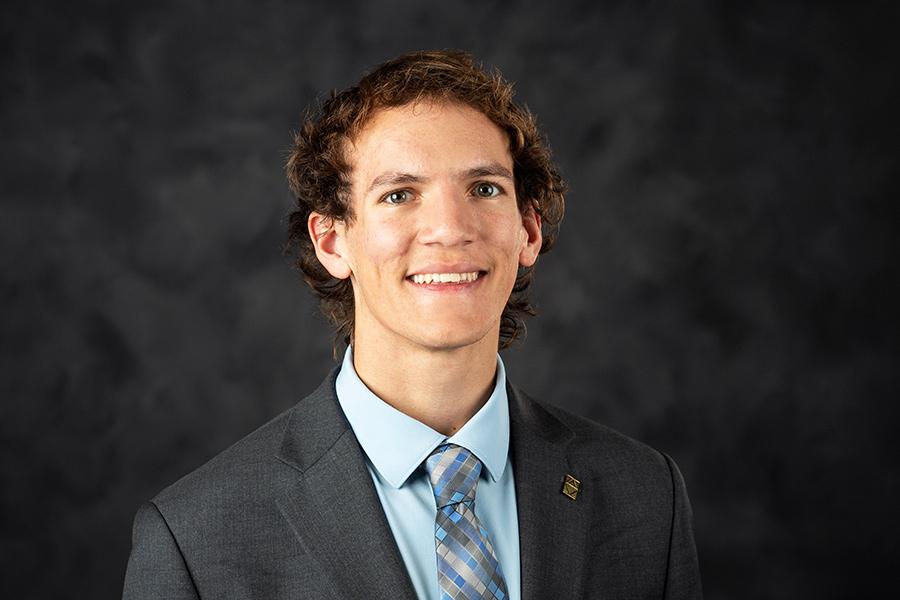
Rhodes Scholar Evan Garrison grew up in a 9,000-person town
Rhodes Scholarship winner Evan Garrison studies orbital debris policy, as Mississippi State extends its finalist streak to six years.
Key points
- Evan Garrison, a Mississippi State University senior, was named a 2027 Rhodes Scholar, one of only 32 chosen nationwide out of more than a thousand university-endorsed candidates.
- He studies aerospace engineering, astronautics and mathematics, and built his research around orbital debris — the junk already circling Earth — and the science-based policy needed to keep it from becoming a bigger hazard.
- He is also a Harry S. Truman Scholar, a Marshall Scholarship finalist and a national debate champion, and spent the summer of 2026 doing research at Oxford before he knew the Rhodes would send him back.
- Mississippi State has now produced a Rhodes finalist for six straight years, 13 in the last 13 years, an unusual run for a land-grant university in the South that spent decades off that particular map.
- More than 34,000 objects larger than 10 centimeters are cataloged around Earth, and roughly 100 million smaller fragments exist that no radar can track one by one.
Evan Garrison is 22, comes from Webb City, a town of about 9,000 people in southwest Missouri, and until fairly recently had no particular plan involving outer space. "I came to college as a small-town kid passionate about addressing orbital debris," he has said, a line that sounds more like a tagline than a confession, except that it matches what people who have watched him work at Mississippi State University since his freshman year will tell you. On November 16, that passion for a problem almost nobody looks up and notices earned him one of the most selective academic honors on the planet: a Rhodes Scholarship, which will send him to Oxford for a doctorate starting in 2027.
It is not a small prize. According to reporting from *Mississippi Today*, more than 1,000 students nationwide received formal university endorsements to compete this year; that produced 238 finalists, and of those 238, only 32 were chosen. Harvard placed four. Yale and Princeton placed three each. Mississippi State placed Garrison — for the sixth year running.
An engineer who also does policy and debate
Garrison is a Louis A. Hurst Jr. Presidential Scholar, majoring in aerospace engineering and astronautics alongside mathematics, with minors in artificial intelligence, political science and global engineering leadership — a combination that does not usually travel together, and in his case did not happen by accident. He belongs to the university's Shackouls Honors College and its Cursus Honorum honors pathway, and his research question is essentially a bridge: how to get the engineers who understand the physics of orbital debris and the policymakers who would have to act on that understanding working from the same information.
The interest did not start as scholarship-application material. Garrison is an undergraduate researcher in Mississippi State's applied aerodynamics and aeroacoustics group and a research assistant at the university's Raspet Flight Research Laboratory, and he previously held an Air Force Research Laboratory Phillips Scholarship. David Hoffman, who directs the university's Office of Prestigious External Scholarships, described that same line of research as "high-end research on tracking orbital debris" when Garrison won the Truman Scholarship earlier in 2026, months before the Rhodes arrived.

In the summer of 2026, before he even knew he would be a Rhodes Scholar, Garrison had already set foot at Oxford: the Shackouls Honors College study-abroad course took him to Trinity College and the Department of Computer Science at the University of Oxford, where he worked on material for his honors thesis and sat in on a seminar on C.S. Lewis. When the program ended, he stayed in the United Kingdom as an honorary research assistant in the Signal Processing Group at the University of Liverpool. Months later, without planning it that way, he won the scholarship that will send him right back to the same campus.
The Rhodes is not his only title this year. Garrison was named a Harry S. Truman Scholar in 2026, a program that funds up to $30,000 in graduate study for students planning careers in public service, according to the Truman Foundation, and he is currently a finalist for the Marshall Scholarship, meaning he spent this past fall competing simultaneously for two of the country's most demanding graduate fellowships. On top of that, he captained Mississippi State's debate team to the 2026 season-long national team championship of the International Public Debate Association, and the university gave him its Harry C. Simrall Award for Engineering Excellence.
"MSU put the world before me and told me I could run wherever I wanted."
Evan Garrison
What orbital debris actually is
Orbital debris is not just dead satellites drifting aimlessly. It is the accumulated result of almost 70 years of launches: spent rocket stages left in orbit, fragments from accidental explosions, bolts and paint flakes shaken loose by thermal stress, and the wreckage of a handful of decisive collisions and weapons tests that have happened in low Earth orbit. The deliberate destruction of China's Fengyun-1C satellite in 2007 and the accidental 2009 collision between Iridium 33 and Cosmos 2251 each added thousands of trackable fragments in a single event.
Size is not the only thing that matters. At typical low-Earth-orbit speeds of 7 to 8 kilometers per second, even a paint chip can punch through a satellite's hull; in a head-on collision, relative speed can top 10 kilometers per second. That physics is exactly what underpins the so-called Kessler syndrome, the hypothesis that a chain reaction of collisions could generate enough new debris to make certain orbital bands unusable for generations, even if no new satellites were ever launched again.
The European Space Agency's 2026 Space Environment Report confirms that the trend is moving in that direction: in 2025 alone, more than 300 launches put over 4,000 new payloads into orbit, at a pace of roughly ten satellites a day, while on average only three large objects reenter and burn up in the atmosphere each day. The agency calculates that the debris population would keep growing from collisions already in motion even without a single additional launch, and its internal Space Environment Health Index multiplied roughly tenfold in a single year.

Garrison does not study the problem from a pure physics lab. He works from the exact point where engineering and policy collide: how to translate tracking data into rules that governments and space companies both can and will follow. By his own account, that is the reason he paired a technical degree with minors in political science and engineering leadership from the start, rather than sticking to courses in his specialty alone.
Six years running: what the streak says about Mississippi State
A Rhodes Scholarship announcement reads, on its face, like a story about one exceptional young person. Garrison's fits into something longer, too: Mississippi State has produced a Rhodes finalist every year since 2021, and 13 over the last 13 years, at a university that for much of its history was not considered a feeder school for that kind of honor, let alone in a field as specific as orbital debris policy. The most recent predecessor was Donald "Field" Brown, of Vicksburg, a 2013 Rhodes Scholar who studied English and philosophy before going on to graduate work at Harvard — a discipline nearly the opposite of Garrison's aerospace-and-policy track, which is part of the university's point: the streak does not ride on one major or one department.
University president Mark E. Keenum framed the selection as bigger than Garrison alone:
"Evan Garrison's selection as a Rhodes Scholar is a testament to his own remarkable drive and determination. This honor also reflects the exceptional quality of scholarship, academic rigor and support."
Mark E. Keenum, President, Mississippi State University
Hoffman, who has guided several of those 13 finalists through the process, was more specific about Garrison in particular: "from the moment he stepped onto campus and into our offices his freshman year, he set himself apart," he said, adding that Garrison's "tireless commitment" and the energy he puts into everything he does "is being recognized at the global level." Garrison did not peak late, in his senior year. By every account of those who watched him start, he arrived already running.

The scholarship itself is more than a century old: it was established in 1902 under the will of British businessman and colonial administrator Cecil Rhodes, and since then it has funded graduate study at Oxford for more than 8,000 people from over 60 countries, among them former U.S. President Bill Clinton and scientist Howard Florey, whose work helped turn penicillin into a usable drug. The program, now run by the Rhodes Trust, covers full university and college fees plus a monthly living stipend; for American scholars, the combined value of two or three years of study can run past $150,000. The global acceptance rate hovers around 0.7%, and in the United States, Garrison's home country, it sits closer to 1.4% of all applicants.
This year's class carried a few other stories worth noting on their own: Prairie View A&M University and The Citadel each produced their first-ever Rhodes Scholar, and among the other 31 Americans selected are students researching artificial intelligence in healthcare, designing biodegradable implantable neural stimulators, and studying water scarcity across the Middle East and the Colorado River Basin. Other young researchers working on problems most people never think about have picked up recognition of their own this year, from the six scientists under 40 honored by the Infosys Prize to Dublin researcher Tomás Ryan, who landed a 10.5-million-euro European grant.
Garrison said he was sad to leave Starkville. From Oxford, where he will begin a doctorate in aerospace engineering as part of his Rhodes cohort, he intends to keep working on the question that got him there: turning the tracking of debris already in orbit into policy sturdy enough to keep a collision from forcing that conversation the hard way. Other missions are tackling space safety from different angles in the meantime, including the Hera spacecraft, which arrived this year at the asteroid humanity deliberately nudged off course in 2022, and the experiments Puerto Rican students recently sent to the International Space Station.
The detail you might have missed
Cecil Rhodes's 1901 will originally set aside 60 scholarships a year. More than a century later, the program awards over 100 every cycle, spread across more than 20 constituencies covering 64 countries — which means the scholarship itself has grown, generation after generation, almost as steadily as the problem one of its newest recipients is now being sent to study: the sheer number of objects humanity has left spinning over its own head.
For more - Mississippi State University's full profile of Evan Garrison - This year's 32 Rhodes Scholars, nationally (Mississippi Today) - The Rhodes Trust - NASA Orbital Debris Program Office, Frequently Asked Questions - ESA 2026 Space Environment Report - Raspet Flight Research Laboratory
Go further
- Web · Mississippi State UniversityMississippi State's Garrison named Rhodes Scholar
El perfil oficial con las citas completas de Garrison, el presidente Keenum y David Hoffman.
- Web · Mississippi Today32 Americans named as Rhodes Scholars have variety of interests, from space junk to art history
El contexto nacional: quiénes son los otros 31 becarios Rhodes de esta edición.
- Web · Rhodes House, University of OxfordThe Rhodes Trust
La organización que selecciona y financia a los becarios Rhodes de todo el mundo desde 1903.
- Web · NASA Orbital Debris Program OfficeOrbital Debris FAQ
Las cifras oficiales de la NASA sobre cuántos objetos hay en órbita y cómo se generan.
- Web · European Space AgencySpace Debris
El informe anual europeo sobre el estado de la órbita terrestre, con las tendencias más recientes.
 YouTube · Mississippi State UniversityMississippi State Senior Evan Garrison Named Rhodes Scholar
El vídeo oficial del anuncio en el campus de Starkville.
Sources
- Mississippi State's Garrison named Rhodes Scholar
- 32 Americans named as Rhodes Scholars
- Orbital Debris FAQ, NASA Orbital Debris Program Office
- Space Debris, European Space Agency (2026 report)
- Rhodes Scholarship, Wikipedia
- MSU's Garrison named university's latest Truman Scholar
- Webb City news coverage of Garrison's debate achievements





