


 Have a great day, y'all!
Mole, firewood and an 88-year-old family kitchen: Morelos makes its cuisine heritage
On 6 November in Cuernavaca, the Mexican state of Morelos declared its traditional cuisine part of its intangible cultural heritage. The protection covers techniques, ingredients and the cooks who keep them alive, and comes with a catalogue and a safeguarding plan.

On Friday 6 November, a few steps from simmering pots of mole and the wood-fired griddles set up in Plaza General Emiliano Zapata in central Cuernavaca, Governor Margarita González Saravia signed a short document with long-term consequences. The traditional cuisine of Morelos is now officially part of the state's Intangible Cultural Heritage. What is being protected is not a dish or a recipe book. It is everything behind them: the cornfield, the wood fire, the clay pot and the hands that know when the mole is ready.
The signing opened La Gran Mesa de México, the first Ibero-American Summit of Territorial Cuisine, which ran for three days, from 6 to 8 November, and filled the square with traditional cooks, farmers and craftspeople. Entry was free. According to La Crónica de Hoy, the decree also carries the signatures of the state culture secretary, Montserrat Orellana Colmenares, and the state tourism secretary, Daniel Altafi Valladares, and will be published in the state gazette, the Periódico Oficial Tierra y Libertad.
- Morelos declared its traditional cuisine part of the state's intangible cultural heritage on 6 November 2026.
- The protection covers knowledge, techniques, ingredients and community customs, not just recipes.
- The declaration grew out of field research in local communities to identify the people who keep these techniques alive.
- A new catalogue, Mujeres de fuego y memoria ("Women of fire and memory"), gathers the stories and recipes of the state's traditional cooks.
- The next announced step is a register of practices and a safeguarding plan built with community participation.
What exactly does the declaration protect?
It is a fair question, because "heritage" sounds like a museum and this is something cooked every day. According to Publimetro, the recognition covers cooking techniques, local ingredients, the link with farming and the community traditions that surround food. La Crónica gives a similar list: knowledge, procedures, ingredients, customs and shared experiences tied to preparing and preserving food.
Put simply, the protection now reaches the way a family in Tetela del Volcán toasts its chillies, the day of the year a dish is made and the reason it is made. It reaches native maize, the tart huaje pod, corn smut (huitlacoche) and cured cecina beef. Above all, it reaches the people who know how to do it.
The practical value of a decree like this lies in what follows it. The sources agree that it creates an institutional basis for conservation measures and for handing this knowledge on to younger generations. The immediate goal, according to Publimetro, is to build a register of these practices and a safeguarding plan that gives communities an active role. It mirrors the method UNESCO uses: first document what exists and who practises it, then decide how to support it without freezing it in place.

Mexico knows this road well. In 2010 UNESCO inscribed traditional Mexican cuisine on its Representative List of the Intangible Cultural Heritage of Humanity, using Michoacán as its model case. The file describes it as a complete cultural model running from field to table: maize, beans and chilli as the base; the milpa and the chinampa as farming systems; nixtamalisation, which cooks maize with lime to loosen the hull and boost its nutritional value; stone grinding tools; and the groups of cooks who keep it all going.
Morelos is applying that logic at state level. It is not the first state to do so, and it will not be the last, but its declaration arrives with something many such files lack: a book full of names.
A catalogue named after women
The same ceremony launched Mujeres de fuego y memoria, a newly published catalogue devoted to the traditional cooks of Morelos, with their life stories and recipes. The title is deliberate. Across most of Mexico, the people who sustain wood-smoke cooking are women, many of them older, who learned from their mothers and grandmothers without anyone writing anything down.
One of them received the loudest applause of the afternoon. Angélica, who represents a family cooking tradition now 88 years old, kept alive by her grandmother, her mother and the generations that followed, came up to accept a tribute. La Crónica places her at the head of Fonda La Güera, a family eatery. She spoke plainly, like someone who has spent a lifetime at the stove.
"Times are sometimes hard, but with determination you can achieve a lot."
Angélica, cook honoured for 88 years of family tradition, as quoted by Publimetro
What was on the menu, and who was cooking?
For three days, from 10am to 6pm, the square worked as a market where visitors could talk directly to the person behind the pot. Publimetro's coverage listed several kinds of mole, including one made with mezcal, along with enchiladas, tamales (one of them filled with tropical gar fish), quesadillas made with marigold flowers, guasmole, aguachile, cecina, tlayudas, black pozole and a hibiscus-and-guava drink.
Prices were those of a neighbourhood eatery rather than a gourmet festival. Quesadillas started at 40 pesos, tacos at 60, and main dishes ran from 100 to 180 pesos depending on the ingredients. Among the moles, the paper singled out the one made by Sofía Cruz Vázquez, a traditional cook from Tetelcingo, in the municipality of Cuautla.
Besides the cooks from Morelos, there were delegations from Michoacán, Guerrero, Puebla, Tlaxcala, Nayarit, Quintana Roo and the State of Mexico. Veracruz was the guest state, bringing regional dishes, coffee and vanilla from Papantla. There was even a paella stand from Spain, a nod to the summit's Ibero-American label.
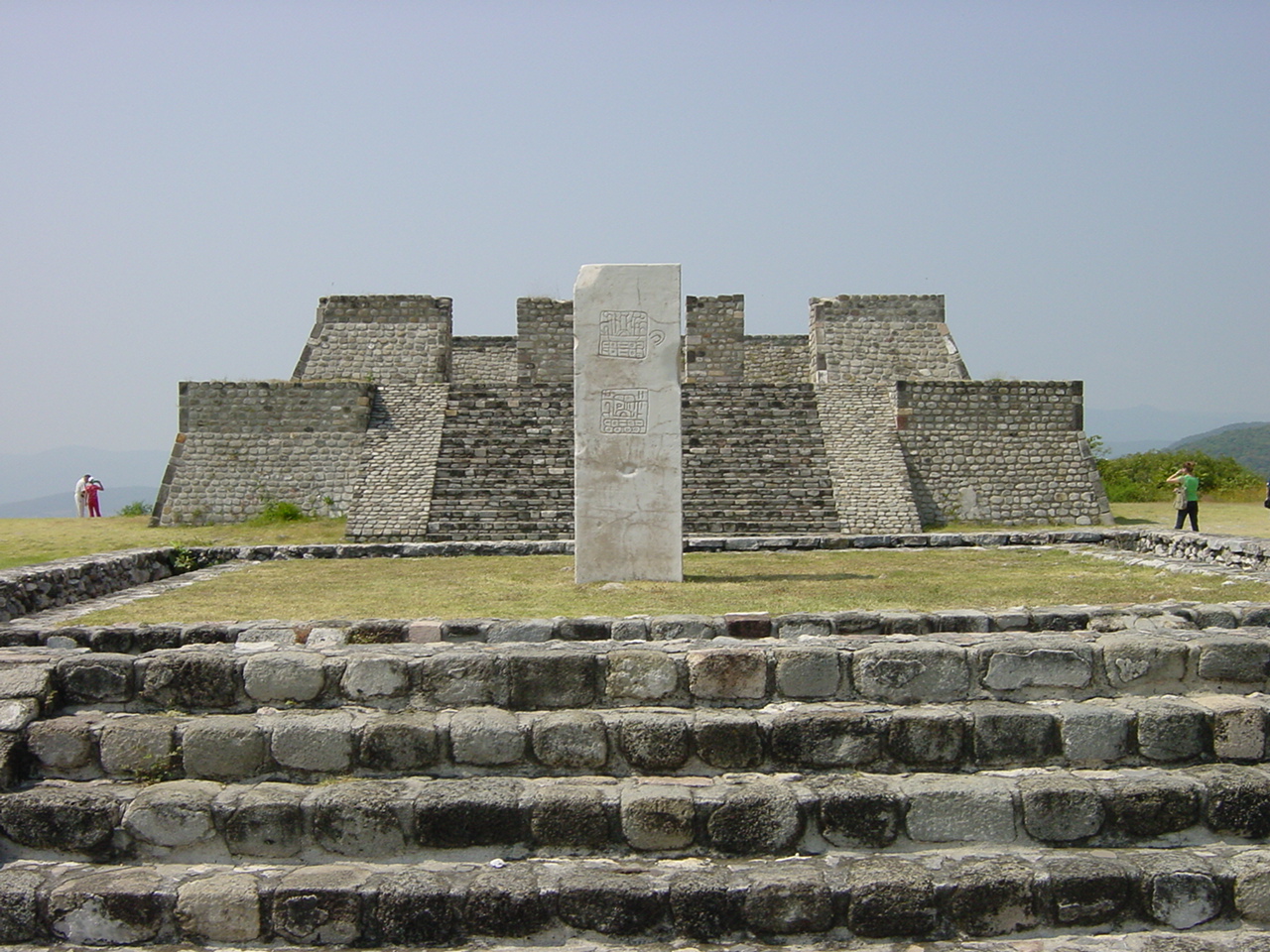
The programme went beyond food. There was live cooking, workshops, talks and cultural events, all under the umbrella of the state's tourism and culture programme "Xochicalco, Tierra de Encuentros", named after the archaeological site in western Morelos. According to Publimetro, the working sessions covered food sovereignty, farm production and the problems traditional cooks face today, and their conclusions were due to be gathered in a manifesto read at the closing on Sunday 8 November, with commitments to carry the work into 2027.
Mexico's federal tourism secretary, Josefina Rodríguez Zamora, attended as the official witness to the signing. She spoke about the place of food in travel across Mexico and the value of tasting smoke-kitchen cooking where it was born. She also announced that La Gran Mesa de México will return next year and in the years after, with more cooks, producers and traditions. Daniel Altafi Valladares said the event aims to tie cooking to farming, recognise the people who preserve these traditions and open opportunities for direct sales.
From a world forum to a cooks' contest in Tepoztlán
The declaration did not come out of nowhere. Morelos has spent several years using its cuisine as public policy and as a draw for visitors, and that track record explains the timing.
- June 2025. The sixth Meeting of Traditional Cooks of Morelos took place at the Dilao sculpture garden in Tepoztlán. According to El Financiero, 20 cooks took part, 16 of them from Morelos, drawn at random from 50 on a register. The day attracted more than 2,000 visitors and generated over 3 million pesos in spending. The jury prize went to the mole of Beatriz Arenas Martínez from Tetela del Volcán.
- October 2025. The governor announced a designation of origin for Morelos mezcal and a geographical recognition for the cecina of Yecapixtla, according to Publimetro.
- November 2025. Cuernavaca hosted the tenth World Forum of Mexican Gastronomy, marking 15 years since the UNESCO listing. Chilango counted cooks from ten states, chefs from France, Italy, Spain and Morocco, and around 100 exhibitors.
- 2026. The seventh Meeting of Traditional Cooks was held at the Jardín Borda cultural centre, with Puebla as guest state, according to Mexico Daily Post.
- 6 November 2026. The heritage declaration is signed and La Gran Mesa de México opens.
At the Tepoztlán contest, Altafi Valladares described the event as "a public policy that recognises those who preserve the gastronomic soul of Morelos", El Financiero reported. The phrase is a useful key to this month's decree: it turns a run of festivals into a long-term institutional commitment.
"Cooking is a complex process tied to the environment."
Gloria López, president of the Conservatory of Mexican Gastronomic Culture, at the 2025 World Forum, as quoted by Chilango

What changes for the cooks, and for the people who eat?
For the cooks, the most concrete difference is visibility. A state register makes it possible to know how many there are, where they live and what they cook, which is the first requirement for any support programme, whether training, market access or direct sales at fairs like this one. La Crónica notes that the government's stated aims are community tourism and local consumption: that visitors' money should reach the community that guards the recipe, not only the restaurant in the city.
For farming, the link is direct. Many of the ingredients now under protection are grown on small plots: the native maize for tostadas, huajes, amaranth, nopal cactus, honey. The 2025 forum showcased local products such as rice and mezcal, both with designations of origin, along with sugar cane, honey, amaranth and nopal. A living traditional cuisine needs someone to keep planting those varieties, and a safeguarding plan can help make sure that harvest has a buyer.
For diners, the effect should show up in what is on offer. Morelos is less than two hours by road from Mexico City and is a regular weekend destination for people heading to Tepoztlán, the spa resorts or Xochicalco. With the declaration, the state has a reason to make that trip include a meal at a market eatery or in a village kitchen, not just a hotel buffet. Other Mexican cities have been moving in a similar direction: Puebla, for instance, placed 14 restaurants in the Michelin Guide, with cemitas and mole among the honours, and a chinampa farming project in Xochimilco won the Basque Culinary World Prize.
What is still missing
The declaration is a starting point. For it to have real effect, the decree must appear in the state gazette, the register of practices has to be compiled community by community, and the safeguarding plan needs a budget and a timetable. None of the sources consulted gives investment figures yet, or the number of cooks who will be included. The closing manifesto, which was meant to set out the commitments for 2027, is also still to be made public in detail.
There is a less visible challenge too. Smoke kitchens depend on firewood, clay and a kind of time that modern life does not always allow. The experience of other listings, such as UNESCO's recognition of the Wixárika pilgrimage route to Wirikuta, shows that a title helps most when communities decide how to use it. If the Morelos plan keeps the cooks at its centre, as its backers promise, Mujeres de fuego y memoria will be the first chapter of something bigger.
In the meantime, the square in Cuernavaca has already shown how it might work. For three days, anyone who wanted to try a mole from Tetelcingo or a marigold quesadilla could do so for under 200 pesos, and pay the person who cooked it directly.
Further reading
- Traditional Mexican cuisine on the UNESCO list: the 2010 file that serves as a model for state-level declarations.
- La Crónica's report on the signing, with the names of those who signed the decree (in Spanish).
- What the heritage status means for Morelos cuisine, with details of the catalogue and safeguarding plan (in Spanish).
- The sixth Meeting of Traditional Cooks in Tepoztlán, with the full list of winners and dishes (in Spanish).
- On The Positive Way: the Afro-Ecuadorian women of Esmeraldas who cooked a world-record tapao.
Go further
- Web · UNESCOLa cocina tradicional mexicana, Patrimonio Cultural Inmaterial de la Humanidad
El expediente original de 2010 explica qué hace única a la cocina mexicana, de la milpa a la nixtamalización.
- Web · Publimetro MéxicoCocina tradicional de Morelos ya es patrimonio cultural: qué implica
Detalla el catálogo Mujeres de fuego y memoria y el plan de salvaguardia anunciado.
- Web · La Crónica de HoyMorelos reconoce su gastronomía como patrimonio cultural inmaterial
Crónica de la firma del decreto y del programa de La Gran Mesa de México.
- Web · El FinancieroMorelos celebró en Tepoztlán su VI Encuentro de Cocineras Tradicionales
La lista de cocineras premiadas y sus platillos es un buen mapa de la cocina del estado.
- Web · ChilangoForo Mundial de la Gastronomía Mexicana en Cuernavaca
Repasa los guisos morelenses que se presentaron en el foro de 2025, del mole de huaje al mencolomole.
- Web · Mexico Daily PostPuebla, special guest at the seventh Meeting of Traditional Cooks in Morelos
Cuenta en inglés el séptimo encuentro de cocineras en el Jardín Borda.





