


 Have a great day, y'all!
Jackfruit, microplastics and mango peel: Nayarit honours five scientists
On 12 November, Nayarit's state congress approved its 2026 Science and Technology Research Medal for five people chosen from twelve applicants. Their work runs from crop health to what local food does inside the gut.
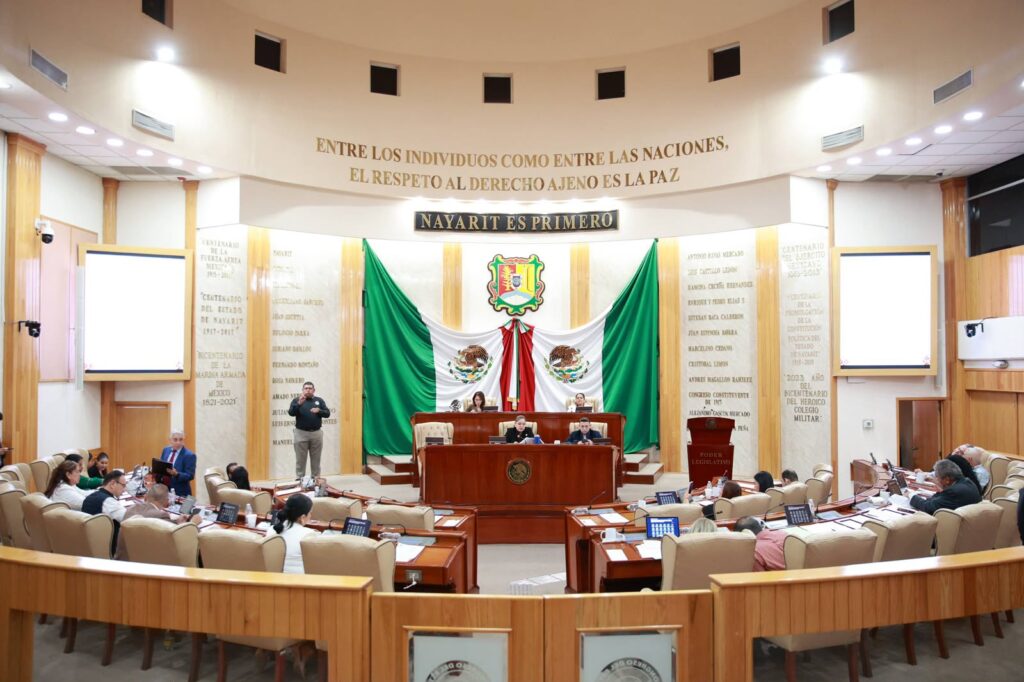
A red mite that feeds on jackfruit leaves in the orchards of San Blas. The pesticides and microplastics that can end up in farmed shrimp. What happens to the peel of an Ataulfo mango once it reaches the colon. These are some of the questions studied by the five people who, on 12 November, were awarded the Nayarit Medal for Scientific and Technological Research 2026 by the Nayarit State Congress.
Lawmakers in Tepic, the state capital, approved the decree granting the award. According to the congress's official statement, the medal honours people who "through research and innovation generate knowledge and solutions" for the state's challenges. The local paper Meridiano de Nayarit reported that there were 12 applicants, five of whom were chosen.
- Five people receive the 2026 Nayarit Medal for Scientific and Technological Research, across four categories.
- They were selected by the state's Council for Science and Technology (COCYTEN) after an open call; the congress then approved the decree.
- Their fields: crop health, agro-industrial training, contaminants in food, science outreach, and the links between Nayarit's food, the gut microbiota and health.
- This edition includes a category of its own for researchers at the start of their careers.
Five names, four categories
This year's medal is split into four categories. Merit in Scientific and Technological Research goes to two people: Luis Martín Hernández Fuentes, for his contributions to crop health and agricultural innovation in the state, and Graciela Guadalupe López Guzmán, for her work in scientific and technological research.
The Regional and Territorial Scientific Development award goes to Martha Lorena Guzmán Robles, recognised for 25 years of academic leadership and for her role in agro-industrial education in Nayarit. Gladys Alejandra Toledo Ibarra wins in Science and Technology Communication, for bringing scientific knowledge closer to the public. And the New Researchers category goes to Víctor Manuel Zamora Gasga, for his studies of Nayarit foods, digestion, the microbiota and their relationship with health.
The process has two steps. COCYTEN opens a call for applications and evaluates the files. It then sends the results to the congress, which approves a decree, the chamber explained. The legal basis is Article 48 of the Nayarit Science, Technology and Innovation Law, as a committee report from an earlier edition sets out. No date has yet been announced for the award ceremony.
"Through research and innovation they generate knowledge and solutions to meet Nayarit's challenges"
Nayarit State Congress, in the 2026 medal decree
Luis Martín Hernández Fuentes: keeping orchards healthy
Hernández Fuentes works at INIFAP, Mexico's national institute for forestry, agricultural and livestock research. He is, for example, lead author of a field study in the Revista Mexicana de Ciencias Agrícolas on the red spider mite Tetranychus pacificus in jackfruit, a tropical fruit of Asian origin grown in Mexico mainly along the Pacific coast.
The fieldwork took place in orchards in San Blas (Jalcocotán, Tecuitata and El Llano) and in Compostela (El Capomo). The team identified the species, tracked how its populations rose and fell with temperature and humidity, and tested which miticides worked. His co-authors came from the Instituto Tecnológico de Tepic, INIFAP and the Colegio de Postgraduados.
The paper gives a sense of the crop's scale nationally: 1,509 hectares of jackfruit, 22,192 tonnes a year and a value of just over 143.9 million pesos, based on official 2017 figures. For growers who depend on those trees, knowing when a pest builds up and what controls it is the difference between a crop that sells and one that is lost. The congress summed up his contribution in two words: crop health and agricultural innovation.

Graciela Guadalupe López Guzmán and Martha Lorena Guzmán Robles
Less has been published about the other two researchers in the general categories. The congress highlighted Graciela Guadalupe López Guzmán's work in scientific and technological research, and Meridiano added that the award recognises a distinguished record in applied studies.
For Martha Lorena Guzmán Robles, the official statement stresses a quarter of a century of academic leadership in agro-industry. It is the kind of work that rarely makes headlines: training the technicians and professionals who go on to turn mango, jackfruit, sugar cane or coffee into higher-value products. Her category, Regional and Territorial Scientific Development, exists precisely to reward impact on the ground rather than publication counts alone.
Gladys Alejandra Toledo Ibarra: science on the radio
Toledo Ibarra has been a full-time professor at the Autonomous University of Nayarit (UAN) since 2012. She studied pharmaceutical chemistry and took a master's in biological and agricultural sciences at UAN, then completed a PhD in biomedical sciences at UNAM, Mexico's national university, in 2023, according to her profile with the Organization for Women in Science for the Developing World (OWSD).
Her speciality is neuro-immunotoxicology: how organophosphate pesticides affect the nervous and immune systems, both in people and in animals they were never meant to reach. She also monitors classic and emerging contaminants, including pesticides, metals, antibiotics and microplastics, in the white shrimp farmed in Nayarit. She is part of the Nayarit unit of the national food-safety research laboratory, LANIIA, and holds level I in Mexico's National System of Researchers.
The medal, though, is not for her papers, which number more than forty, but for what she does outside the lab. She organises research placements such as the Delfín and Explora programmes, events like Molecular Biology for Girls and Science Fridays, and since 2024 she has contributed to a weekly science slot on Radio UAN. She also leads efforts to close the gender gap in science.
It is her second award of 2026. In August she won one of the national For Women in Science fellowships, granted by L'Oréal, UNESCO and the Mexican Academy of Sciences, for a project on how microplastics may disrupt communication between the immune and endocrine systems.

Víctor Manuel Zamora Gasga: what local food does in the gut
The early-career award goes to a scientist at the Integrated Food Research Laboratory of the Instituto Tecnológico de Tepic. According to his profile with the Ibero-American research network CYTED, he works on three lines: foods with prebiotic and probiotic effects, digestion and fermentation in the colon, and dietary patterns and their effect on public health.
His method is to recreate a food's journey through the body. First, digestion in the stomach and small intestine is reproduced in the lab. Then what is left is fermented with gut microbiota, and the compounds the bacteria produce are measured.
Several of his studies use TIM-2, a computer-controlled model of the colon developed in the Netherlands. With it he has tested the prebiotic effect of pre-digested mango peel and the shifts in gut bacteria caused by hibiscus calyces and agave fructans. He has also analysed snacks made from mango by-products, fibre-rich Ataulfo mango fruit bars, dried jícama chips and the phenolic compounds in tomatoes and tomatillos.
Fibre and polyphenols that the body cannot digest travel on to the colon, where they become food for bacteria. The microbes ferment them into compounds such as short-chain fatty acids. Measuring those compounds in a controlled model lets researchers compare one ingredient with another before any trial in people, a cheaper and quicker first step.
His profile also lists traditional fermented drinks such as tejuino, a maize drink popular across western Mexico. The underlying idea is easy to grasp: many of the peels and seeds that food processors throw away could feed the gut bacteria that help keep us healthy. The congress put it this way: research on "the foods of Nayarit, digestion, the microbiota and their relationship with health".
A medal with a track record
The award is not new. In the 2022 edition, according to the legislative committee's report, 50 entries competed across six areas: agricultural sciences, engineering, social and economic sciences, medical sciences, natural sciences and the exact sciences.
That year the winners included native bacteria able to hold back the Fusarium fungus, a study of the natural enemies of crop pests, geothermal energy projects in the south of the state, the effect of metformin on blood-sugar control in type 2 diabetes, and a model for deciding when to harvest mangoes. The exact-sciences prize was left vacant: the only entry did not meet the requirements.
The engineering winner was Jorge Alberto Osuna García, a researcher at INIFAP's experimental station in Santiago Ixcuintla. His team built a single model for the Ataulfo, Tommy Atkins, Kent and Keitt varieties that uses accumulated heat units and dry-matter content, measured with a handheld spectrometer, to tell whether fruit is ready without cutting it open, Agraria.pe reported. He received the medal on 26 October 2023.
The 2026 edition shifts the focus. Instead of fields of knowledge, the categories now reward kinds of contribution: a research career, regional impact, outreach and young talent. Science communication and the next generation now have a place of their own.

Why it matters in a state like Nayarit
Nayarit has about 1.2 million inhabitants, according to INEGI's 2020 census, and an economy closely tied to the land and the sea: fruit orchards on the coast, sugar cane and tobacco in the valleys, shrimp in the estuaries. Several of the winners work right on that line between science and what people grow, catch and eat.
Three of the five winners are women, in a year when one of them, Toledo Ibarra, has also won a national fellowship for her research on microplastics. Giving outreach a category of its own says something too: in a small state, explaining science on the radio or at a workshop for girls can reach more people than a paper in a specialist journal.
The list also reveals a network of institutions working together. The jackfruit study joins INIFAP with the Tecnológico de Tepic and the Colegio de Postgraduados. Toledo Ibarra's research spans UAN, UNAM and LANIIA. And Zamora Gasga's profile sits within an Ibero-American food research network.
The Positive Way has covered other science stories from Mexico's state universities: the Nazas River catfish described by researchers in Durango, the Querétaro university software that finds where traffic jams and the Cessna donated to a polytechnic in Aguascalientes. There is also the new snake found in Puebla thanks to a hen.
At the same 12 November session, lawmakers also approved changes to the state's anti-discrimination and social development laws to improve support for vulnerable children and adolescents, Meridiano reported.
The ceremony is still to come. When it happens, five people will receive the medal: a specialist in orchard pests, two academics with long careers, a toxicologist who talks science on the radio, and a young researcher who studies what gut bacteria do with a mango peel.
Further reading
Go further
- Web · Congreso del Estado de NayaritReconoce Congreso el talento científico y tecnológico
El comunicado oficial con las cinco personas galardonadas y el motivo de cada medalla.
- Web · OWSDGladys Alejandra Toledo Ibarra
Su perfil en la red internacional de mujeres científicas: líneas de trabajo, publicaciones y proyectos de divulgación.
- Web · CYTEDFicha de investigador: Víctor Manuel Zamora Gasga
Resume sus estudios sobre mango, jamaica, jícama y bebidas fermentadas y su efecto en la microbiota.
- Web · Revista Mexicana de Ciencias Agrícolas (INIFAP)Tetranychus pacificus en yaca (Artocarpus heterophyllus) en Nayarit
El estudio de campo en San Blas y Compostela que firma como primer autor Luis Martín Hernández Fuentes.
- Web · Agraria.peJorge Alberto Osuna recibió la Medalla Nayarit a la Investigación
Cómo un modelo para saber cuándo cosechar mango ganó la edición de 2022.
- Web · Sentido ComúnReconoce UNESCO México a investigadora de la UAN por estudios sobre microplásticos
El otro premio de 2026 de Toledo Ibarra, con detalles de su línea sobre microplásticos.
Sources
- Reconoce Congreso el talento científico y tecnológico (Congreso del Estado de Nayarit)
- Reconocen talento de investigadores nayaritas (Meridiano de Nayarit)
- Galardona Congreso aportaciones de investigadores a la entidad (Meridiano de Nayarit)
- Reconoce Congreso el talento científico y tecnológico (Noticias DLB)





