


 Have a great day, y'all!
Six in 2018, 199 this summer: Manitoba's rarest butterfly is gaining ground
Zoo-raised Poweshiek skipperlings released in southeastern Manitoba's tall grass prairie hit a record this year, and wild-born butterflies keep turning up where the species had vanished.

This summer in the Rural Municipality of Stuartburn, in Manitoba's southeast corner, local residents helped send a batch of small brown butterflies out into the big bluestem. They were Poweshiek skipperlings, among the rarest insects in North America, and they had spent the winter as caterpillars inside an incubator at the Assiniboine Park Zoo in Winnipeg.
There were 199 of them. In 2018, the first year of the program, there were six.
- The Assiniboine Park Conservancy and the Nature Conservancy of Canada released 199 zoo-raised Poweshiek skipperlings in 2026 at the Manitoba Tall Grass Prairie Preserve.
- More than 900 have now gone back to the wild since 2018, and close to 800 eggs are already in care for next summer.
- Survey crews logged record counts: sightings at sites checked every year are up 19-fold since 2018.
- For a third straight year, butterflies born in the wild turned up at a site where the zoo first released skipperlings in 2023.
The numbers come from a joint release the two organizations published in Winnipeg on Aug. 6, at the end of this year's field season. They describe a species that, a decade ago, looked to many biologists like it was slipping away for good.
A butterfly that almost vanished in plain sight
The Poweshiek skipperling does not look like much. Its upper wings are dark brown with a band of orange along the front edge, and the underside of the hind wings is grey with pale, almost silver veins. The wingspan is 24 to 30 millimetres. Adults emerge in late June or early July, live about two weeks, and spend that time drinking nectar, mating and laying eggs on grasses and sedges.
For most of the 20th century it was a common sight. It lived in unplowed prairie from the Dakotas east to Michigan and Indiana, and in Canada only in southeastern Manitoba. Then, between roughly 2005 and 2015, it crashed. Biologists who went back to former strongholds in Iowa, Minnesota and the Dakotas found, in the words of the U.S. Fish and Wildlife Service, "only single-digit numbers, or none at all."
Nobody can point to a single cause. The joint release names habitat loss, extreme weather and climate change. Other assessments add overgrazing, invasive plants and the conversion of the last prairie scraps to cropland.
The species is now listed as endangered in both countries. Canada's scientific committee on wildlife, COSEWIC, moved it from threatened to endangered in 2014, the same year the United States listed it under the Endangered Species Act. The IUCN Red List classes it as critically endangered.
That makes a patch of southeastern Manitoba one of the most important places in the world for this butterfly. In 2021, experts estimated that between 150 and 500 adults remained in the wild.

Six butterflies, then 13, then 19
The rescue began quietly. In 2018 the Assiniboine Park Zoo, working with the Minnesota Zoo and a group of Canadian partners known as the Poweshiek Protection Team, started what conservationists call head-starting.
The method is simple to describe and very hard to do. Each summer, staff briefly bring a few wild females to the zoo so they can lay eggs, then return them to the prairie. The eggs hatch into caterpillars that spend the winter in a climate-controlled incubator, protected from the predators, floods and deep freezes that kill most of their wild siblings. The following summer, the adults are released.
The early numbers were tiny. Six butterflies went back to the prairie in 2018, 13 in 2019 and 19 in 2020. In 2021, the Nature Conservancy of Canada reported, the zoo released 47, more than the first three years combined.
A turning point came in July 2020. For the first time, the Assiniboine Park Zoo and the Minnesota Zoo tried to breed captive-reared Poweshiek skipperlings in human care, pairing them in one-foot mesh enclosures inside a 72-hour window. Five of the eight pairs mated. Staff at the Winnipeg zoo watched every pair around the clock, because the program could not afford to keep butterflies back from release if breeding failed.
"We couldn't afford to not release them back into the wild."
Laura Burns, Assiniboine Park Zoo, quoted by the Minnesota Zoo in 2021
Before trying it with the real thing, both zoos had practised since 2018 on the Garita skipperling, a close and more common relative. Minnesota Zoo conservation biologist Erik Runquist said at the time that managed breeding "presents the opportunity to increase the number we release each year."
That is what happened. By the end of 2026, the Manitoba program had returned more than 900 butterflies to the wild.
What the 2026 surveys found
Releasing butterflies is only half of the job. The other half is counting them, and that is where this year's results stand out.
According to the joint release, survey crews from the zoo and the Nature Conservancy recorded the highest counts and the largest population estimates since the program began. Observations at the sites they monitor every year are now 19 times higher than in 2018. Across all sites, observations are 27 times higher than in the program's first year. Crews saw nearly twice as many butterflies this season as last, even though they did fewer surveys.
Two findings matter more than the totals.
The first is that wild Poweshiek skipperlings are showing up near past release sites where nobody had recorded them before. The second is the third consecutive year of wild-born butterflies at the site where zoo-raised adults were first released in 2023, a place where the species had disappeared. Butterflies that hatch, overwinter and emerge on their own are the sign that a population can carry itself.
"We have seen tremendous progress in this program, and each field season gives us more reason to be hopeful."
Laura Burns, Manager of Conservation Programs, Assiniboine Park Conservancy
The zoo's veterinary team also worked with conservation scientists this year on an immobilization study, which found better ways to mark adults with tiny colour codes. Less time in human hands means less stress for an insect that lives only two weeks.
And for the fourth year running, residents of Stuartburn helped with a release. Close to 800 eggs were collected this summer for 2027.
A prairie that is almost gone
The butterfly cannot be separated from where it lives. The Manitoba Tall Grass Prairie Preserve covers about 5,800 hectares near the villages of Gardenton and Vita, roughly 50 kilometres south of Steinbach. Botanists with the Manitoba Naturalist Society realized in the late 1980s that a large block of tall grass prairie had survived there, unplowed.
It is a rare thing. Only about 0.5 per cent of Manitoba's original 6,000 square kilometres of tall grass prairie is still standing. The rest became farmland, roads and towns.
What remains is crowded with life. More than 1,000 species use the preserve's habitats, and 16 of them are on provincial or national endangered lists. It holds the world's largest population of the western prairie fringed orchid, more than half of all the plants known, and the last one in Canada.
Kristen Martin, a program director with the Nature Conservancy of Canada, put it plainly in the joint release: the skipperlings "depend on healthy tall grass prairie, one of the most endangered ecosystems in the world."
"Prairies evolved alongside natural disturbances such as fire and grazing."
Kristen Martin, Program Director, Nature Conservancy of Canada
Her point is that releasing butterflies only works if there is good prairie to release them into. Without fire and grazing, shrubs and aspen move in and the grasses and flowers the skipperling needs fade. The Nature Conservancy and its partners manage the preserve with prescribed burns and grazing to keep it open.

The Michigan half of the story
Manitoba is not working alone. In Michigan, the John Ball Zoo in Grand Rapids has raised the species since 2021, and the Minnesota Zoo has helped lead captive rearing since 2015. The U.S. Fish and Wildlife Service wrote in July that partners on both sides of the border planned to release about 1,500 zoo-reared Poweshiek skipperlings this summer into restored prairie fens in Michigan and Manitoba. One Michigan site will host what the agency called "the first reintroduction of this species within the United States."
In 2025, the Association of Zoos and Aquariums gave its top North American conservation award to the Assiniboine Park Conservancy, the Minnesota Zoo and the John Ball Zoo for this work.
The cross-border effort makes sense. With only two wild populations left, a single bad summer, a flood or a wildfire in either place could set the species back years. Every new site where butterflies breed on their own spreads that risk.
What still has to happen
The scientists involved are careful not to call the species safe. Two surviving wild populations is still a precarious place for any animal. The program depends on yearly funding, on volunteers and students who spend long July days walking survey lines, and on landowners and agencies who keep the prairie burned, grazed and free of invasive plants.
The next test is whether the wild-born butterflies at the 2023 release site, and the new wild sightings near other release points, keep growing without help. If they do, the head-starting work can shift toward new locations, closer to the self-sustaining population that recovery plans aim for.
For now, the trend line runs in one direction. Six butterflies became 13, then 19, then 47, and this summer 199, with 800 eggs waiting in the incubator. You can read more about other species making a comeback in Yukon's Donjek Dall sheep, the moose of Quebec's zone 17 and Wales's rarest oil beetle. And for a Manitoba story from a very different arena, there is Mark Scheifele's Jets record.
The detail you might not know
The skipperling is not the only rarity sharing those 5,800 hectares. In 1998, a count in the preserve found 34,491 stems of the endangered small white lady's slipper orchid, 16,899 of them in flower. The same prairie also shelters sandhill cranes, plains pocket gophers and the Great Plains ladies' tresses orchid. When botanists first recognized the site in the late 1980s, they were looking at plants. Nearly four decades on, the same ground is one of only two places on the planet where the Poweshiek skipperling still lives in the wild.
Further reading
Go further
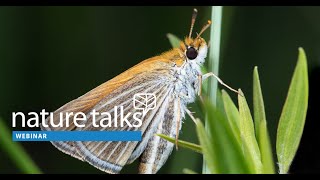 YouTube · YouTubePoweshiek skipperling: Recovery tales of a tiny butterfly
A short film on how zoos and biologists are pulling the species back from the edge.
 YouTube · Michigan NatureLife on the Brink - Poweshiek skipperling
The Michigan side of the story, at the only other place the butterfly survives in the wild.
- Web · Assiniboine Park ZooGrassland Butterfly Conservation Program
How the Winnipeg zoo rears, overwinters and releases the butterflies.
- Web · U.S. Fish and Wildlife ServiceA rare prairie butterfly gains new ground
The cross-border release plan for 2026 and the first U.S. reintroduction.
- Web · Nature Conservancy of CanadaNature Conservancy of Canada in Manitoba
The group that manages much of the tall grass prairie where the butterflies live.
Sources
- Assiniboine Park Conservancy and Nature Conservancy of Canada mark another successful grassland butterfly conservation season
- U.S. Fish and Wildlife Service: A rare prairie butterfly gains new ground
- Nature Conservancy of Canada: Assiniboine Park Zoo sets new release record
- Minnesota Zoo: Assiniboine Park Zoo and Minnesota Zoo breed critically endangered butterfly in managed care
- Manitoba Tall Grass Prairie Preserve (Wikipedia)





