


 Have a great day, y'all!
A new award in Quintana Roo honors the vanilla, the lobster and the pig that almost vanished
For the first time, Quintana Roo honored people who work the land and sea for a living: a vanilla grower, a fisherwoman from Punta Herrero, and a breeder saving the nearly extinct Mexican hairless pig.
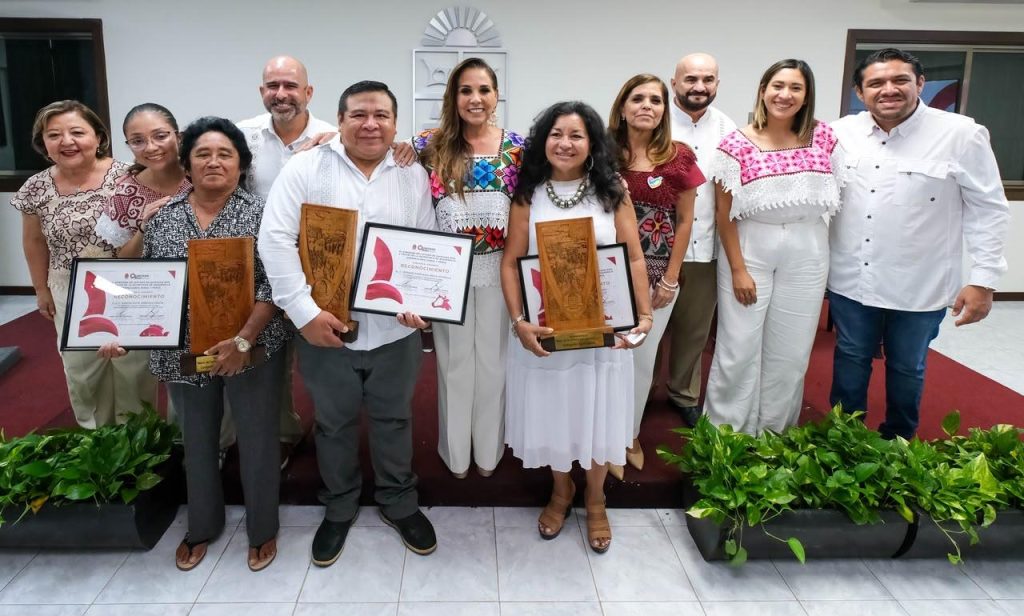
On the afternoon of November 13, inside the state government hall in Chetumal, three people who had never stood on an official stage heard their names read out next to the word "merit." Georgina Gil Hernández grows vanilla and keeps stingless bees in southern Quintana Roo. Martha Ruth Góngora García has made her living from the sea for decades in Punta Herrero, a fishing settlement reachable only by a four-hour dirt road. Edward Manuel Brito Estrella has spent sixteen years breeding, one litter at a time, the last pure specimens of a pig breed that nearly vanished from Mexico. The three received the first-ever Mérito del Sector Rural Quintanarroense (Quintana Roo Rural Sector Merit Award), a recognition the state had never given before.
- Quintana Roo handed out its first-ever rural merit award to three people: a vanilla grower and native-bee keeper, a fisherwoman from Punta Herrero, and a breeder working to save the Mexican hairless pig.
- The pig breed Edward Brito raises is nearly extinct: only about a thousand purebred animals are estimated to survive across the Yucatán Peninsula.
- Punta Herrero, where Martha Góngora fishes, sits inside the Sian Ka'an Biosphere Reserve and depends almost entirely on spiny lobster.
- A panel of outside specialists, not the government itself, chose the three winners from among the nominations submitted.
A recognition that came late
For decades, Quintana Roo handed out awards for almost everything: best hotel, best chef, cleanest beach. No one had ever honored the people who plant, fish, or raise animals for a living. That changed this year, when the state's Secretariat of Agricultural, Rural and Fisheries Development (Sedarpe) opened a call across the state's eighteen municipalities to find people who had spent years working the land and sea without depleting what they touched.
A review panel made up of academics and sector specialists, rather than officials, read through the nominations and chose Gil, Góngora, and Brito. Governor Mara Lezama Espinosa presented the award at a ceremony she described as an act of "social justice" for a sector that, she said, sustains the state's economy outside of tourism.
For decades we handed out recognitions for many things, but we were missing the essential one: the hands that have always put food on our table.
Jorge Aguilar Osorio, Sedarpe secretary
The award fits into what the state government calls the Nuevo Acuerdo por el Bienestar y Desarrollo de Quintana Roo (New Agreement for Wellbeing and Development), a plan meant to keep the state's economy from resting solely on the hotels of the Riviera Maya and Cancún. Quintana Roo welcomes millions of visitors every year, but much of its territory, the south, the interior, the Sian Ka'an coastline, lives off activities that rarely show up in tourism reports: subsistence farming, backyard livestock, small-scale fishing, and the breeding of native species. The call for nominations, published months earlier by Sedarpe, asked for verifiable life stories, documented years of work, and practices that did not wear down the soil, the sea, or the species involved.
The ceremony in Chetumal also drew Othón P. Blanco's municipal president, Yensunni Martínez Hernández, and state lawmakers including Ángel Álvarez Cervera, who chairs the legislature's rural and fisheries development committee. But the speeches agreed on one point: the spotlight belonged to three names that, until that afternoon, were unknown outside their own municipalities.
The vanilla and the bee that doesn't sting
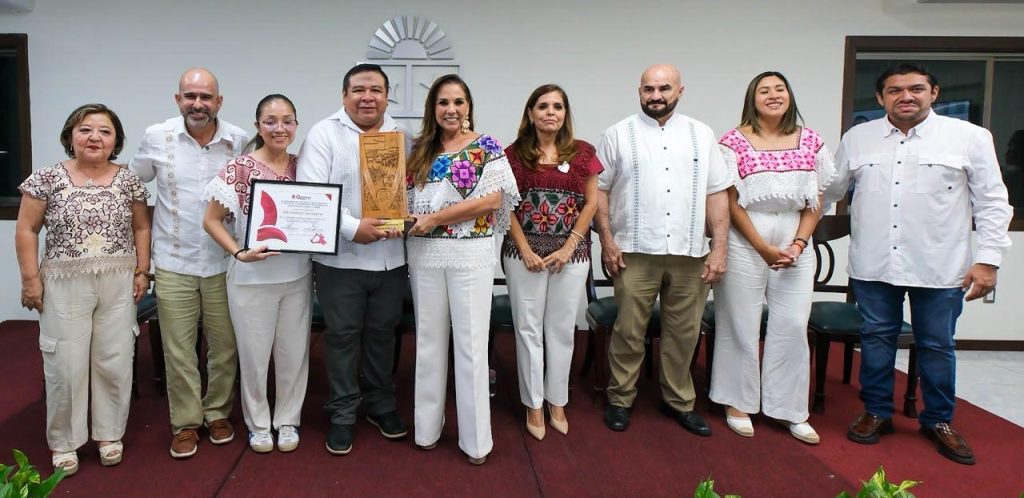
Georgina Gil Hernández has grown vanilla for years in the southern part of the state, work that in Mexico demands patience: each Vanilla planifolia flower opens for a single morning each year and must be pollinated either by hand or by one very particular insect, the melipona bee, native to the peninsula since long before the Spanish arrived. Unlike the European honeybee, the melipona has no functional stinger and lives in small colonies inside hollow logs that Maya beekeepers have tended as a family inheritance for generations.
The species is declining because of deforestation and pesticide use, and several projects across the peninsula, including one documented by the environmental outlet Mongabay, try to rescue it by offering hives for "adoption" to people who agree to keep agrochemicals away from them. Gil combines both trades: without the melipona, her vanilla would set fewer fertilized pods; without the vanilla's flowers, the bee would lose a steady food source. It is work that shows up in no tourism statistic, yet it keeps alive a plant Mexico once exported to the entire world and that, in its own birthplace, now depends on a handful of growers like Gil.
Meliponiculture is nothing new on the peninsula. Maya communities tended these hives, known as jobón when kept in hollowed-out logs, long before European honeybees arrived with the colonizers. That imported bee, more productive for commercial honey, pushed the melipona out of much of its original range during the twentieth century, and with it went part of the traditional knowledge of how to keep it. Families who, like Gil's, kept raising melipona bees anyway did so almost always without institutional support, convinced that the honey, long valued by Maya healers for its medicinal properties, and the pollination it offers crops like vanilla were worth the effort of keeping alive colonies that reproduce far more slowly and fragilely than the common honeybee's.
Four hours of dirt road to reach the sea
Punta Herrero does not appear on Riviera Maya tourist maps. It is a tiny fishing community at the southern tip of Espíritu Santo Bay, inside the Sian Ka'an Biosphere Reserve, a wetland of international importance under the Ramsar Convention. For the first half of the twentieth century, its residents lived off coconut palms; Hurricane Janet, in 1955, wiped out that economy and pushed the community toward organized, cooperative fishing instead.
Today most of the people who fish there, Martha Ruth Góngora García among them, are over forty, and almost no children remain, since families send them to study in Chetumal. Spiny lobster (Panulirus argus), caught using artificial shelters and free diving between July and February, sustains the local economy, according to research published by the Community Conservation Research Network. Living inside a protected natural area means the community cannot build or exploit the land the way other coastlines do, and the fishers often support the reserve's surveillance patrols, frequently without pay.
They are the hands that have always put food on our table.
Jorge Aguilar Osorio, Sedarpe secretary
Góngora represents a generation that chose to stay when others left for hotel jobs in Cancún or Tulum, four or five hours away. Her livelihood today hinges on whether the lobster population can withstand sargassum blooms and poaching by outsiders who do not belong to the cooperative, two problems local fishing organizations have flagged repeatedly in recent years.
The Punta Herrero cooperative does not sell its lobster directly to restaurants on the Riviera Maya, roughly four hours away by road. It sells instead to middlemen who set the final price, and adding value to the catch, freezing it, processing it, selling it without intermediaries, requires training and financing that, according to researchers who have worked with the community, arrives rarely and unevenly from state and federal governments. Nature tourism, which reaches other parts of Sian Ka'an in force, is sometimes floated as an alternative for communities like this one, but turning a fisherman into a tour guide or service provider involves a technical, financial, and legal learning curve that not every family can afford. Until that shift happens, Góngora and the rest of the cooperative will keep heading out for lobster between July and February, much as they have since the years following Hurricane Janet.
The pig that nearly disappeared with the colony
Of the three honorees, Edward Manuel Brito Estrella's story needs the most unpacking, since few people outside Yucatán have heard of the Mexican hairless pig, known locally as cerdo pelón. It arrived with the Spanish in the sixteenth century, when no pigs existed in the Americas; over time it adapted to the peninsula's heat and humidity by losing nearly all its hair, a trait rare among the world's domestic pig breeds. It is black, with large ears and snout, thrives on low-quality forage, and, according to the magazine México Desconocido, its meat is central to traditional Yucatecan cochinita pibil.
The breed began disappearing in the twentieth century, pushed aside by faster-fattening commercial pigs. Brito has spent sixteen years breeding, carefully crossing, and documenting the few purebred animals left, work with no quick payoff: each sow averages six piglets per litter, two litters a year, and the animals are not sold until seven months old. What is at stake goes beyond genetic curiosity. Saving the pure breed means preserving an animal that can be raised without antibiotics, with less stress and lower cost than industrial pigs, and that offers rural peninsula communities a real path toward food sovereignty.
Keeping a herd of hairless pigs is neither simple nor cheap in terms of land: breeders estimate that one boar and twenty-six sows need roughly five hectares to graze and feed on tree forage and sugarcane juice during the dry season. For a breeder who receives no subsidy for conserving the breed, unlike some other animal conservation programs that do get public funding, every litter lost to an accidental cross with a commercial pig sets back more than a decade and a half of work. Brito has kept up that pace without the infrastructure that universities or research centers, which also safeguard purebred animals on the peninsula, can draw on; his breeding operation rests, above all, on one family's persistence.

What an award cannot fix
A trophy does not stop the sargassum threatening Punta Herrero's lobster, slow the deforestation shrinking the melipona bee's habitat, or guarantee enough purebred hairless pigs survive to secure the breed long-term. Sedarpe has not announced, for now, any specific funding tied to the award, and the original call for nominations, published months earlier on its website, included no grant money.
What does change, as both Lezama and Aguilar Osorio agreed at the ceremony, is the public acknowledgment of trades that almost never enter the conversation about the state: while Quintana Roo takes in millions of tourists a year on its beaches, people like Gil, Góngora, and Brito sustain, far from the hotels, a quieter economy rooted in the land, the sea, and the native species the peninsula has always had. The Sedarpe secretary put it plainly: the state had been missing the essential recognition.
Elsewhere on the peninsula, wildlife is also showing signs of recovery: the most recent survey found more jaguars in Quintana Roo than just a few years ago, and in sports, athletes from the state such as Carlos Sansores have also put Quintana Roo on the national map this year.
The detail you might not know
Almost no children live in Punta Herrero. Not because the community is dying out, but because every family that wants its children to study past primary school sends them to Chetumal, four hours away by dirt road, leaving behind only the adults who still head out to sea before dawn. Martha Góngora belongs to one of the few generations that chose not to leave with them.
Go further
- Web · Sedarpe, Gobierno de Quintana RooConvocatoria oficial del Mérito del Sector Rural Quintanarroense
El documento original con los requisitos que debían cumplir los candidatos.
- Web · Secretaría de la Convención RamsarFicha oficial Ramsar de Sian Ka'an
El registro internacional que explica por qué esta reserva, hogar de Punta Herrero, es un humedal de importancia mundial.
- Web · Mongabay LatamColmenas en adopción: el proyecto que busca salvar abejas nativas en la península de Yucatán
Para entender por qué la abeja melipona que cuida Georgina Gil necesita ayuda en toda la península.
- Web · México DesconocidoEl cerdo pelón mexicano, una extraña raza traída por los españoles
La historia completa de la raza que Edward Brito lleva dieciséis años rescatando.
- Web · Community Conservation Research NetworkPunta Herrero
Un retrato detallado de la comunidad pesquera donde vive y trabaja Martha Góngora.
Sources
- Hace Mara Lezama justicia social al reconocer por primera vez a protagonistas del desarrollo rural
- Encabeza Mara Lezama entrega del galardón Mérito del Sector Rural Quintanarroense
- El cerdo pelón mexicano, una extraña raza traída por los españoles
- Punta Herrero
- Colmenas en adopción: el proyecto que busca salvar abejas nativas en la península de Yucatán
- Sian Ka'an - Ramsar Sites Information Service




