


 Have a great day, y'all!
A new federal law doubles the debt ceiling for small-business bankruptcy relief
President Trump signed a bipartisan bill on November 10 that permanently raises the debt limit for the fast-track small-business bankruptcy process to $7.5 million and simplifies the Chapter 13 limits that families use.
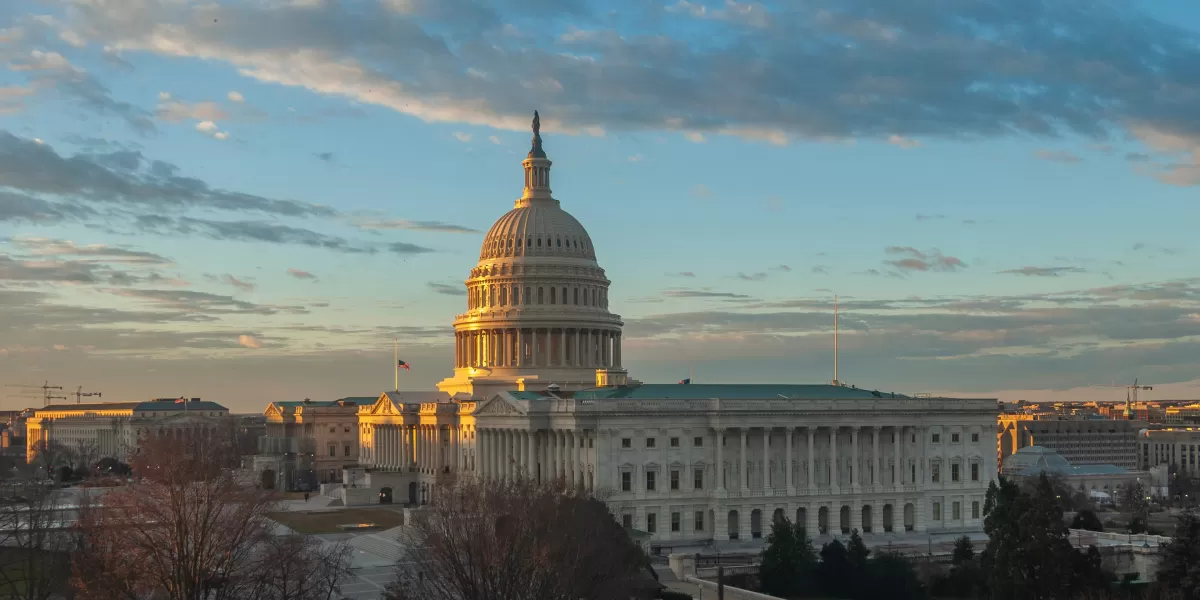
- The Bankruptcy Threshold Adjustment Act (H.R. 7730) was signed into law on November 10, 2026.
- It permanently sets the Subchapter V small-business reorganization debt cap at $7.5 million, up from roughly $3.4 million.
- It also replaces the separate secured and unsecured debt caps in Chapter 13 with a single $2.75 million limit for individuals and families.
- The House passed it by voice vote and the Senate by unanimous consent, with sponsors from both parties.
- The new limits apply to cases filed on or after the signing date; earlier filings keep the prior rules.
A small hardware store that owes $5 million to suppliers and a bank can no longer be shut out of the cheapest form of Chapter 11 protection. Neither can a family carrying a mortgage, medical bills and a small-business loan that add up to more than the old Chapter 13 ceiling. Both groups gained a wider door into bankruptcy court on November 10, 2026, when the president signed the Bankruptcy Threshold Adjustment Act, a bill that had moved through Congress for most of the year with support from lawmakers on both sides of the aisle.
The law rewrites a single number that has quietly decided, for years, who gets to use the cheaper, faster version of Chapter 11 known as Subchapter V, and who instead faces the slower, costlier traditional process. It also folds two separate Chapter 13 debt ceilings into one, a change bankruptcy lawyers have been waiting on since a pandemic-era exception lapsed in 2024.
What changes for small businesses
Subchapter V was created by the Small Business Reorganization Act of 2019 to give small companies a shorter, cheaper path through Chapter 11: no creditors' committee in most cases, a single consolidated plan, and a judge who can confirm it over creditor objections if it treats them fairly. Congress temporarily lifted the debt ceiling to $7.5 million in 2020 to help businesses survive the pandemic, extended that exception twice, and then let it expire in June 2024. The ceiling reverted to its original, inflation-adjusted level of about $3.4 million, instantly shutting out thousands of mid-sized companies that had relied on the higher cap.
The Bankruptcy Threshold Adjustment Act restores the $7.5 million figure and removes the expiration date this time. According to a client alert from McDonald Hopkins, debts are counted as of the date a case is filed, debts owed to company insiders or affiliates are excluded, and at least half of the debt has to come from business activity for a company to qualify. Businesses built around a single piece of real estate remain outside the program under existing rules.

A simpler rule for families in Chapter 13
The same bill tackles a second, quieter problem. Chapter 13, the bankruptcy chapter most individuals and families use to keep their home or car while repaying debt over three to five years, had capped secured debt at roughly $1.58 million and unsecured debt separately at about $526,700. Anyone whose mortgage plus credit cards plus medical bills crossed either line, even slightly, was pushed out of Chapter 13 and into the more complex Chapter 7 or Chapter 11, according to an analysis from the National Law Review.
The new law merges both figures into one combined ceiling of $2.75 million. A family with a larger mortgage but modest credit-card debt, or the reverse, no longer risks disqualification over which column a debt falls into. Attorneys who track bankruptcy filings expect the simpler math to let more households use Chapter 13's structured repayment plans instead of liquidating assets under Chapter 7.
When small businesses face financial distress, they should have a practical path to reorganize and continue operating.
Rep. Laurel Lee, co-sponsor, U.S. House of Representatives
Community organizations that work with small businesses, including a coalition represented in a letter of support sent to lawmakers, had pushed for exactly this kind of permanent fix, arguing that temporary extensions left owners unable to plan ahead. A related pattern shows up in The Positive Way's coverage of apprentices in New Jersey: workers and small employers both do better when the rules they depend on stop changing every year or two.
How the bill moved through Congress
Representative Ben Cline, a Republican from Virginia who had also sponsored the original 2019 law creating Subchapter V, introduced H.R. 7730 on February 26, 2026, alongside Representative Laurel Lee of Florida and Representative Lou Correa, a Democrat from California, as original co-sponsors. The House Judiciary Committee reviewed the bill before the full chamber approved it by voice vote on September 16, 2026, a procedure reserved for measures without organized opposition. The Senate companion, S. 3977, passed by unanimous consent on September 28, 2026, and the House and Senate versions were reconciled without amendment.
The Bankruptcy Threshold Adjustment Act will give small businesses the certainty they need to reorganize.
Rep. Ben Cline, sponsor, U.S. House of Representatives
The White House confirmed the president signed H.R. 7730 into law on November 10, 2026, alongside three unrelated bills covering taxpayer advocacy, a historic landmark designation, and Medicare wheelchair rules. According to reporting from Bloomberg Law, practitioners expect the change to lead to more small-business and personal bankruptcy filings in the coming months, as companies and households who had been locked out by the lower thresholds since 2024 become eligible again.
Lenders will see a wider pool of borrowers eligible for Subchapter V, though the process still gives them less control over a reorganization plan than traditional Chapter 11 does. Landlords and vendors dealing with a struggling tenant or customer may see faster filings and shorter timelines, since Subchapter V plans typically move through court in months rather than years. Restructuring lawyers interviewed by trade publications, including Olshan Law in a client note, described the permanence of the new cap as more significant than the dollar figure itself, since it ends a cycle of temporary extensions that had made the threshold unpredictable for anyone planning a restructuring more than a year in advance.
For a family weighing whether to file for bankruptcy, the practical change is narrower but still meaningful: a single, combined debt ceiling means fewer surprises at the courthouse door, and a few more households will qualify for a repayment plan that lets them keep their home rather than lose it in a liquidation. Bankruptcy judges and trustees, who had already adapted their forms once in 2024 when the temporary limits lapsed, are now updating guidance again to reflect the permanent figures, according to notices posted by several federal bankruptcy courts.
Neither chamber recorded a dissenting vote on the bill, and no lawmaker's public statement opposed the substance of the change, a rarity for a Congress that has split sharply on spending measures in the same stretch of months. The agreement traces back to a shared view, voiced by sponsors from both parties, that a workable bankruptcy system benefits creditors and debtors alike by resolving financial distress faster and with less value lost to legal costs.
What happens between now and the next filing surge
Courts had already lived through one version of this problem. When the temporary $7.5 million cap lapsed in June 2024, every pending case kept the higher limit it had filed under, while any new filing after that date had to meet the lower, roughly $3.4 million threshold. Lawyers describe that two-tier period as confusing for clients who were close to the line, since the outcome of a bankruptcy filing could hinge on whether the paperwork reached the clerk's office a few days earlier. The new law resolves that uncertainty going forward, but only for cases filed on or after November 10, 2026; it does not reopen or retroactively convert cases that were filed, or denied Subchapter V status, while the lower cap was in effect.
Lenders who finance small and mid-sized businesses are watching the change closely for a different reason. Subchapter V gives a struggling company's owners more room to keep their equity and propose a repayment plan than a traditional Chapter 11 case does, and it limits how much leverage secured lenders can exert over that plan compared with the ordinary process. A wider pool of eligible debtors means banks and other lenders that extend credit to companies in the $3.4 million to $7.5 million debt range now need to factor Subchapter V's creditor-friendlier procedural rules, but debtor-friendlier plan rules, into how they structure and monitor those loans. Industry groups that track the law, including the letter of support organized ahead of the September votes, argued that predictable rules ultimately help lenders too, since a workable path to reorganization recovers more value than a liquidation forced by an arbitrary eligibility cutoff.
For bankruptcy trustees and court clerks, the shift mostly means updated forms and training rather than a new process, since Subchapter V itself does not change, only who may use it. Several district bankruptcy courts have already posted notices to attorneys reminding them which debt figure applies to a given filing date, a practical detail that matters because getting the threshold wrong can mean a case is dismissed and has to be refiled under a different chapter, at further cost to a business or family already under financial strain.
Learn more
- White House: H.R. 7730 signed into law
- McDonald Hopkins: the Bankruptcy Threshold Adjustment Act explained
- National Law Review: debtor eligibility under Subchapter V and Chapter 13
- Bloomberg Law: higher debt caps to boost small-business and personal bankruptcies
- Rep. Ben Cline's official page
- Rep. Laurel Lee's official page
Go further
- Web · The White HouseCongressional Bills H.R. 997, H.R. 1703, H.R. 1945, and H.R. 7730 Signed into Law
La confirmación oficial de que el presidente firmó la ley el 10 de noviembre de 2026.
- Web · McDonald HopkinsCongress permanently restores the $7.5 million Subchapter V debt limit
Explica cómo se cuenta la deuda y quién califica bajo el nuevo tope del Subcapítulo V.
- Web · National Law ReviewDebtor Eligibility Under Subchapter V and Chapter 13 Expected to Rise
Compara las cifras exactas de deuda del Capítulo 13 antes y después de la reforma.
- Web · Bloomberg LawHigher Debt Caps to Boost Small Business, Personal Bankruptcies
Analiza el previsible aumento de presentaciones de quiebra tras la entrada en vigor.
- Web · Ripon AdvanceCline, Lee push to raise Chapter 11 cap for small businesses
Recoge las declaraciones de los dos legisladores que impulsaron el proyecto.
- Web · Olshan LawCongress Permanently Raises Subchapter V Bankruptcy Debt Limit to $7.5 Million
Explica por qué la permanencia del nuevo tope importa tanto como la cifra misma.
Sources
- Congressional Bills H.R. 997, H.R. 1703, H.R. 1945, and H.R. 7730 Signed into Law
- Congress permanently restores the $7.5 million Subchapter V debt limit
- Debtor Eligibility Under Subchapter V and Chapter 13 Expected to Rise
- Higher Debt Caps to Boost Small Business, Personal Bankruptcies
- Cline, Lee push to raise Chapter 11 cap for small businesses





