


 Have a great day, y'all!
Seven in ten high-speed trains will run: Spain's rail strike and what has changed
Tuesday's rail strike keeps most trains moving. Here is what runs, what workers are asking for and which safety measures are already under way.

The essentials in 30 seconds
- On Tuesday 17 November Spain's whole rail sector holds a 24-hour strike. 72% of AVE high-speed and long-distance trains will run, and 75% of Cercanías commuter trains at peak times.
- It has been called by the Renfe and Adif works committees, backed by CCOO, UGT and CSIF, plus the drivers' union Semaf at several operators. Their core demand is safety after the Urda crash.
- Since 28 October the government has approved a safety plan, aid for victims and a decree strengthening inspections; unions want them implemented now, with more staff.
- If you travel: check your ticket today, look at your operator's website before you leave and, if your train is cancelled, you are entitled to a change or a refund.
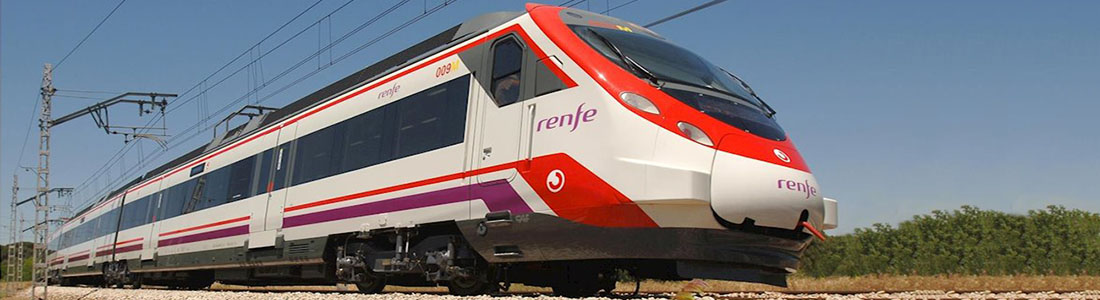
At Madrid's Atocha station, at six on Tuesday morning, the first band of minimum services will kick in. From six to nine, three in every four scheduled Cercanías trains will leave on time. By mid-morning that drops to half. That is what the rail strike will look like as it partly halts trains across Spain, the broadest walkout since train drivers began striking earlier this month.
It comes twenty days after the collision at Urda, in Toledo province, on the Madrid–Seville high-speed line, which killed 69 people on 28 October. The question riding with half the country on the platform is whether the train is still safe and what is being done to stop it happening again. Here are the facts, calmly.
What runs on Tuesday
Minimum services were set by the Ministry of Transport and Sustainable Mobility, according to Renfe's statement and figures compiled by elDiario.es:
- Cercanías: 75% at peak hours (6:00–9:00, 13:30–15:30 and 18:30–20:30) and 50% the rest of the day.
- Medium distance: around 65% of trains.
- AVE and long distance: 72%.
- Rodalies in Catalonia: 66% at peak times, 33% otherwise.
- Renfe freight: 26%.
- Iryo: keeps 70% of its trains.
- Ouigo: runs 17 of its 27 scheduled trains, cancelling ten, including several Madrid–Valencia, Madrid–Barcelona and Madrid–Alicante services.
Ouigo has emailed affected customers: they can change their ticket for free or get a refund, plus a non-refundable credit worth 50% of the fare. Iryo is offering rebooking or cancellation. Renfe advises checking each train's status before setting off, as changes may happen during the day.
Who called it and what they want
The strike was called by the works committees of Adif, the rail infrastructure manager, and of Renfe, together with two rail unions, SF and SCF, and backed by CCOO, UGT and CSIF, according to El Español. The train drivers' union Semaf issued its own call covering Renfe, Iryo, Ouigo and five freight operators.
Their demands, in their own terms: more safety across the network, more staff and lighter workloads in traffic control centres, clear protocols for bad weather, an official guide for when the LZB signalling system fails, better monitoring of temporary speed limits and a technical recommendation on minimum train crews. They also oppose outsourcing and want the commitments agreed with the ministry in February honoured.
In recent days the government appointed Joaquim Hortalà as president of Adif and Inmaculada Gutiérrez as president of Renfe. The unions are keeping the strike: they say the dispute stays open until what has been agreed is put into practice, according to Actualidad Valencia. Semaf has also called another stoppage for Monday 23 November.
"We are fully aware that, when they have the will, they can process and pass rules in a few weeks."
Diego Martín, general secretary of Semaf, quoted by Qué!
What has already changed since Urda
Three packages have been approved in three weeks. They are worth knowing because they explain what is on the negotiating table.
The first, on 3 November, was an extraordinary safety plan for high-speed rail. Its central measure is double validation: when automatic blocking is not working, control-centre decisions must be checked by a second controller. The official investigation will establish what caused the crash, but published reports say the LZB system had failed minutes before. The plan also brings new software for control centres, a review of rules by the State Railway Safety Agency, more staff, rest periods matched to the busiest hours, regular drills, and completion of the ERTMS train-control system on the Madrid–Seville line in early 2027, with fewer services until then, according to the Council of Ministers summary.
The same day, €30 million in direct aid and advance compensation was approved for victims and their families. It is paid without waiting for court cases to end, is tax-free, and is handled through support offices at central government delegations, with home visits for those who cannot travel.
The second, on 10 November, was a royal decree-law that strengthens the agency's inspection powers and gives train drivers the right to refuse to start, or to stop a train, if they detect a risk on the line. Parliament must ratify it.
The third, on 13 November, came when the agency published its recommendations on double checks, listing the critical operations that will require a second operator and an auditable record of each check. Infrastructure managers have six months to present their plans, including how many extra staff they need and when they will arrive, according to El Español.
Context that helps
Spain has the longest high-speed rail network in Europe. In 2025 its trains carried 547 million passengers, and high-speed rail doubled its 2019 ridership to 44.5 million, according to the competition regulator's annual report. The overwhelming majority of those journeys ended without incident.
Recent history also offers a lesson. After the Angrois crash in 2013, it took around ten years to extend automatic ERTMS control on the affected stretch. This time the timetable is measured in months, and the debate is happening in public, with workers, engineers and government arguing over concrete measures. Unions and government share the goal; what they dispute are the deadlines and the resources.

What you can do
- Today: check your ticket on the Renfe, Iryo or Ouigo website or app. If your train is cancelled, ask for a change or a refund.
- On Tuesday: if you use Cercanías, try to travel during peak bands, when more trains run, and allow extra time.
- If you can: work from home, share a car or bring your trip forward.
- If you want to help: victims' support offices are run by government delegations; official information is on the Ministry of Transport website.
The strike falls in the middle of the campaign for the 29 November general election. If you need to plan your vote, this guide has the full calendar, including postal voting. And if you are following another of these weeks' big debates, here is the figure that sums up Spain's housing problem.
On Wednesday, timetables return to normal. The negotiations will take longer: the next date circled in red is Monday the 23rd.
To understand it better
- Renfe's official minimum services for 17 November (Spanish)
- Safety plan and victim aid approved on 3 November — La Moncloa (Spanish)
- Annual rail sector report 2025 — CNMC (Spanish)
Go further
- Web · RenfeServicios mínimos para la huelga del 17 de noviembre
La fuente oficial de los porcentajes de trenes que circulan.
- Web · La MoncloaPlan de seguridad de la alta velocidad y ayudas a las víctimas de Urda
Detalle de las medidas y de las ayudas aprobadas el 3 de noviembre.
- Web · CNMCInforme anual del sector ferroviario 2025
Las cifras de viajeros y precios que dan contexto al debate.
- Web · El EspañolSeguridad Ferroviaria impulsa la doble validación
Explica qué operaciones exigirán un segundo controlador.





