


 Have a great day, y'all!
From 104 to 133 countries: UN death penalty moratorium wins its widest backing
The General Assembly's Third Committee approved on 13 November, by 133 votes to 33 with 16 abstentions, the resolution calling for executions to be suspended with a view to abolition. It is the strongest support since the first vote in 2007.

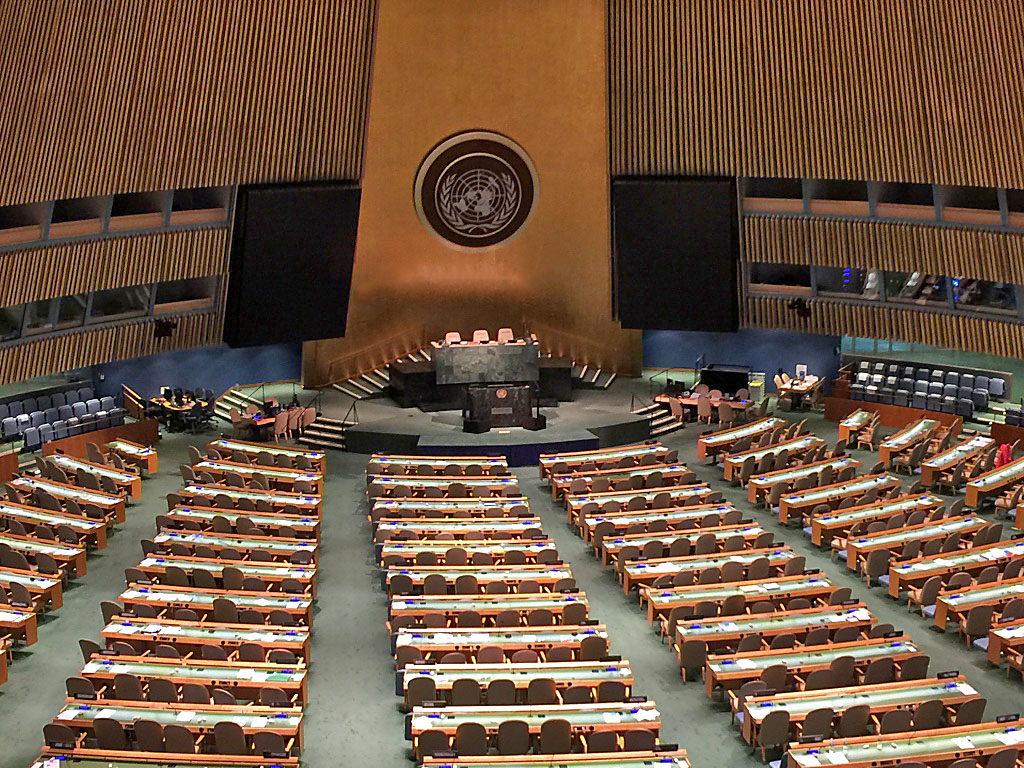
Nineteen years separate two numbers. In December 2007, 104 countries voted in the UN General Assembly to call for a universal moratorium on the death penalty. On 13 November 2026, in a room in New York, the figure reached 133.
The vote took place in the Third Committee, the General Assembly body that handles human rights. The text, registered as A/C.3/81/L.43, passed by 133 votes in favour, 33 against and 16 abstentions, according to the official UN meeting record. It calls on states that still use capital punishment to establish a moratorium on executions with a view to abolishing it.
A timeline shows how far it has come:
- 2007: first resolution, championed by Italy. 104 in favour, 54 against, 29 abstentions.
- 2010: 109 in favour.
- 2014: 117 in favour.
- 2018: 121 in favour.
- 2022: 125 in favour.
- 2024: 130 in favour in the plenary, after 131 in the Third Committee.
- 13 November 2026: 133 in favour in the Third Committee.
The series comes from the voting record compiled by Wikipedia from UN documents; the 2026 figure comes from the meeting record. Euronews and Italy's Italpress news agency note that this is two votes more than in the same committee two years ago, and Italpress calls it a record.
What was voted on, and what was not
Precision matters here. This resolution is not a treaty and binds no one. It is a political recommendation, voted on every two years, and it measures something specific: how many governments are willing to say in public that executions should stop.
That is why the numbers matter. In 2007 the gap between "yes" and "no" was 50 votes. In 2026 it is 100.
The session was not a quiet one. Before adopting the text, the committee voted on an amendment proposed by Singapore reaffirming each country's "sovereign right" to set its own penalties. It passed by 97 votes to 63, with 16 abstentions. Mexico, one of the resolution's supporters, regretted the addition and pointed out that the original draft already addressed sovereignty.
The Mexican delegation also made a practical argument, recorded in the UN minutes.
"No system is immune to error."
Delegation of Mexico to the Third Committee
According to the same record, Mexico added that a moratorium offers an opportunity to strengthen safeguards and prevent irreversible loss of life. On the other side, Egypt argued that capital punishment deters serious crimes which, in its delegation's words, threaten the lives and security of societies. Both positions went on the record, and the vote settled it.
The Singapore amendment is a recurring feature of these debates. Supporters of the death penalty use it to underline that the resolution does not override national law; supporters of the moratorium accept the wording because the core request, a pause in executions, survives intact. This year, once again, the text that left the room still asked for that pause.
Who pushed the text
The resolution is the work of a cross-regional group of countries known as the Interregional Task Force. Italy has belonged to it from the start and was the country that took the first proposal to the Assembly in 2007. Its foreign minister, Antonio Tajani, welcomed the result.
"The international community is moving more and more towards overcoming this unjust and inhuman practice."
Antonio Tajani, Italian foreign minister, quoted by Italpress (our translation)
According to Italpress, the Italian government worked on the negotiations with civil society groups including Amnesty International Italy, the Community of Sant'Egidio and Nessuno Tocchi Caino, which coordinate through a national task force on the death penalty.
A world that is moving, and one that is not
The vote comes in a year of contrasts. On one side, fewer and fewer countries keep the death penalty. Euronews, citing Amnesty International, notes that by the end of 2025 113 countries had abolished it for all crimes and 145 had done so in law or in practice. Europe and Central Asia recorded no executions and no new death sentences in 2025. Belarus, the only European country that still has it in law, handed down no sentences and carried out no executions for the first time since 1994.
During the session itself, Lebanon's delegation noted that the country announced the formal abolition of capital punishment in August 2026, according to the UN record.
On the other side, the countries that do execute are doing so more. Amnesty counted at least 2,707 executions in 17 countries in 2025, up 78% from 1,518 in 2024, according to Euronews. The great majority took place in Iran, with at least 2,159. China is not included in the count, because it treats those figures as a state secret.
After Iran came Saudi Arabia, with at least 356 executions; Yemen, with 51; and the United States, with 47 across 11 states, the highest figure there since 2009, again according to the Amnesty data reported by Euronews. At least 1,257 executions were for drug offences, in China, Iran, Kuwait, Saudi Arabia and Singapore, which Amnesty says international law does not allow. The Middle East and North Africa went from at least 1,442 executions in 2024 to 2,611 in 2025.
Those figures are why abolitionist groups describe the moment as a widening gap rather than a straightforward advance: more countries are stepping away, while a few are executing at a pace not seen in decades. Mexico cited a rise of almost 80% during the session, consistent with Amnesty's figure.
That double trend explains the value of the vote. The resolution does not solve what happens in a handful of countries, but it confirms where the majority is heading. Every two years, more governments sign a text that twenty years ago would have been a minority position.

Where the votes came from last time
To see where growth might come from, it helps to look at the previous round. On 17 December 2024 the plenary adopted the tenth resolution with 130 votes in favour, 32 against, 22 abstentions and 9 absent, according to the World Coalition Against the Death Penalty. That was five more "yes" votes and five fewer "no" votes than in 2022.
Most of the shift came from Africa. Thirty-three African countries voted in favour in 2024, compared with 17 in 2007, the coalition says. Kenya, Morocco and Zambia, which had previously abstained, backed the text for the first time. Algeria and Tunisia also voted yes for the first time. Antigua and Barbuda moved straight from "no" to "yes", while the Bahamas and Bangladesh stopped voting against and abstained instead.
Not everything moved the same way. The coalition notes that Uganda went back to abstaining in 2024, and that Zimbabwe, which had voted in favour in committee, abstained in the plenary because its abolition bill was still awaiting the president's signature. They are reminders that every vote also reflects each country's domestic politics.
The coalition highlighted another detail from 2024: for the first time since 2022, opponents did not send the Secretary-General a note verbale distancing themselves from the resolution. It is a minor diplomatic gesture, but those who follow these votes read it as a sign that organised opposition has weakened.
Against that baseline, the 133 committee votes of 2026 are two more than in committee in 2024 and three more than in that year's plenary. The final figure will be known in December.
Behind each of those shifts there is usually a domestic story: a court ruling, a new government, a long campaign by lawyers and families, or simply years without an execution that make a formal moratorium easier to accept. The UN vote does not create those changes, but it records them, and it gives governments that are halfway there a public place to state where they stand.
The day's other votes
The same afternoon, the Third Committee approved nine other resolutions. One on extrajudicial, summary or arbitrary executions received 131 votes in favour, none against and 47 abstentions. During that debate, an Egyptian amendment to remove references to sexual orientation and gender identity was rejected by 74 votes to 69, the record shows.
The committee also approved without a vote the follow-up resolution to the Second World Assembly on Ageing, a text that usually passes by consensus. It adopted others on the right to development, the right to food and international cooperation on human rights, the last of which drew 176 votes in favour.
Anyone who follows the UN will recognise the pattern: full consensus is hard to come by, but broad majorities exist. We saw it this month with the WHO pandemic agreement, adopted with no votes against, and with the International Court of Justice's climate opinion, which began in a classroom in Vanuatu.
What comes next
The text approved by the Third Committee now goes to the full General Assembly, which will vote on it in December, according to Euronews. By tradition, the plenary result tends to be very close to the committee's, though it can shift by a few votes because of absences or last-minute changes. In 2024 it went from 131 in committee to 130 in the plenary.
Organisations that follow the issue, such as the World Coalition Against the Death Penalty, use these votes both as a barometer and as a tool: a government that votes yes in New York finds it harder to justify executions at home. That is why they watch the abstainers closely, since they are the countries most likely to change sides from one vote to the next.
The meeting record does not say which countries changed their votes compared with 2024, and neither do the other sources consulted. That list, once the recorded vote is published, will show where the two new votes came from.
The UN is also busy this season with other questions of global governance, such as the global dialogue on artificial intelligence that brought 163 countries together in Geneva.
The detail you might not know
In 2007, the gap between countries backing the moratorium and those rejecting it was 50 votes. In 2026 it is exactly 100: 133 to 33. In less than two decades the margin has doubled, without the resolution changing its central request.
Further reading
Go further
- Web · Naciones UnidasThird Committee approves 10 draft resolutions (GA/SHC/4458)
El acta oficial de la sesión del 13 de noviembre, con cada votación y las intervenciones de las delegaciones.
- Web · Euronews133 países de la ONU votan a favor de la moratoria universal de la pena de muerte
Resume el voto y lo pone en contexto con las cifras de ejecuciones de Amnistía Internacional.
- Web · ItalpressOnu, approvata la risoluzione per una moratoria universale della pena di morte
La versión italiana: el país que impulsó la primera resolución en 2007 explica su papel en la negociación.
- Web · WikipediaResolutions concerning death penalty at the United Nations
La tabla con todas las votaciones desde 2007, útil para ver la tendencia de dos décadas.
- Web · World Coalition Against the Death PenaltyTwo-thirds of the UN General Assembly vote in favor of the 10th resolution for a moratorium
La lectura de la coalición de ONG que sigue estas votaciones desde el principio, sobre la resolución de 2024.





