


 Have a great day, y'all!
A public university in Medellín now makes Colombia’s malaria pills
A 400-square-metre public plant in Medellín has produced Colombia’s first industrial batch of chloroquine: 1.7 million tablets that PAHO will distribute in Colombia and across the region.

In a 400-square-metre production room at the University of Antioquia in Medellín, workers turned out 1.7 million chloroquine tablets this year. Chloroquine is a front-line malaria treatment that Colombia had imported for decades. This is the first time a public university plant in the country has made it at industrial scale, with approval from the national drug regulator, Invima, and with a buyer already waiting: the Pan American Health Organization.
The first batch was announced on 14 May 2026. By mid-July the boxes had been handed to PAHO, and on 22 July Colombia's Ministry of Health said the government had received the chloroquine made in Antioquia.
- The first batch held 1.7 million tablets, against an initial target of 1.2 million.
- Colombia uses roughly 1.3 million units a year, according to the Ministry of Health.
- The project was funded with 2 billion pesos from the national Health Research Fund.
- PAHO will distribute the drug in Colombia and in other countries in the region.
- It is the first of five medicines for neglected diseases the university is developing.
A small plant with three decades of practice
The Essential Medicines Production Plant belongs to the Faculty of Pharmaceutical and Food Sciences at the University of Antioquia, known as UdeA. It has run for more than 30 years, makes only solid forms such as tablets and capsules, and works at volumes a private drugmaker would call modest.
Its size did not stop chloroquine from going through every stage regulators require: research, formulation, pilot batches, stability studies and finally a health registration. Invima granted registration 2025M-0022020 in June 2025, as Infobae reported at the time. Eleven months later, full production began.
"This is the result of trusting the 30 years of experience of a public medicine production plant."
Wber Ríos Ortiz, dean of UdeA's Faculty of Pharmaceutical and Food Sciences
The dean told RTVC Noticias that the batch rests on three years of work with the Ministry of Health and the Ministry of Science. The first estimate called for 1.2 million tablets. PAHO then confirmed that demand was higher, so the plant raised output to 1.7 million.
David Felipe Molina, the plant's project manager, described the daily routine to El Colombiano: the team moves step by step with whatever Invima requires. The harder task now, he said, is keeping that capacity going year after year.

Why a cheap tablet matters so much
Malaria is caused by Plasmodium parasites and spread by the bite of female Anopheles mosquitoes. The Ministry of Health puts Colombia's toll at 50,000 to 100,000 cases a year, mostly along the Pacific coast, in the Cauca and Sinú river valleys, the Amazon and the eastern plains of the Orinoquía. By May 2026 the country had logged 14,899 cases.
The people who fall ill tend to live far from hospitals, often in scattered rural Indigenous and Afro-Colombian communities. Whether a rural health post has the drug on its shelf depends on international purchases, prices and shipping times that no one in the village controls.
Within Antioquia, more than 90% of the department's cases occur in the Urabá and Bajo Cauca subregions, El Colombiano reported. Iván Darío Vélez, founder of UdeA's Programme for the Study and Control of Tropical Diseases (PECET), told the paper why mining makes things worse: every pit left behind by mining, he said, is a potential breeding site for Anopheles.

Medellín already knows what applied science can do against mosquitoes. Releasing insects that carry Wolbachia bacteria, a programme run by the World Mosquito Program with PECET, cut dengue incidence by 95% to 97% in Medellín, Bello and Itagüí. That method does not work for malaria, though. "They are two completely different mosquitoes," explained Sara Robledo, PECET's director. Fast treatment within everyone's reach remains the main tool.
Other countries show the disease can be beaten. Suriname became the first Amazonian country certified malaria-free, and in Asia Timor-Leste went from 223,000 cases to zero. In both places, guaranteed diagnosis and treatment in remote areas made the difference, as the World Health Organization notes.
From campus to a regional fund
The batch is not just for Colombia. It was bought through the PAHO Strategic Fund, which pools demand from several countries to obtain essential medicines at better prices. With this delivery, the University of Antioquia joined the fund's list of suppliers.
The purchase falls under Colombia's CONPES 4170 policy document of 2025 and an agreement between the Ministry of Health, the National Institute of Health and the university to expand the state's capacity to make medicines. The ministry described the product as the result of cooperation between government, academia and the national pharmaceutical industry.
Ríos Ortiz told El Colombiano that the project is meant for Latin America as well as Colombia. Chloroquine sits on the list of essential medicines for neglected diseases, a market where few private companies see much commercial interest.
Next: four more drugs and a plant 30 times larger
Chloroquine is the first item on a longer list. The same agreement covers niclosamide, for tapeworm infections; benznidazole, for Chagas disease, which El Colombiano says affects 436,000 people in Colombia and puts more than 12 million at risk; and praziquantel, for serious parasitic infections that damage the lungs and liver.
A second agreement targets triple-combination dolutegravir, a first-line HIV treatment. A ruling by the Court of Justice of the Andean Community upheld a compulsory licence on its patent, which could cut the price by more than 90%. The university expects its health registration by the end of 2026. According to Colombia's High-Cost Account, cited by El Colombiano, 185,954 people in the country have been diagnosed with HIV and 80.7% receive treatment. The approach echoes the twice-yearly HIV prevention shot that now has a 40-dollar generic.
There is also a 1.8 billion-peso agreement, with a 14-month timeline, to make primaquine, which attacks the dormant liver stages of the malaria parasite and prevents relapses. Another covers a sterile-solutions line at the Alma Máter Hospital's compounding centre, designed to produce antidotes for methanol, cyanide and pesticide poisoning.
The biggest bet is in eastern Antioquia. On the university's campus in El Carmen de Viboral, a new plant of about 10,000 square metres is planned, with lines for solids, liquids and injectables and its own quality-control laboratory. The projected investment is 423.6 billion pesos, with 350 billion coming from the national government through multi-year budget commitments. Construction is expected to take seven years. Ríos Ortiz estimates it would raise capacity 30- to 40-fold and allow the university to make between 200 and 300 medicines.
The challenges are clear. The current plant is small, meeting good manufacturing practice standards demands constant investment, and the new site is years away. In Bogotá, another sustained public policy is already showing numbers, with poverty falling in every district of the city. In Antioquia, the next test is making sure the chloroquine made in Medellín reaches health posts in Urabá, the Pacific and the Amazon on time.
Something you might not know
The only comparable project in Latin America cited by El Colombiano is in Argentina: the Hemoderivatives Laboratory of the National University of Córdoba, a public university laboratory that makes plasma-derived medicines. Antioquia hopes to play a similar role in the north of the continent, and it has started with a 150-milligram tablet that, in a village in the Bajo Cauca, can stop a fever in time.
Go further
 YouTube · Hora 13 Noticias¡Qué orgullo! UdeA recibe certificación Invima para producir medicamento para la malaria
Cuenta el momento de junio de 2025 en que el Invima dio luz verde a la planta universitaria.
 YouTube · Universidad de AntioquiaLuz verde para la construcción de nueva sede de la Planta de Medicamentos Esenciales de la UdeA
La universidad explica el proyecto de la nueva planta en El Carmen de Viboral.
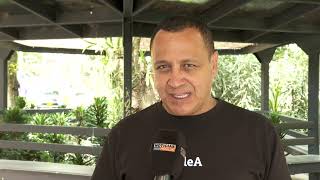 YouTube · Noticias Telemedellín¡Histórico! La UdeA elaboró de manera industrial medicamento para tratar la malaria
Reportaje local con imágenes de la producción del primer lote.
- Web · Organización Panamericana de la SaludFondo Estratégico de la OPS
Explica cómo los países de las Américas compran juntos medicamentos esenciales a mejor precio.
- Web · Organización Mundial de la SaludPaludismo: datos y cifras
La ficha de referencia de la OMS sobre la malaria, su transmisión y su tratamiento.
- Web · Universidad de AntioquiaPECET – Programa de Estudio y Control de Enfermedades Tropicales
El grupo de Medellín que lleva décadas investigando malaria, leishmaniasis y dengue.
Sources
- El Colombiano: UdeA entrega 1,7 millones de tabletas de cloroquina a la OPS
- RTVC Noticias: La Universidad de Antioquia produce por primera vez cloroquina en una planta pública y universitaria
- Infobae: la Universidad de Antioquia obtiene el aval del Invima para producir cloroquina
- Consultorsalud: Universidad de Antioquia entrega el primer lote de cloroquina producido en Colombia





