


 Have a great day, y'all!
Fresh water under a polder, a cloud forest in Colombia: 13 women farmers honoured
Thirteen women from twelve countries, including Colombian conservationist María Victoria Blanco, received the Women in Ag Award 2026 at the EuroTier fair in Hanover on 11 November, picked from more than 170 applicants in 62 countries during the International Year of the Woman Farmer.

At four o'clock on Wednesday 11 November, the German Agricultural Society (DLG) stand in Hall 13 of EuroTier, in Hanover, hosted the ceremony for the Women in Ag Award 2026. Its 13 winners were chosen from more than 170 applicants in 62 countries. Among them were a Dutch arable farmer who banks fresh water underground, a Nigerian cassava processor, a Kazakh educator and an Austrian designer who feeds insects on industrial leftovers.
There was also a Colombian veterinarian who has spent 32 years looking after a patch of cloud forest beside one of the country's best-known waterfalls.
- 13 winners from 12 countries, across four categories: farming, agribusiness, education, and technology and research.
- The award, run by the DLG and Women in Ag magazine, is in its fifth year and has grown with every edition.
- First prizes went to the Netherlands, Nigeria, Kazakhstan and Austria; Kenya, Uganda, South Africa, China and Colombia also reached the podium.
- The ceremony fell within the UN's International Year of the Woman Farmer, launched by the FAO in December 2025.
The names had been public since mid-October, when the organisers posted the list on their Substack newsletter. Hanover was the moment to hand the prizes over, followed an hour later by a gathering of the Female Agri Fellows, a network the DLG runs for women working in the sector. Germany's Federal Ministry for Economic Cooperation and Development backs the award, and the agriculture minister, Alois Rainer, is its patron. His one-line case for it, quoted on the DLG's award page: "We need fair conditions and strong role models."
EuroTier ran from 10 to 13 November with more than 2,100 exhibitors from over 50 countries and a theme of "intelligence in animal farming". For one afternoon, the DLG's stand turned the focus from the technology to the people who put it to work.

Four categories, thirteen stories
Farming: water in the ground, mushrooms on the coast
The farming prize went to Marianne van den Hoek-Huijbregts, who runs a 220-hectare family farm on Schouwen-Duiveland, an island in the Dutch province of Zeeland. In the south-western delta, winter rarely leaves farmers short of water. Summer does. Fresh water becomes scarce, and land that is surrounded by the sea is always at risk of turning brackish.
Her answer is Freshwater Focus. The DLG describes it as the first fully operational, farmer-initiated aquifer storage and recovery (ASR) system in Dutch arable farming, and it has made her farm self-sufficient in fresh water.
The principle behind ASR is simple to state and slow to get right. Surplus fresh water is pushed underground when there is plenty of it, held there, and pumped back up when crops need it. Van den Hoek talked through the project in 2024 on a Rabobank podcast about water shortages in farming, under the title Akkerbouwer als zoetwatermanager, roughly "the arable farmer as freshwater manager". She also sits on the board of Royal Cosun, the Dutch sugar beet cooperative.
Farmers acting as water managers is becoming a theme well beyond Zeeland. In the American West, Utah has begun paying farms to keep farming so that their water keeps reaching the Great Salt Lake.
Second place in farming went to Lavender Odeny of Kenya, founder of MashLav Foods. Working out of Kilifi County on the Kenyan coast, she has pioneered commercial oyster mushroom farming and trained 120 farmers. Her award profile describes the goal in her own terms: proving that innovative agriculture can drive economic growth and help communities withstand shocks.

Third place went to Rotterdam. Marlen Arkesteijn founded Tuinderij de Stadsboerin, an urban farm that supplies pesticide-free vegetables to more than 150 households. It runs on community-supported agriculture: members pay up front for a share of the harvest and share the season's risks with the grower.
Agribusiness: cassava, chicks and biological inputs
Ifeoma Okonkwo took first place in agribusiness. She is co-founder and group managing director of Ifgreen Industries & Investment, a Nigerian company that turns cassava into gluten-free flours and food-grade starch. The DLG credits it with more than 3,200 jobs and support for more than 800 women farmers.
Much of its raw material comes from smallholders, whom the company trains and mentors, according to Prime Business Africa, which profiled Okonkwo after she was named overall winner of Nigeria's National MSME Awards in 2025. By then her direct workforce had grown from two people to 77, mostly women and young people. Her five-year goal, she told the outlet, was a carbon-negative Ifgreen running on solar power and biogas made from cassava waste.
It validates years of hard work, resilience, and innovation in transforming Nigeria's cassava value chain.
Ifeoma Okonkwo, on her 2025 national MSME award, to Prime Business Africa
Second place went to Nakalema Assumpta of Uganda. Her company, HatchRite, is a young firm based in Mbarara, in the west of the country, that builds incubators and brooders locally for small poultry farmers, with solar power in the mix. The point is simple: more eggs that hatch, and more productive family farms. The DLG says HatchRite has already served more than 700 farmers.
Valentyna Bolokhovska came third. She co-founded BTU, a Ukrainian producer of biological products for agriculture, and brings more than half a century of experience in the field.
Education: from the Kazakh steppe to a Colombian waterfall
The education category opened in Central Asia. Valeriya Yudina, who has worked in education for over 30 years, won for turning Digital Agroleaders from a student competition into a broader programme for developing agricultural talent.
The competition was started in 2010 by Eurasia Group, a farm machinery dealer in the region. According to The Astana Times, more than 2,500 students from Kazakhstan and Kyrgyzstan took part in 2026, more than double the previous year. The company's chief operating officer, Sergey Glokke, put the philosophy in a sentence: technology alone does not transform an industry, people do.
South Africa's Sharon Monethi came second. She founded the Woman of Age Foundation, chairs the Women and Food Fellowship and developed Hydro Coop, a model that pairs hydroponic growing with cooperative ownership. In 2024 she won the second edition of Women for Zero Hunger, a programme run by Stop Hunger and Women in Africa Philanthropy, for a project helping families set up backyard plots using nine-square growing units.
A 14-hectare classroom near Bogotá
Third place went to Colombia. María Victoria Blanco is co-founder and executive director of the Fundación Granja Ecológica El Porvenir, and the DLG singles out two things: her work restoring cloud forest, and the more than one million visitors who have passed through the foundation's environmental education programmes.
She and her husband, Carlos Alberto Cuervo, are both vets. They have run the farm since 1994, when they had just left university. It covers 14 hectares in the San Francisco district of Soacha, next to the Tequendama Falls, a short drive from Bogotá, and combines conservation, food growing and teaching. In 2020 the broadcaster Noticias Caracol reported that 127 insect species and 26 mammal species had been recorded there, including the two-toed sloth and the oncilla, a small wild cat. School groups and researchers come from across the country, and Blanco teaches children and farmers to grow food without chemicals.
The other half of the story is a building. In 2008 the couple bought the house perched over the falls, built in 1923 and later closed for years as it deteriorated and the river became badly polluted. Restoration began in 2010, with interest from the then French ambassador, Pierre-Jean Vandoorne, and European support, according to El Espectador. It reopened in 2012 as the Casa Museo Tequendama, a museum about the region's biodiversity, and in 2018 Colombia's culture ministry listed it as a national cultural heritage site under resolution 3335.
Blanco also pushed for the falls to be written into the clean-up plan for the Bogotá River. Following a ruling by the Council of State, Colombia's top administrative court, the environment ministry declared the waterfall part of the country's natural heritage. Her next aim, she said in 2020, was national recognition for the Tequendama canyon as a geological heritage site.
The couple have kept it all going through donations, their own income and loans taken out in their own names. When the pandemic stranded them abroad until October 2020, they asked for help, and, as she put it, people answered.
This isn't our job. It's our life.
María Victoria Blanco, speaking to El Espectador
Similar stories keep turning up elsewhere in the Andes and the Amazon. In Ecuador, the women of Sarayaku have brought the forest closer to home with 200,000 seedlings in two years, and a Kichwa grower went from 25-cent sales to a stage at the World Food Prize.
Technology and research: insects, data and plant disease
Katharina Unger won the technology and research category. She founded and runs LIVIN farms, based in Vienna. Trained as an industrial designer, she grew up near the Austrian-Hungarian border and later moved to Hong Kong, where she was struck by how much of the food was imported and how little people knew about where it came from. That sent her looking for alternatives, and she landed on insects: they can be raised on waste, in a small space, with little water or energy.
Her company installs automated units, called Hive PRO, at the sites where organic by-products are generated. The insects eat the leftovers, and the system returns protein, fat and fertiliser. LIVIN farms monitors the units remotely and restocks them with young insects after each cycle. According to the DLG, its systems process more than 100,000 tonnes of organic by-products a year. The company runs a 1,400-square-metre pilot site in Vienna and raised €6m in a 2022 funding round, as reported by the city's life sciences agency, LISAvienna. Unger's pitch at the time was that customers could turn substantial losses on organic waste into extra income.

Professor Dong Xiaoxia of the Chinese Academy of Agricultural Sciences came second. She has led more than 60 projects, and her team built a national agricultural information platform used by more than 180,000 farming households.
Third place was shared. Mirjam Lechner of Germany works on animal health and welfare, including research into swine inflammation and necrosis syndrome (SINS) and digital tools for farmers. Professor Amna Shoaib of Pakistan, a plant pathologist at the University of the Punjab, develops biological alternatives to chemical pesticides.
Why this year
The UN named 2026 the International Year of the Woman Farmer, and the FAO launched it on 4 December 2025, on the sidelines of its 179th Council session. The figures released that day show what is at stake. In 2021, agrifood systems employed around 40% of the world's working women. Women farmers produce 24% less per hectare than men even on plots of the same size, and women in paid agrifood jobs earn 78 cents for every dollar men earn.
"The cost of inaction is enormous," the FAO's chief economist, Máximo Torero, said at the launch. The agency also estimates that each day of extreme heat cuts the value of crops grown by women by 3% relative to men.
The organisers do not list any prize money. What the award offers, according to the DLG, is visibility and an international network. In the 2024 edition, a jury of women from different countries and parts of the farm sector first shortlisted eight candidates per category from short video portraits, then picked the podium. It looked at fresh approaches, contribution to the future of farming and benefits to the wider farming community, and took regional differences into account. Entry is free and candidates apply themselves.
Each year the field has widened. In 2023 there were more than 130 applications from 38 countries; in 2025, around 150 from 63 countries, according to the Italian site greenMe; and in 2026, more than 170. The DLG will open the next round in spring 2027. That same week in London, the Tusk Conservation Awards honoured three African conservationists on a similar principle: putting names to the people doing the work on the ground.
A detail you might have missed
Inside the Casa Museo Tequendama there is a stone where the engineers who built the house carved their names, and an attic laid out as the old presidential suite. The falls visible from its windows became known around the world through a drawing by Alexander von Humboldt. What first persuaded Blanco to take the place on was a patch of cloud forest on the neighbouring hillside, home to sloths, squirrels and owls. "That motivated us to restore the place," she said in 2018.
Further reading
- Women in Ag Award 2026 winners, on the DLG website.
- International Year of the Woman Farmer 2026, the FAO's hub.
- María Victoria Blanco and the fight for the Tequendama Falls, a profile in El Espectador (in Spanish).
- The winners announcement, from Women in Ag magazine.
- How LIVIN farms works, on LISAvienna.
Go further
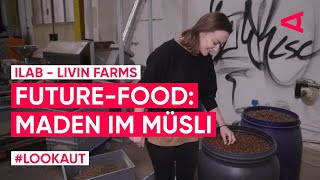 YouTube · LOOKAUTLIVIN farms züchtet Mehlwürmer & Insekten - Die Nahrung der Zukunft?
Un recorrido por la empresa de Katharina Unger para ver cómo se crían insectos con restos orgánicos (en alemán).
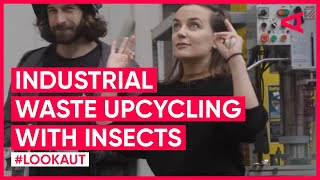 YouTube · LOOKAUTIndustrial Waste & Insects: A Perfect Match for Sustainability
Reportaje breve sobre cómo los residuos industriales pueden alimentar granjas de insectos (en inglés).
- Substack · Women in Ag MagazineWomen in Ag Award 2026: winners announced
El anuncio original con la ficha de cada una de las trece premiadas.
- Web · DLGWomen in Ag Award
La página oficial del premio, con ganadoras de ediciones anteriores y la próxima convocatoria.
- Web · FAOInternational Year of the Woman Farmer 2026
Datos, informes y actividades del Año Internacional de la Mujer Agricultora.
- Blog · El EspectadorMaría Victoria Blanco: la resistencia del Salto de Tequendama
Perfil largo de la veterinaria colombiana y de cómo rescató la casa del salto.
- Web · Noticias CaracolMaría Blanco, la mujer que logró declarar al Salto de Tequendama como patrimonio natural de Colombia
Cuenta la biodiversidad de El Porvenir y la lucha por la protección del salto.
Sources
- DLG – Women in Ag Award 2026: Winners
- DLG – Women in Ag Award
- Women in Ag Magazine – Women in Ag Award 2026: winners announced
- Milling and Grain – Women in Ag Award 2026: winners announced ahead of EuroTier
- FAO – FAO launches International Year of the Woman Farmer 2026
- The Cattle Site – EuroTier and EnergyDecentral return to Hanover in 2026
- El Espectador – María Victoria Blanco, la resistencia del Salto de Tequendama
- El Espectador – MinCultura declara Casa Museo Tequendama como Bien de Interés Cultural Nacional
- Noticias Caracol – María Blanco, la mujer que logró declarar al Salto de Tequendama como patrimonio natural
- Prime Business Africa – Meet Nigeria's cassava queen
- LISAvienna – LIVIN farms secures EUR 6 million Series A investment
- The Astana Times – Building capabilities for future of agriculture
- Stop Hunger – Celebrating Sharon Monethi: Champion of Zero Hunger
- greenMe – Le storie delle vincitrici dei Women in Ag Awards (2025)
- Rabobank – Akkerbouwer als zoetwatermanager (pódcast)





