


 Have a great day, y'all!
3.94 kilos and a guarania on board: Paraguay's first home-built satellite is in orbit
GuaraníSat-2, launched from California on 1 October, is the first satellite designed and assembled entirely in Paraguay. Built with 14 institutions from five countries, it will test NASA and Italian hardware, measure the South Atlantic Anomaly and relay messages for radio amateurs.

At 3:18 p.m. Asunción time on Thursday, 1 October, a rocket climbed away from pad SLC-4E at Vandenberg Space Force Base in California. Packed among more than a hundred satellites was a box 10 by 10 by 30 centimetres, weighing 3.94 kilograms. It was GuaraníSat-2, the first satellite ever designed, assembled and integrated entirely in Paraguay.
Back home, state broadcaster Paraguay TV had gone live at 2 p.m. In California, engineer Adolfo Jara, the project lead, watched the launch in person. "We are all very proud, and very much on edge," Alejandro Román, director general of aerospace execution and development at the Paraguayan Space Agency (AEP), told the Asunción daily Última Hora that afternoon.
- When: 1 October 2026, from Vandenberg, California, on a SpaceX rideshare carrying more than 100 satellites.
- What: a three-unit (3U) nanosatellite weighing 3.94 kg, built by Paraguayan teams.
- Who: 14 institutions from Paraguay, Japan, the United States, Mexico and Italy, around a core of 40 to 50 Paraguayan professionals.
- Why: an amateur radio relay open to the world, measurements of the South Atlantic Anomaly, and tests of hardware for a future Earth-observation satellite.
The difference from the country's first attempt comes down to one word: home. GuaraníSat-1, launched in February 2021, was built by Paraguayan engineers working in Japan under a programme run by the Kyushu Institute of Technology. This time the design, assembly and integration all happened in laboratories in San Lorenzo and Asunción. As the Spanish news agency EFE reported, carried by Infobae, Román put it simply: the spacecraft was "developed entirely" by "Paraguayan hands".

From a one-kilo cube to a satellite built at home
To see how far Paraguay has come, it helps to look back. The country created its space agency by law in 2014, and cooperation with Japan opened the way to orbit. On 20 February 2021 an Antares rocket lifted off from Wallops Island, Virginia, carrying the Cygnus NG-15 cargo ship to the International Space Station. On board was GuaraníSat-1, a 10-centimetre cube weighing 1.3 kg, which was released from the station on 14 March that year.
That first satellite had a narrow job: collecting data from ground sensors to help track Chagas disease in Paraguay's Chaco region. It stayed in orbit for about 16 months and burned up on re-entry on 5 July 2022, its mission complete. Its biggest result, though, stayed on the ground: a group of engineers who now knew how to design, test and fly a spacecraft.
When the AEP announced the follow-up in 2023, Jara was blunt about the goal. "We want to repeat our experience with the launch of the second satellite," he told Última Hora. He added a line that reads differently now: "We want more young people to have the same dream we had years ago, and to give them the chance to unlock their potential."
The schedule the agency published in its GuaraníSat-2 technical overview shows the step-by-step approach:
- May 2023: project kick-off.
- May 2024: mission design review.
- April and May 2025: first environmental qualification tests.
- July 2025: critical design review.
- February 2026: flight readiness review.
- Fourth quarter of 2026: launch and operations.
One stage still had to happen abroad. In late March 2026 a team of engineers flew to Japan to put the flight model through its final tests at the Kyushu Institute of Technology in Kitakyushu. According to La Nación, the satellite went through vibration, electromagnetic compatibility and thermal vacuum testing, with temperatures swinging from roughly -24 to 61 degrees Celsius. "We are moving through a critical stage in the development of the GuaraníSat-2 flight model," the AEP said at the time.
Those trips abroad may soon be unnecessary. On 4 September, Foreign Minister Rubén Ramírez Lezcano and Hajime Takasago, resident representative of the Japan International Cooperation Agency (JICA), signed a grant agreement worth about 24 million US dollars, Última Hora reported. The money will pay for a four-storey building of around 3,400 square metres on the National University of Asunción campus in San Lorenzo. It will house the Space Lab, where satellites are designed and integrated, and the GeoLab, which analyses geospatial data for farming, disaster risk management and land planning. The Rio Times put the grant at 3.818 billion yen and noted that the centre will let Paraguay run at home the tests that currently require travel.
At the signing, Ramírez Lezcano spoke of turning Paraguay into a "regional hub for space technology". That sounds ambitious for a landlocked country of just over six million people. Yet neighbours have shown that small teams can go a long way: Uruguay, for instance, now processes weather-satellite signals on its own with three operators and one antenna.
What is on board, and who built it
GuaraníSat-2 is small but busy. According to the Polytechnic Faculty of the National University of Asunción and the AEP, its main components are:
- An experimental co-processor from NASA's Jet Propulsion Laboratory, from a family similar to the chips used on Mars rovers, which will be tested for processing and storing images.
- Deployable solar panels from the Italian company Astradyne, folded with a design inspired by Japanese origami.
- A Mexican-made circuit board that serves as the on-board computer.
- A camera on the edge of the spacecraft to take pictures from orbit.
The science missions have names of their own. MUA, built by the Faculty of Engineering at the National University of Asunción, will count muons, particles produced by cosmic rays, to study the South Atlantic Anomaly. That is a region where Earth's magnetic field is weaker, stretching over much of South America, Paraguay included. Satellites passing through it take more radiation, and their electronics glitch more often. Few countries in the region can measure it from orbit with an instrument of their own.
The Catholic University of Asunción contributed artificial intelligence algorithms that help the satellite work out which way it is pointing and correct its orientation. The Polytechnic team worked on the backplane, the antenna system, a Helmholtz cage that simulates Earth's magnetic field on the ground, and an image classifier. One of its electronics engineering students, Édgar Ramírez, presented his backplane design at the Small Satellite Conference in Utah, one of the industry's main gatherings.
Paraguayan channel Trece still hosts its broadcast of the first satellite's launch in February 2021, where this story began:
A relay for radio amateurs everywhere
The mission with the largest potential audience is called EIRU, developed by the AEP itself. It turns the satellite into a small radio relay. According to the agency's technical overview, it uses the amateur APRS system in two modes: it can repeat messages instantly, or store them and pass them on later when it flies over another station. The Polytechnic team added a LoRa experiment, a low-power technology designed to collect readings from sensors in remote areas.
The Spanish amateur radio site EA1URO published the mission details: the satellite listens on 145.825 MHz and transmits on 437.375 MHz, where it also sends a Morse code beacon to identify itself. It flies at about 500 kilometres, higher than its predecessor. Anyone with a licence and basic equipment can try to reach it.
"To take the next step in our space development."
Alejandro Román, AEP director general of aerospace execution and development, on the satellite's purpose
That line explains why GuaraníSat-2 works as a test platform rather than an Earth-observation satellite. Everything learned from it, from how the Italian panels behave to whether the NASA co-processor survives the radiation, will feed into GuaraníSat-3, which will carry an observation mission with possible uses in agriculture and natural resource monitoring. In a country whose soybean crop has just hit a record 12.6 million tonnes, watching fields from space has an obvious market.
The project relied on a wide network. According to EFE and ABC Color, scientists, students, technicians and researchers from 14 institutions in five countries took part. Alongside the AEP, the Polytechnic, the Faculty of Engineering and the Catholic University, the list includes the Mexican Space Agency and UNAM, the Polytechnic University of Bari, Uruguay's University of the Republic, the national power utility ANDE and the Kyushu Institute of Technology, whose standard satellite bus the Paraguayan engineers adapted and improved. The launch campaign was managed by the European company RIDE!, with support from the Paraguayan firm itti, according to a RIDE! press release from November 2025.

The team expects the satellite to stay in orbit for a little over two years, depending on solar activity and atmospheric conditions. It will then sink slowly and burn up on re-entry, leaving no debris behind. In the meantime, its data will come down to the Space Lab ground station at the National University campus in San Lorenzo, and to any radio amateurs who tune in.
The project has already reached classrooms. At the Colegio Técnico Nacional, an electronics student built an experimental ground station with rotating antennas, backed by the Space Lab, to track the satellite, receive its signals and recover its data. That is exactly what Jara was after in 2023: more young people with the same dream. Similar stories are appearing across the region, from the Costa Rican rocket that won in Mexicali with a home-made motor to Ireland, which set a record for European Space Agency contracts on the back of small university labs.
In the RIDE! release, AEP president General Osvaldo Almirón Riveros described the launch as proof that Paraguay is emerging as a player in its own right. Esteban Fretes, the agency's director of research projects, had made the same case months earlier, according to The Rio Times: the aim is autonomy, so that Paraguay no longer depends on other countries to do space science.
The release of GuaraníSat-1 from the International Space Station in March 2021 was captured in this video:
Something you might not know
GuaraníSat-2 carries more than instruments. In February 2026 the AEP received permission from Francisco Alberto Flores Leiva, grandson of composer José Asunción Flores and holder of the rights, to include the guarania India on the satellite, La Nación reported. Verses from the song are carried on the spacecraft's structure, as columnist Arturo Peña Villalata described in his piece "India, the space guarania".
The choice is loaded with history. José Asunción Flores was born in 1904 in La Chacarita, Asunción's riverside neighbourhood. As a boy he shined shoes and sold newspapers, and at 12 he joined the Police Band, where he learned music and played the trombone. In the mid-1920s he created the guarania, a slow, wistful style that is now part of Paraguay's identity. India, with lyrics by the poet Manuel Ortiz Guerrero, came out of their partnership later that decade, and on 24 July 1944 the government declared it a national song.
A century after a former shoeshine boy invented a musical genre in Asunción, his song circles the Earth about 15 times a day, aboard a satellite his compatriots built.
Further reading
- GuaraníSat-2 technical overview, published by the Paraguayan Space Agency (in English).
- How the launch unfolded, in Última Hora (Spanish).
- The Polytechnic Faculty's role in the satellite's missions (Spanish).
- Frequencies and modes for radio amateurs, on EA1URO (Spanish).
- The story of GuaraníSat-1, on Wikipedia.
Go further
 YouTube · Agencia Espacial del ParaguayPrograma especial en conmemoración de la puesta en órbita del satélite paraguayo GuaraniSat-1
El canal oficial de la agencia repasa cómo llegó a órbita el primer satélite, la base de todo lo que vino después.
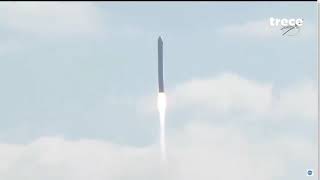 YouTube · TreceLanzamiento del GUARANISAT-1
La transmisión del despegue de 2021, para comparar con el salto de 2026.
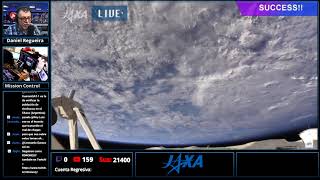 YouTube · RDrone UYMirá como fue puesto en órbita el satélite Guarani Sat-1 desde la Estación Espacial por JAXA
Imágenes de la liberación del primer satélite paraguayo desde la Estación Espacial Internacional.
- Web · Agencia Espacial del ParaguayGUARANISAT-2 Overview
La ficha técnica oficial con misiones, socios y calendario del proyecto.
- Blog · EA1UROGuaraniSat-2: Paraguay lanzará su segundo nanosatélite en octubre con APRS y LoRa
Frecuencias y modos para que cualquier radioaficionado intente contactar con el satélite.
- Web · Facultad Politécnica, UNAGuaraníSat-2: Paraguay anuncia el lanzamiento de su segundo satélite con participación activa de la FP-UNA
Qué piezas del satélite diseñaron profesores y estudiantes de la Politécnica.
- Web · RIDE!RIDE! leads the end-to-end mission management and launch of GuaraniSat-2
Cómo se organizó la campaña de lanzamiento, contado por la empresa que la gestionó.
Sources
- Paraguay lanza su segundo satélite al espacio: Claves y el impacto de GuaraníSat-2 (Última Hora)
- GUARANISAT-2 Overview (Agencia Espacial del Paraguay)
- Paraguay pone en órbita su segundo satélite, el primero construido en el país (EFE/Infobae)
- GuaraníSat-2: el satélite paraguayo que ya orbita la Tierra (ABC Color)
- Paraguay GuaraníSat-2 satellite (The Rio Times)
- Paraguay y Japón sellan un acuerdo de donación de USD 24 millones (Última Hora)
- GuaraniSat-2: avanzan pruebas en Japón (La Nación)
- GuaraníSat-2 y la FP-UNA (Facultad Politécnica UNA)
- GuaraniSat-2: APRS y LoRa (EA1URO)
- RIDE! press release on GuaraniSat-2
- GuaraníSat-1 (Wikipedia)







