Have a great day, y'all!
After 50 years of barges and ice roads, a Dene community in Saskatchewan can drive south
Hatchet Lake Denesuline First Nation and Wollaston Lake have celebrated the 102-kilometre all-season road that replaces a 42-kilometre barge crossing and a winter ice road, more than two decades after planning began.

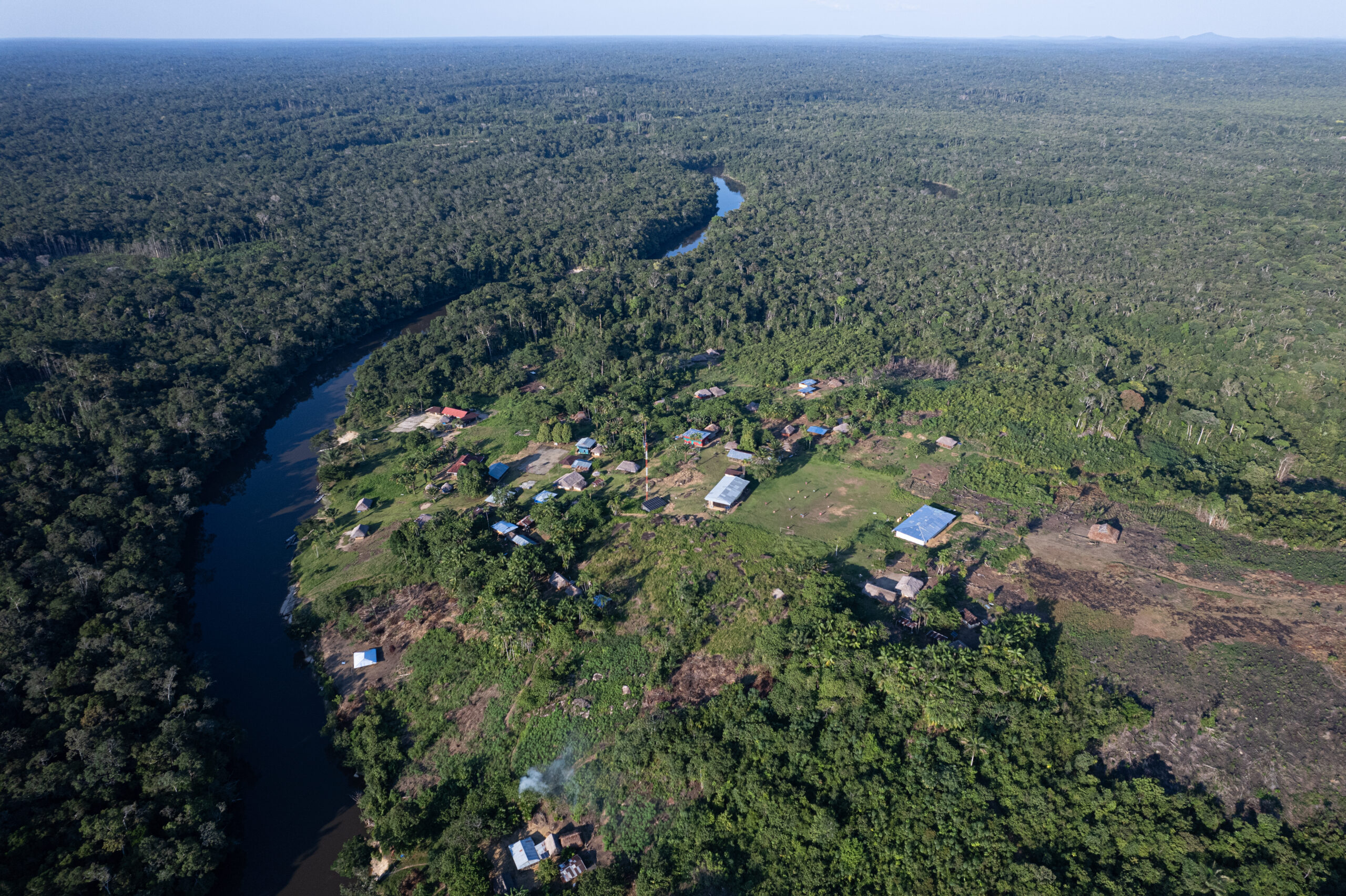
On a Thursday in mid-November, people from Hatchet Lake Denesuline First Nation gathered beside a gravel road that had taken longer to build than many of them had been alive. The road runs 102 kilometres through the boreal forest of far-northern Saskatchewan, and on November 12 it was officially celebrated as the new link between their community and the rest of the province.
For the roughly 1,800 people who live at Wollaston Lake, the change is simple to describe. Until this autumn, getting a truck to town meant a barge in summer, an ice road in winter and an airplane in between. Now there is a road.
- What: a 102-km all-season gravel highway linking Wollaston Lake and Hatchet Lake Denesuline First Nation to Highway 905 and the provincial network.
- Who: led by the First Nation and Indigenous Services Canada, with the Saskatchewan government, which will maintain it.
- How long: planning began in 2004; the first 14 km were built between 2007 and 2011.
- Cost: more than $70 million from Ottawa, plus about $10 million from the province.
- What it replaces: a 42-km barge crossing that ran about five months a year, and a seasonal ice road.
The opening of Highway 995 is a historic milestone for our community.
Chief Bartholomew Tsannie, Hatchet Lake Denesuline First Nation

A lake that drains two ways, and a community at the end of it
Wollaston Lake sits in the Athabasca Basin, close to the Manitoba and Nunavut borders. Geographers know it as a curiosity: it is described as the largest bifurcation lake in the world, meaning its water leaves in two directions, one stream heading toward the Arctic Ocean and another toward Hudson Bay. In Dene the lake is known as Axe Lake, and locals call the settlement "the Post".
The community has two parts. The northern settlement of Wollaston Lake is small, with 96 residents in the 2021 census. Beside it is Wollaston Post, home of the Hatchet Lake Denesuline First Nation, a Treaty 10 nation whose name in Dënesųłiné is Tthęł Tué Dene. In 2021 the Nation counted 1,913 members, about 1,450 of them living on reserve.
According to a community profile published by the uranium company Cameco, people here still lived largely by hunting and gathering into the early 1940s. The settlement grew around commercial fishing, trapping and a trading post. Children at the two local schools are taught in English and Dene, and every year classes spend two weeks on Moose Island with Elders. Many families still fish commercially in season and hunt caribou.
None of that changed the arithmetic of distance. The community sits on the eastern shore; Highway 905, the nearest road south, ends on the western side. Everything heavy had to cross the water or the ice.
For half a century that job fell largely to the Wollaston Lake Barge. It began in 1974 as a private vessel, and the province took it over in 1980. The Ministry of Highways says it is the only cable-free barge in Saskatchewan and the only one that needs to be booked in advance. It runs about five months a year, at a cost to the province of roughly $420,000 annually, and in recent years Hatchet Lake itself operated it under contract.
On October 14, community members, including Prince Albert Grand Council Vice-Chief Joseph Tsannie, gathered on the shore to watch it make its last 42-kilometre crossing.

Twenty years, two stalls and one road
The idea of a road is far older than the gravel. Planning and design started in 2004. The province approved a first leg of construction in 2008 and paid $10.1 million to build the first 14 kilometres between 2007 and 2011. Then the work stopped. Saskatchewan withdrew its commitment in 2012, and for years the project sat with only its first stretch finished.
The price of waiting showed up in ordinary places. In July 2019, the Wollaston Lake fishery shut its operations in Prince Albert and at the lake, and 25 jobs went with it. Anne Robillard, then chief executive of the Hatchet Lake Development Limited Partnership, told paNOW that without a road the costs had become too high. At the time, the 102-kilometre route was estimated to cost about $1 million per kilometre.
Food and building materials faced the same problem. When CTV News reported on the restart of construction, it noted that most supplies arrived by plane, at about $1,100 a flight, and that housing materials were especially expensive and hard to deliver. Many residents travel south for medical care.
The ice road carried its own risks. Leaders have spoken publicly about people lost on the lake over the years, and Saskatchewan's then highways minister said the new work would "get vehicles off the open ice of Wollaston Lake." Prince Albert Grand Council leaders have also said the ice crossing had become less reliable as winters changed.
The road's paperwork is almost as old as the idea. A federal environmental review, the Comprehensive Study Report for the Wollaston Lake Road, sits in the archive of the Impact Assessment Agency of Canada, a reminder that the route was mapped, studied and approved long before most of it was built.
When the project came back to life around 2020, it did so modestly. The first plan was a seasonal road that would add one or two months of overland access each year, with a phase-one budget of $6.75 million: $6.5 million from Indigenous Services Canada over two years and $250,000 from Saskatchewan, which also agreed to cover maintenance. "This is tremendous news for our community," Chief Tsannie said then. The federal minister of the day, Marc Miller, credited the Nation's leadership and the Prince Albert Grand Council for pushing the file.
That seasonal road became, step by step, an all-season highway. Each phase raised the standard: higher embankments, proper culverts, crushed gravel that holds up during spring thaw. For a community that had watched the project stall twice, the shift mattered as much as the money. A seasonal road would have shortened the wait between barge and ice. An all-season road ends it.
The turn came when Ottawa took over the lead. Construction resumed with a contractor partly owned by the First Nation itself, Points Athabasca Contracting, which hired equipment operators and labourers from Wollaston Lake and Hatchet Lake. In 2024 the federal budget added a final $49 million, which larongeNOW reported would cover the embankment from kilometre 25 to the end of the route, plus culverts, gravel, erosion control and signage.
By the time of the ceremony, WestCentralOnline reported, federal spending had passed $70.3 million. Final inspections and finishing work continue, with completion expected in 2027. Until then the community and the contractor run the road; after that, the Saskatchewan Ministry of Highways will operate and maintain it as part of the provincial network.
What changes at the Post
Chief Tsannie listed the practical gains: easier access to health care, schools and supplies, and new economic openings. "For decades, we have been working toward a reliable, all-season road," he said at the event.
Prince Albert Grand Council Vice-Chief Joseph Tsannie looked further ahead. He mentioned the fishery, jobs and even sports development, since teams will be able to travel to tournaments by road.
The opening of this all-season road completely changes the economic landscape.
Joseph Tsannie, Vice-Chief, Prince Albert Grand Council
Federal Indigenous Services Minister Mandy Gull-Masty said the road "will make a lasting difference in the lives of residents." Saskatchewan Highways Minister Kim Gartner thanked the federal government and the workers, and noted that the province's highway network grows with it. Buckley Belanger, Ottawa's secretary of state for rural development and a long-time northern Saskatchewan politician, said the two communities were "closer than ever to having year-round road access."
The day came with a second, smaller announcement that matters in a place where trucks were rare. Ottawa committed $1.368 million to rebuild the local landfill: a new waste cell sized for about ten years, a system to collect leachate, a stormwater pond and new operating stations. The old site will be capped and closed. The money depends on the project passing its environmental assessment.
Protecting water is a priority here. Cameco's profile of the community notes that residents watch nearby mining closely for any risk to the lake, and the Nation is one of the northern communities that signed the 2016 Yá thi Néné Collaboration Agreement with Cameco and Orano, which covers jobs, business development and environmental stewardship.
Wollaston Lake is not the first northern community to trade a seasonal link for a permanent one. In the Northwest Territories, the Tłı̨chǫ community of Whatì got its all-season road in 2021 after decades on a winter route. Further south, in Iowa, a river town recently waved off its temporary ferries when a new Mississippi bridge opened five months early. The logic is the same: when the crossing is permanent, everything that depends on it becomes cheaper and more predictable.
Across the North, Indigenous nations are increasingly building the institutions they waited on for decades. In Nunavut, the hamlet of Arviat will host Canada's first Arctic university, and in Nova Scotia all 13 Mi'kmaw First Nations now run their schools together.
At Wollaston Lake the next tests are ordinary ones. How much will groceries cost once a truck can make the trip? Will the fishery reopen its southern plant? Can a hockey team drive to a tournament in Prince Albert in March without checking the ice? The answers will come over the next few seasons. For now, the barge is tied up for good, and the road is open.
Further reading
- Highway 995 Wollaston Lake Road opens (CBC News video)
- Wollaston Lake Barge makes final crossing (larongeNOW)
- Historic northern Saskatchewan highway nearing completion (WestCentralOnline)
- Community profile: Wollaston Lake / Hatchet Lake First Nation (Cameco North)
- Saskatchewan Highway 995 (Wikipedia)
Go further
- Web · CBC NewsHighway 995 Wollaston Lake Road opens
Short video report from the day the community celebrated the new road.
- Web · larongeNOWWollaston Lake Barge makes final crossing
The farewell to the barge that carried the community's supplies for half a century.
- Web · WestCentralOnlineNorthern Saskatchewan highway nearing completion after more than 20 years
Full account of the November 12 ceremony, with the figures and the speeches.
- Web · Cameco NorthWollaston Lake / Hatchet Lake First Nation community profile
A portrait of the community, its Dene-language schools and its fishery.
- Web · paNOWNorthern Wild fishery shuts down operations, owners blame lack of all-weather road
Why the road mattered so much to local jobs, as told in 2019.
- Web · WikipediaHatchet Lake Denesuline First Nation
Basic facts on the Nation, its reserve and its Treaty 10 roots.
Sources
- Historic northern Saskatchewan highway nearing completion after more than 20 years
- Wollaston Lake, Sask., celebrates final stage of all-season highway project
- Wollaston Lake Barge makes final crossing
- New federal funding guarantees completion of Wollaston Lake road project
- Indigenous Services Canada news release