Have a great day, y'all!
Golfito gets its own degree to look after Golfo Dulce, with 30 places from 2027
The University of Costa Rica will open a degree in Integrated Management of Marine and Coastal Areas at its Southern Campus, with 30 places, after nine years of design work and a survey of 2,231 secondary school students.

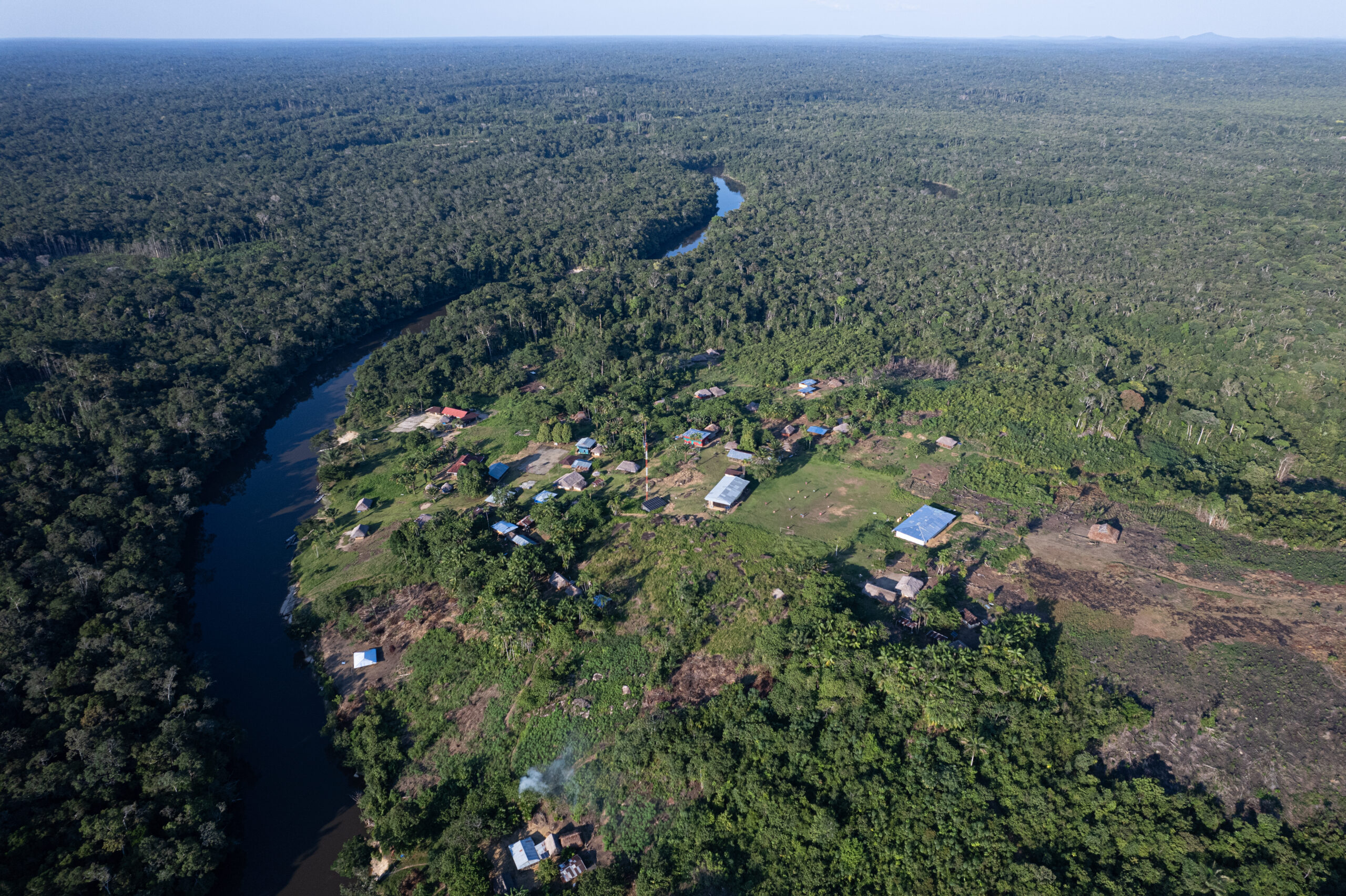
The Golfito campus of the University of Costa Rica (UCR) sits on a green hillside facing Golfo Dulce, on the country's southern Pacific coast. From the first semester of 2027, that view becomes a syllabus. The university will open a bachelor's and licentiate degree in Integrated Management of Marine and Coastal Areas there, a programme designed around the communities that live from the sea in the far south.
UCR presented the degree on November 13 in an announcement from its Office of the Vice-Rector for Teaching. It will take 30 first-year students, will be taught in person at the Southern Campus (Sede del Sur), and arrives after a design process that began in 2017. Almost nine years of paperwork, surveys and revisions, so that a region with roughly 750 square kilometres of gulf has people trained to study it without moving to San José.
- What: a bachelor's and licentiate in integrated marine and coastal management, programme code 600602, starting in the first term of 2027.
- Where: the Golfito campus of UCR's Southern Campus, in Puntarenas province.
- How many: 30 places for new students; the approving resolution initially authorises two cohorts.
- How it was decided: the university surveyed 2,231 secondary school students and 40 representatives of institutions and organisations working on the coast.
- Approval: Costa Rica's National Council of Rectors (Conare) cleared it in October, and resolution VD-13892-2026 made it official on October 29.
A degree that starts at the shoreline
Golfo Dulce is not an ordinary bay. It runs about 50 kilometres long, covers some 750 square kilometres and its inner basin reaches 200 metres deep, according to a profile in Diario Extra. Because of its shape, a deep basin partly closed off by a shallower sill near the mouth, it is often described as one of the world's few tropical fjords. Deep down, oxygen is scarce. A review of 123 studies published in 2021 in the Revista de Biología Tropical by José A. Vargas-Zamora, Eddy Gómez-Ramírez and Álvaro Morales-Ramírez found low oxygen below 50 metres and a basin floor that frequently becomes anoxic.
Life still thrives. Humpback whales from the southern hemisphere arrive between July and October, and northern humpbacks between December and March. Bottlenose and spotted dolphins live there all year. In September 2023 the World Cetacean Alliance certified the gulf as a Whale Heritage Site, the first in Latin America, as The Tico Times reported. The same year it was named an Important Marine Mammal Area.

The water is ringed by protected land. Piedras Blancas National Park, Corcovado National Park and the Golfito Wildlife Refuge together hold more than 56,000 hectares of tropical forest. The water has rules too. On June 11, 2010, the board of the fisheries institute Incopesca declared the gulf a Marine Area for Responsible Fishing, covering 750 square kilometres split into an inner and an outer zone. El Financiero reported at the time that about 190 small-scale fishers would switch to more sustainable gear, and that trawling had already been banned in October 2009. The scheme was built jointly by the institute, the sport fishing federation and seven local fishing associations.
That mix of conservation, fishing, tourism and local livelihoods is exactly what the new degree aims to manage. Lecturer María José Rodríguez, who helped design the programme, listed in UCR's announcement the pressures she sees on the coast: overfishing, habitat pollution, growth in tourism and population, competing uses of marine space and social hardship in coastal villages. The programme, she explained, will combine the study of species, habitats and ecosystems with the social, economic and cultural life of the people who depend on them.
Part of the push came from outside the classroom. According to the university, the idea took shape after the Southern Campus joined a marine and coastal commission led by Costa Rica's National System of Conservation Areas (Sinac). There, Golfito lecturers saw that the agencies managing the coast needed people who could speak biology, law and local economics at the same time.
What students will learn, and who it is for
The curriculum is built on four pillars: the marine and coastal environment, marine and coastal governance, development economics, and languages. There will be lectures and hands-on courses, laboratory work and field trips. To earn the bachelor's degree, every student must complete a supervised placement with an institution or organisation that manages or protects coastal and marine areas.
Delfino.cr outlined some of the content in October: biodiversity, marine spatial planning, geographic information systems, environmental governance and community participation. In practical terms, that means being able to read a fisheries zoning map, assess the health of a mangrove, understand a concession in the public coastal strip and sit down to negotiate with a fishing association or a tour operator.
Regionalisation cannot be just a speech.
Jáirol Núñez Moya, UCR Vice-Rector for Teaching
Núñez said that opening a degree requires showing that it is academically and socially relevant, that graduates will find work and that the conditions exist for good teaching. Speaking to Diario Extra, he placed it within a wider package of new programmes, describing them as STEM degrees that meet needs Costa Rica has right now.
The director of the Southern Campus, Georgina Morera, stressed the human side. The programme is meant for people who want to understand community realities and help change them, she said, adding that it is not only for young people from coastal towns: it could draw students from across Costa Rica and, eventually, Central America. Curriculum adviser Nancy Fajardo walked through the process since 2017, which included a technical review by the university's Academic Evaluation Centre and consultation with other faculties.
Where will graduates work? UCR points to public agencies and non-governmental organisations that manage and protect coastal and marine spaces, as well as independent consultancy. The campus has also held talks with the University of Cádiz in Spain about possible student exchanges.
There is a built-in check. The resolution authorises only two initial cohorts. Once they graduate, the Southern Campus must evaluate the results before deciding whether the degree continues, a way of testing whether the plan really serves what the region needs.

From banana port to university town
Golfito's history explains why a degree like this matters there. For much of the twentieth century the town was the southern Pacific port of the United Fruit Company, shipping bananas grown across the region. The company wound up its operations there in 1985 after years of labour disputes, crop disease and shrinking markets. Banana farms gave way to oil palm and later to the Depósito Libre Comercial, a duty-free shopping zone that is now the district's biggest employer. The district had 11,284 residents at the 2011 census. Tourism has grown since the mid-1990s, with sport fishing among its main draws.
UCR arrived in 2006 with a campus that for more than a decade did not even appear in the university's statutes. In 2019, Georgina Morera, then director of the campus, told Semanario Universidad that it had 520 students, that nine in ten came from the Brunca region and that 95% held the highest categories of financial aid. At the time it could not create degrees of its own.
That changed on December 6, 2019. UCR's representative assembly voted 349 to 2, with 8 abstentions, to turn the Golfito campus into the Southern Campus, the university's sixth regional headquarters. What it meant, Morera told Semanario Universidad, was that UCR now had "a permanent home in the south". A student, Ana Esquivel, put the practical effect simply: more young people from the south would be able to study without leaving.
The range of programmes has grown since. Agricultural Economics and Agribusiness, Primary Education, Business Computing and Ecotourism were joined in 2025 by Business Management and Logistics. The marine and coastal degree is the first to look straight at the water visible from the campus.
The Golfito programme is one of three new degrees at regional campuses, offering 95 places in total for 2027. The other two are Data Science at the Paraíso site of the Atlantic Campus and Manufacturing Process Engineering at the Caribbean Campus in Limón. The spread is deliberate: all three take technical training to areas outside the Greater Metropolitan Area, where Costa Rica's public universities have historically been concentrated.
The social context of the south makes it more relevant. According to the national statistics institute's 2026 household survey, as reported by Delfino.cr, 27.3% of households in the Brunca region live in income poverty, against 15.4% nationally. The same survey brought a figure moving the other way: multidimensional poverty, which tracks gaps in education, housing, health and work, fell in the region from 13.5% to 10.9% of households. Training professionals who do not have to leave is one of the slowest levers to pull, and one of the longest lasting.

Costa Rica is, above all, a maritime country. Its ocean territory exceeds 574,000 square kilometres, about ten times its land area, as political scientist Stephanie Durán Wong noted in an opinion piece for Delfino.cr. That ratio helps explain why it matters to train coastal managers in the very regions where the coasts are. At The Positive Way we have covered stories from that sea, such as the ghost shark named after Costa Rica, described from a specimen caught in the Pacific, and the great green macaw's return to the South Caribbean, a recovery that relied on neighbours and local experts.
Costa Rican conservation has leaned on local people for decades. The Monteverde reserve, now on the IUCN Green List, began with 328 hectares. And the country's university students keep showing what technical training can produce, like the team that won in Mexicali with a rocket designed and built at home.
What comes next? The first practical step is admission. On November 16 UCR published its admission rules for 2027, which set out how to apply for the 30 places. Then comes the harder part: keeping labs, boats and field trips running at a small campus, and persuading coastal agencies to open their doors for student placements. If the first two cohorts succeed, Golfito will have something it never had: local professionals, trained locally, to look after the gulf that gives the town its name.
Something you might not know
Golfo Dulce is one of the few places on Earth where humpback whales from both hemispheres can be seen in the same year: southern whales arrive during the austral winter and northern ones months later. And less than 200 metres below their backs, the floor of the basin spends much of its time almost without oxygen, like a cold-latitude fjord transplanted to the tropics.
Further reading
- UCR's official announcement of the new degree (Spanish)
- The three STEM degrees UCR will open at regional campuses (Delfino.cr, Spanish)
- Scientific review of Golfo Dulce in the Revista de Biología Tropical
- The Southern Campus YouTube channel
- Golfo Dulce named Latin America's first Whale Heritage Site (The Tico Times)
Go further
 YouTube · Colosal Radio y TelevisiónReportaje especial: UCR será sede en Golfito
Cuenta desde la zona sur qué significó para Golfito que su recinto se convirtiera en sede en 2019.
 YouTube · Universidad de Costa RicaGraduados del Recinto de Golfito
Las caras de quienes ya se titularon en Golfito, el antecedente directo de la nueva carrera.
 YouTube · Justo aquíBallenas y delfines en el Golfo Dulce, Costa Rica
Imágenes del golfo que estudiarán los futuros profesionales, con jorobadas y delfines.
 YouTube · OSA WILDCosta Rica Whale Watching: Why Golfo Dulce Is So Special
Explica en inglés por qué el golfo atrae ballenas de los dos hemisferios.
- Web · Vargas-Zamora, Gómez-Ramírez y Morales-Ramírez (Revista de Biología Tropical)A fjord-like tropical ecosystem, Pacific coast of Costa Rica: overview of research in Golfo Dulce
La revisión de 123 estudios que resume lo que la ciencia sabe del golfo Dulce.
- Web · World Cetacean AllianceWorld Cetacean Alliance
La organización que certificó el golfo Dulce como Sitio Patrimonio de Ballenas.
Sources
- La UCR abrirá una nueva carrera para formar profesionales en protección y desarrollo de las zonas costeras (UCR, 13/11/2026)
- UCR abrirá carreras en áreas estratégicas: estas son las opciones para 2027 (Diario Extra)
- UCR abrirá tres nuevas carreras STEM en sedes regionales a partir de 2027 (Delfino.cr)
- UCR crea Sede del Sur en Golfito (Semanario Universidad, 2019)
- Declaran a Golfo Dulce como área para pesca responsable (El Financiero, 2010)
- A fjord-like tropical ecosystem: overview of research in Golfo Dulce (Revista de Biología Tropical, 2021)
- Pobreza en la región Brunca, Enaho 2026 (Delfino.cr)